





 Portuguese
  English
  Spanish
  5 min of reading
  1 comment





Capable Robot To Build A 200 M² House In A Day, Using Earth And 3D Printing, Promises To Transform The Construction Industry With Sustainable Solutions, Low Cost And Utilization Of Local Natural Resources.
A six-legged robot, named Charlotte, promises to erect a 200 m² house in 24 hours, primarily using natural materials and a cement-free 3D printing system.
Developed in partnership by Crest Robotics and Earthbuilt Technology, the project relies on soil, sand, and construction waste to form structural walls.
The proposal aims to reduce costs, speed up construction, and cut emissions from the construction industry, one of the sectors that emits the most carbon in the world.
-
How the terraforming of Mars can transform the planet: artificial aerosols can increase the temperature by up to 35°C in 15 years, creating conditions for liquid water.
-
Scientists drilled nearly 8,000 meters into the ocean floor above the fault that caused the 2011 tsunami in Japan and discovered that a layer of clay 130 million years old was responsible for making the wave much worse than any model had predicted.
-
Thousands of years after causing the largest eruption of the Holocene, one of the world’s largest supervolcanoes is rebuilding itself beneath the sea south of Japan, receiving new magma and alarming scientists with its transformation.

-
China has activated a magnet 700,000 times more powerful than the Earth’s magnetic field that operates for over 200 consecutive hours while consuming little energy, and now the world wants to know what Beijing plans to do with this technology in 2026.


How The Charlotte Robot Transforms Soil Into Structure
The Charlotte operates as a mobile printing platform.
Attached to the chassis, an extrusion system collects materials available in the surroundings, which may include sand, earth, crushed glass, and crushed bricks.
These materials are compacted and joined in layers, forming the walls of the building.
In this way, the robot eliminates the traditional step of preparing and transporting concrete, reducing logistics and the carbon footprint associated with cement.
The machine was designed to move around the site while printing, raising its body on “legs” to advance in height.
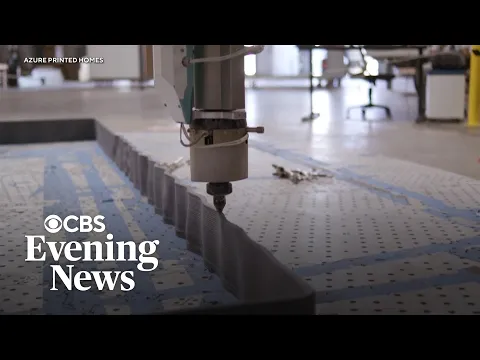

In practice, automation seeks to simplify the process of raising masonry, which usually depends on a large workforce, scaffolding, and multiple work fronts.
Although it is still in the development phase, the announced goal is to enable entire housing units within a day, with lower operational costs and less resource usage.
Why The 24-Hour Promise Is Relevant
Construction time is one of the main cost factors.
In conventional projects, long deadlines increase labor costs, equipment rental, and material logistics.
By automating the initial wall and finishing stages, 3D printing can streamline schedules and free teams for foundations, installations, and finishing work.
Additionally, the ability to print in continuous sequence avoids stops and wastes, favoring delivery predictability.
However, there are technical conditions.
The 24-hour performance depends on project, availability, and preparation of materials, weather conditions, and minimum infrastructure, such as power on-site.
It is also necessary to ensure that the printed structure meets performance standards, thermal comfort, and fire safety.
Even with these caveats, the goal signals a productivity leap for repetitive and large-scale projects.
Sustainability And Reduction Of Environmental Impact
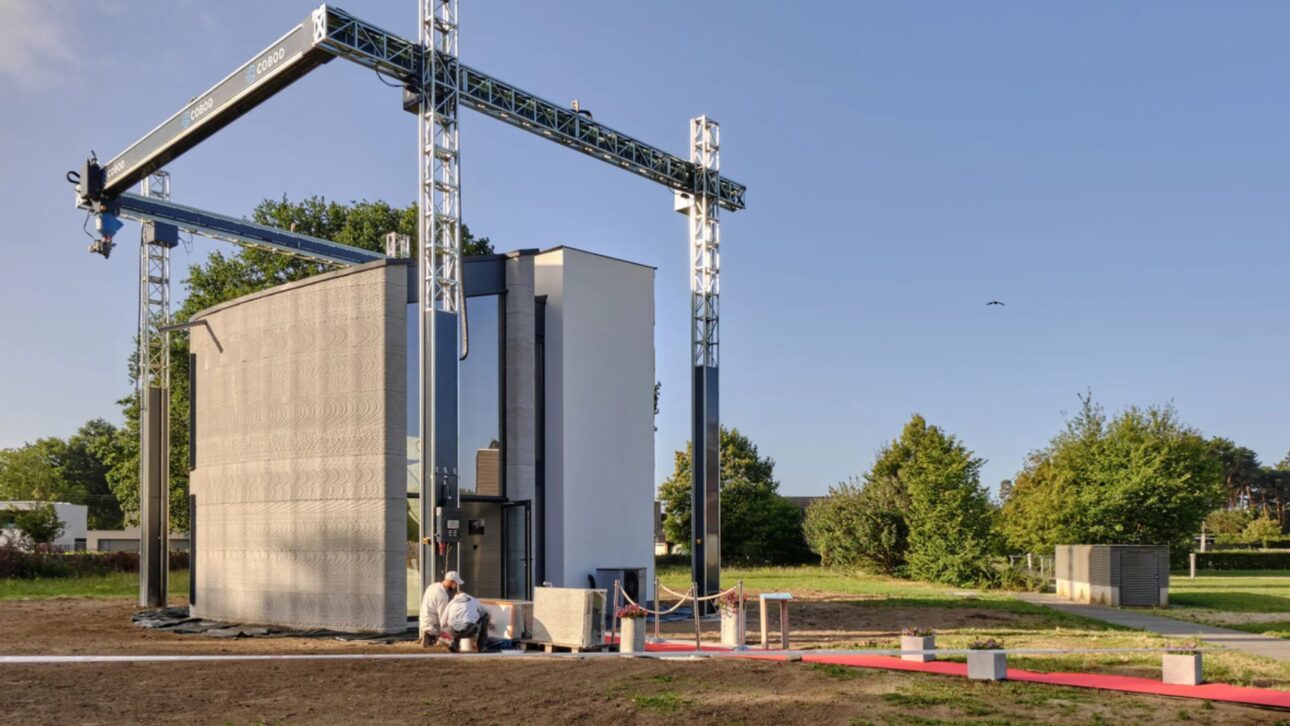
Cement-based construction is intensive in carbon dioxide emissions.
By replacing the traditional binder with cement-free mixtures and local materials, Charlotte aims to reduce environmental impacts and dependence on long supply chains.
The use of waste — such as crushed glass and rubble — adds a component of circular economy, converting liabilities into raw materials.
Another sustainability vector is the structural design.
The layer-by-layer extrusion process allows for optimizing shapes and thicknesses according to load, with reduced material consumption.
In addition, the robot’s digital control favors repeatability, reduces execution failures and, consequently, waste.
In a sector where rework and excess are common, this precision represents a significant environmental and economic gain.
Brazilian Potential: Use Of Local Sand And Earth
In Brazil, the abundance of sand and earth and the variety of regional soils favor tests with low-impact 3D printing.
In rural areas or in municipalities with difficult access to industrialized inputs, the ability to use materials from the surrounding area reduces transportation costs and enables housing solutions with less dependency on urban centers.
The technology also aligns with varied climates, as the composition can be adjusted based on humidity, desired strength, and thermal requirements.
Local feasibility requires compatibility with Brazilian technical standards, assessment of acoustic and thermal performance, and structural validation by qualified engineers.
Furthermore, large-scale adoption involves training teams, integration with foundations and roofing, and certification with public agencies and insurers.
Quick Applications In Disasters And Emergencies
In emergency situations — such as floods and landslides — temporary shelters need to be erected quickly and with few resources.
The proposal of Charlotte is precisely to build rapidly, using material available on-site, reducing the need for logistical convoys.
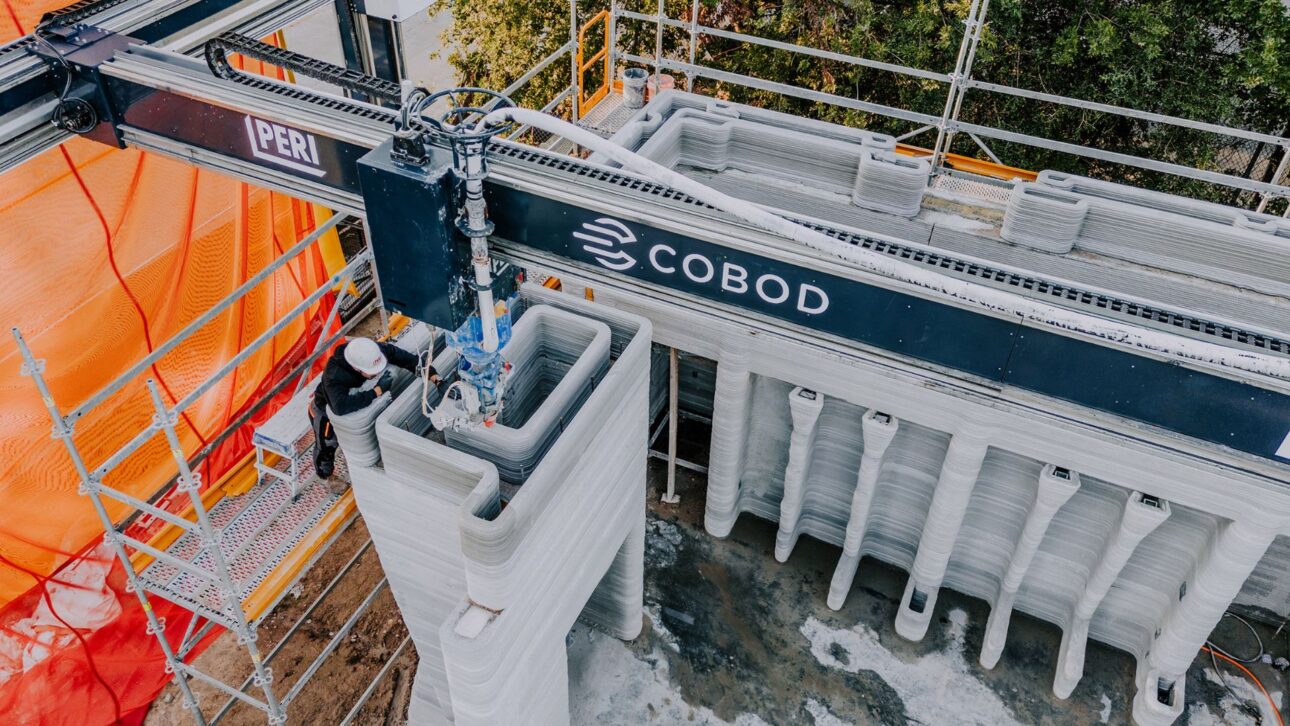
For civil defense and humanitarian organizations, this approach can provide more stable and sustainable shelters than tents, with better thermal insulation and greater climatic resistance.
The automated assembly also preserves the safety of teams, who avoid working in compromised structures or unstable terrain.
Nevertheless, disaster response requires clear protocols: geotechnical assessment, standardized designs and electrical and plumbing checks.
Printing is a key step but needs to integrate with the rest of the shelter.
3D Printing And Personalization In Construction
One advantage of the robotic model is personalization without increasing construction costs.
Changes in layout, curves, niches, and reinforcements can be updated directly in the digital file, without reprogramming the entire chain.
For housing developments, this allows for typological diversity with control over materials and time.
On the other hand, automation reduces exposure to physical risks — falls, repetitive tasks, material handling — and tends to qualify the labor force for operational, maintenance, and quality control functions.
The final cost per square meter depends on productivity, prices of inputs, transport of equipment, and integration with finishes.
There is still no consolidated public reference for cost per m² for Charlotte, a necessary step for comparison with other construction systems.
The financial metric will be decisive for adoption in housing programs and PPPs.
Construction Off Earth: Using Lunar Regolith
The developers plan to adapt Charlotte for extraterrestrial environments, utilizing lunar regolith, composed of dust and rock fragments.
The logic is similar: printing with what is available on site, avoiding transporting large volumes from Earth.
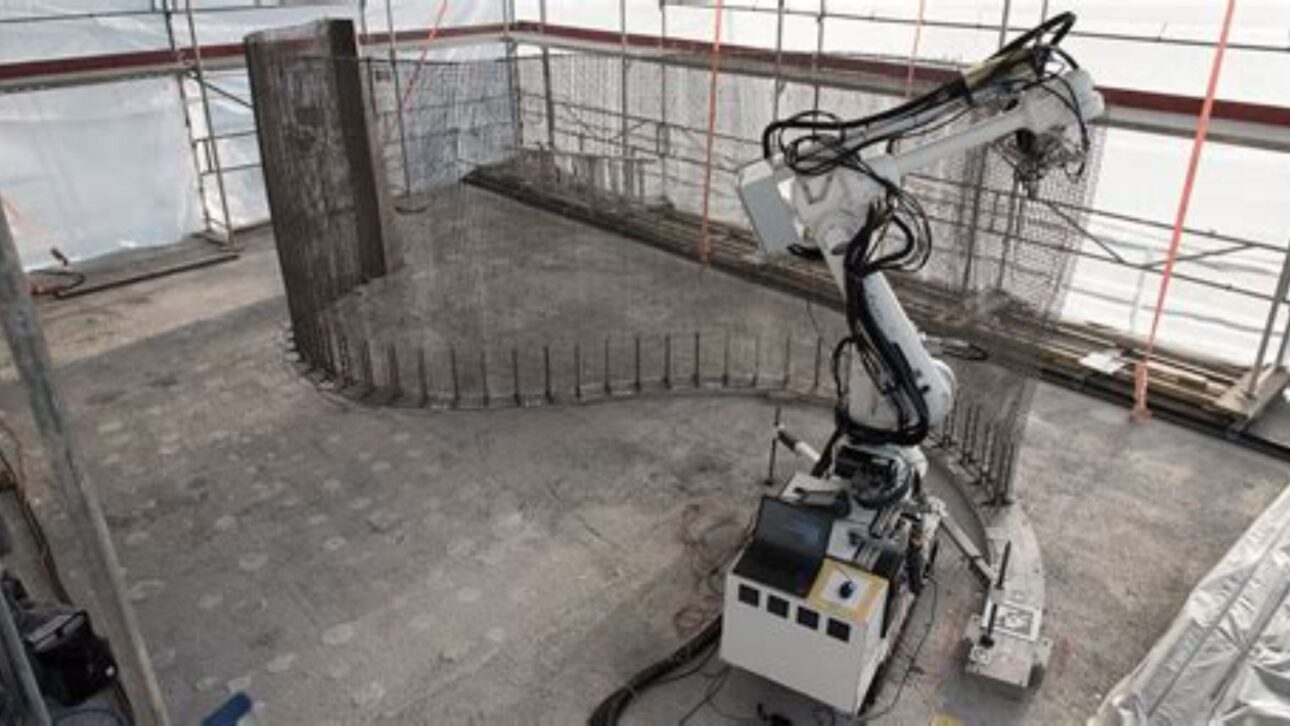
The same extrusion and compaction architecture could raise structural shells and barriers for radiation protection.
Although still experimental, this line of research links to the advancement of lunar missions and the trend of autonomous construction in extreme environments.
The technical learning can strengthen more robust solutions also in remote Brazilian regions.
Changes In The Profession And Training Of Masons
The idea that the robot will “end the mason” is simplistic.
Technologies like Charlotte tend to redistribute tasks and transform professional profiles.
The focus shifts from manual labor to machine operation, calibration, and finishing.
The demand for qualified professionals remains, but with new digital and technical skills.
Instead of eliminating jobs, the trend is upskilling.
Adoption should begin in niches with greater repeatability and material availability.
As standards and insurance mature, usage may expand to social housing, public buildings, and sustainable ventures.
Next Steps And Challenges To Scale The Technology
For the promise to become real housing delivery, validated pilots, performance testing according to national standards, and cost and life cycle studies are necessary.
It is also crucial to integrate 3D printing with roofing, installations and weather protection.
Simultaneously, public policies can prioritize low carbon methods, accelerating the approval of systems that use local materials.
If results are confirmed in the field, the combination of speed, sustainability, and personalization could open a new era in the construction industry.









Eu uso a plataforma https://pedreirorj.com para receber serviços de pedreiro para poder fazer reformas e construção civil no Estado do Rio de Janeiro. Será que eles vão contratar robôs para nós substituir?