





 Portuguese
  English
  Spanish
  6 min of reading
  0 comments


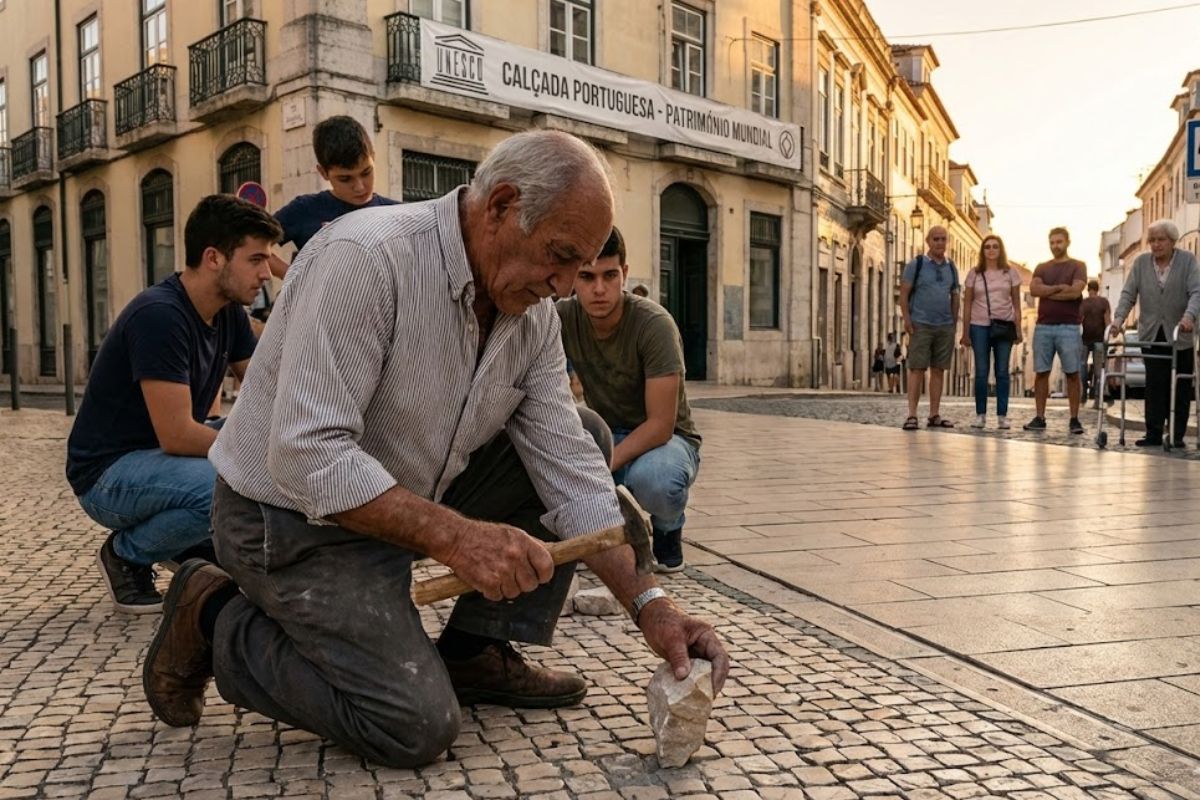
Historic Profession of Cobblestone Layers Resists in Lisbon with Low Wages, Few Apprentices, and Criticism from Residents, While Wheelchair Users Point Out Falls on Portuguese Sidewalks and the City Tries to Reconcile Preservation as a UNESCO Heritage with Safe Accessibility for the Elderly, Tourists, and Residents with Reduced Mobility in Steep, Narrow, and Busy Streets.
The white and black stone sidewalks that draw waves and figures on the ground of Lisbon are more than just a landscape: they support a Historic Profession that is now at risk of disappearing. For decades, residents have reported slips, falls, and wheelchairs getting stuck on the stones, and recently the Portuguese pavement became a candidate for UNESCO Cultural Heritage, reigniting the debate between preservation and accessibility.
According to the report from DW Brazil, among these stones works Vítor, 58, one of the few cobblestone layers still active in the capital. Ten years ago, he swapped his routine as a fishmonger and restaurant owner for the craft he learned at a training center, and our report traveled the streets with him and residents to understand if the Portuguese pavement still fits into today’s Lisbon.
Art on the Ground, Stumbles in Real Life

The sidewalks designed with small limestone and basalt stones have become the trademark of Portugal and a well-known postcard for many Brazilians. They are elaborate mosaics, handcrafted, that turn the ground into art.
-
Brazil Ignores Trump’s threats to BRICS, Buys 42 tons of gold and reduces the Dollar’s share by 6.45% in international reserves.

-
Havan buys historic football land in Blumenau for a million-dollar amount protected by a confidentiality clause and is already planning to change even the layout of streets to build a megastore in half-timbered style costing 80 million reais.
-
Mercado Livre “opens the vault” and announces a record investment of R$ 57 billion in Brazil in 2026, a value 50% higher than the previous year, with an expansion plan that includes 14 new logistics centers, totaling 42 units in the country and hiring an additional 10,000 employees.

-
How investment in technology can revolutionize the national economy and enhance industrial gains, according to a study that highlights the direct impact on productivity, innovation, and wealth retention within Brazil.


However, walking on these stones can be uncomfortable and even dangerous, especially when they are worn, loose, or poorly laid.
Diogo Martins knows this every day. A wheelchair user, he describes the effort to stay on the sidewalk when the wheels slip on the smooth stones.
In several sections, he is forced to descend into the street, competing for space with cars and buses. In certain spots, he reports that he completely lost control of his wheelchair, needing help from others to avoid falling.
In a more serious incident, his chair ended up breaking after one of those jolts.
For Diogo and other residents with reduced mobility, the beauty of the mosaics often does not compensate for the risk. They associate the Portuguese pavement with falls, twists, and the constant fear of getting hurt on a simple trip from home to work.
Historical Profession Pressured by Low Wages
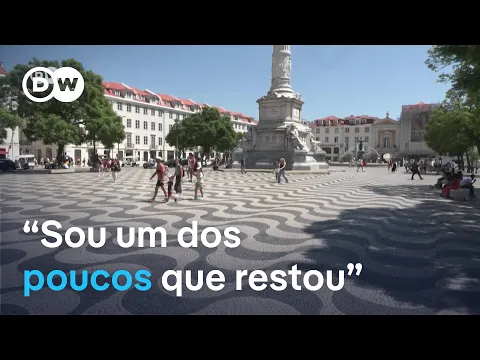

On the other side of this experience is Vítor, who proudly introduces himself: “I am a cobblestone layer.” He learned the craft a decade ago at a training center and today is one of the few professionals still working in Lisbon.
His job, in this report, was to register with stones on the ground the year of consecration of a church, creating a design that mixes devotion, memory, and technique.
However, the routine is tough. Pay is usually calculated by the area laid. The more square meters the cobblestone layer does in a day, the more he receives. This pushes a Historic Profession towards an accelerated and precarious work model, where the professional is tempted to rush through everything to manage to pay the bills.
Professor Nuno Serra, from the same center where Vítor trained, explains that the quality of the paving has been declining precisely because of these working conditions.
If the payment is low and the criterion is solely quantity, the result appears on the ground: poorly fitted stones, unevenness, holes, and sections that easily come loose. Criticisms of the Portuguese pavement, according to him, are directly linked to the low wages paid to cobblestone layers and the lack of time to do careful work.
At the same time, the number of apprentices is decreasing. With little money, little security, and little recognition, it becomes difficult to persuade young people to enter this Historic Profession, which demands intense physical effort, attention to detail, and years of practice to master the mosaic technique.
Tourism, Tradition, and the Race for UNESCO
Despite the complaints, the Portuguese pavement continues to be one of the most photographed symbols of the country. In Lisbon, mosaics with designs of caravels, rosettes, and geometric patterns have become a tourist attraction. The public administration sees this as a cultural and economic asset and, therefore, wants to preserve as much of these surfaces as possible.
Recently, the Portuguese pavement began competing for the title of UNESCO Cultural Heritage. Its defenders believe that this seal can transform the perception of the technique, reinforcing the idea that it is not just “loose stones,” but a craft that deserves investment, planning, and quality maintenance.
The expectation is that the candidacy strengthens the training of new cobblestone layers, brings in more resources, and pressures for stricter safety standards.
For those who live off the craft, like Vítor, international recognition would be a way to improve both the image and the working conditions.
He believes that if there is more institutional respect for the Portuguese pavement, there will also be more oversight, more training, and more care for what is done on the streets.
When Heritage Meets Accessibility
The enthusiasm for preservation, however, is not unanimous. Mário Alves, from the International Pedestrians Federation, and Diogo, the wheelchair user, argue that the uneven stones do not match a modern and truly accessible city.
For them, the problem has been known for a long time: the Portuguese sidewalks are slippery, uneven, and dangerous, especially on rainy days.
Lisbon has a very elderly population, which increases the risk. A fall that results in a leg or hip fracture can mean months of hospitalization, loss of autonomy, and even shorten life expectancy.
For these critics, insisting on mosaics in all neighborhoods means accepting that part of the population will live permanently in high-alert mode to avoid an accident.
Mário Alves points out another important fact: 98% of the city’s sidewalks are common, without significant artistic or historical value. In this immense percentage of streets, the stones are merely functional coverings, not monuments.
He argues that only the sections with artistic merit and heritage relevance should be preserved as they are, with mosaics carefully maintained.
By concentrating efforts where there truly is heritage, he says, it would be possible to free up the majority of the city for flatter, more regular, and safer solutions, like continuous pavements adapted for the elderly, people with disabilities, and strollers.
In Mário and Diogo’s view, this would allow for much better results than trying to maintain artisanal sidewalks everywhere, often without the necessary care.
A Possible Future for the Historic Profession of Cobblestone Layers
Curiously, Vítor himself does not oppose the idea of limiting the Portuguese pavement to certain areas. He agrees that new neighborhoods, with high traffic and an urgent need for accessibility, can adopt other types of pavement.
What he does not accept is seeing the Historic Profession of Cobblestone Layers disappear completely.
Vítor speaks of the craft as someone speaks of a great love. He remembers that his admiration started small, by observing the designs on the ground, and grew until it became a lifelong project.
Today he wants to do nothing else but lay stones. He imagines that in 30 years, there will be more qualified cobblestone layers, better wages, and higher quality sidewalks, both in tourist areas and in places where art truly makes sense.
In his view, Lisbon can be both modern and true to its traditions. The solution, he believes, lies in combining safe, flat pavements in higher circulation zones with well-executed sections of Portuguese pavement, where the mosaic is genuinely artistic and cultural heritage.
In this scenario, the city would preserve its identity without sacrificing the mobility of those who most need a stable floor.
For Vítor, the dream is simple yet ambitious at the same time: to keep the historic profession of cobblestone layers alive, with more respect, training, and recognition, while ensuring that no one has to choose between admiring the beauty of the ground and getting home in one piece after a walk.
And you, if you could decide on your street, would you prefer to keep the Portuguese pavement as it is or replace it with a flatter and safer surface for everyone?








-

-

2 pessoas reagiram a isso.