





 Portuguese
  English
  Spanish
  6 min of reading
  0 comments


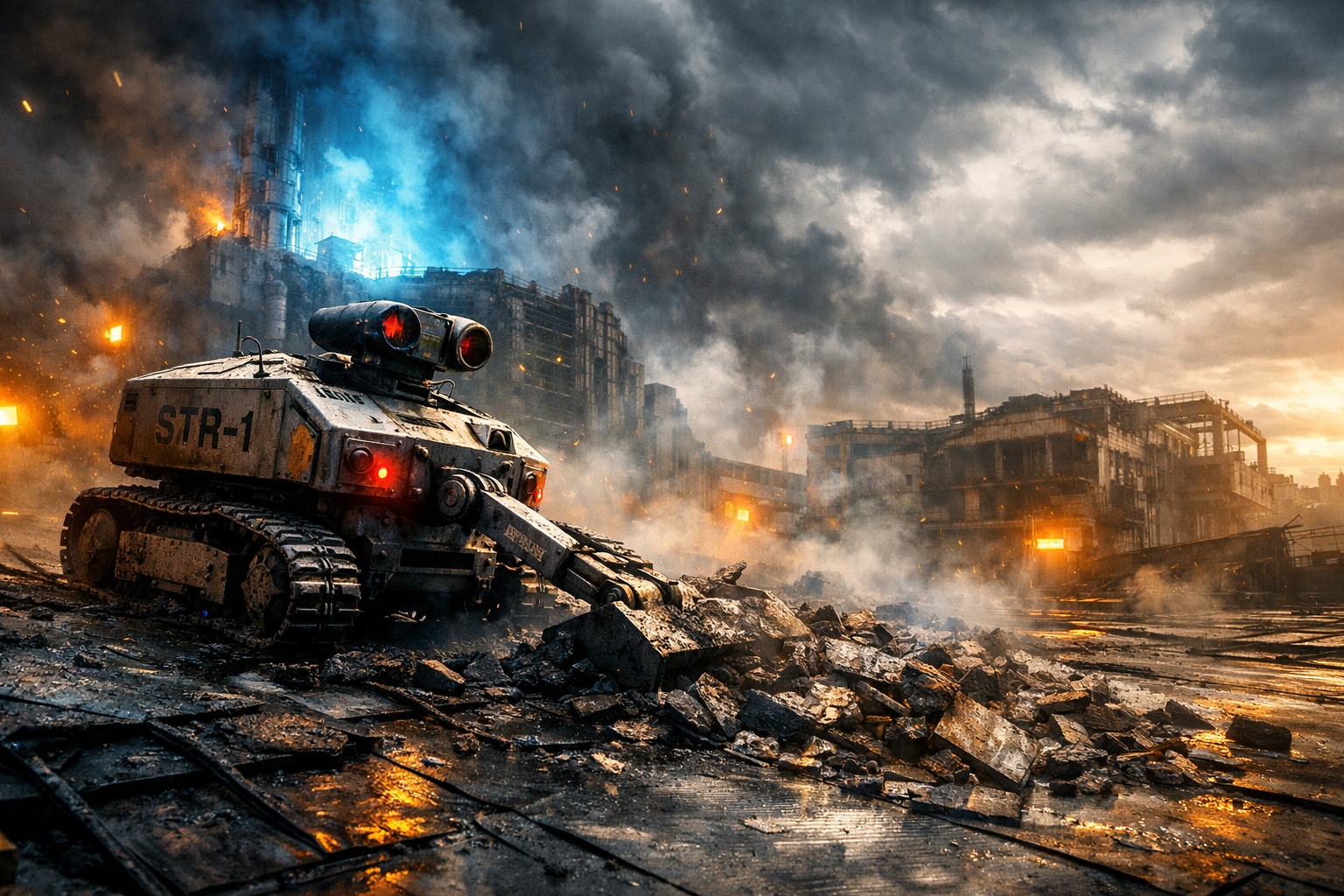
Designed with Technology from Soviet Lunar Rovers, the STR-1 Robot Was Sent to the Roof of the Chernobyl Reactor to Face Radiation of Up to 10,000 Roentgens and Help Clean Up the Most Contaminated Place on the Planet.
In April 1986, an explosion at the Chernobyl Nuclear Power Plant Reactor 4, in what was then the Soviet Union, triggered the largest nuclear disaster in history. The accident released massive amounts of radioactive material and scattered fragments of graphite and nuclear fuel over the reactor building and surrounding structures. These fragments turned the power plant roof into one of the most radioactive places ever recorded on Earth. In some areas, measurements indicated levels nearing 10,000 roentgens per hour, an intensity capable of causing death within minutes.
Removing this material was essential to allow the construction of the concrete sarcophagus that would seal the destroyed reactor. But there was a problem: no human could stay there long enough to perform the cleanup safely. It was in this scenario that Soviet engineers resorted to a technology originally created to explore another world. The solution came from a robot inspired by the vehicles that had been designed to operate on the Moon.
The Disaster That Turned a Roof into a Radioactive Hell
When Reactor 4 exploded in the early hours of April 26, 1986, the reactor core was destroyed, and tons of nuclear material were thrown into the environment. Among the debris scattered were highly radioactive graphite blocks, used inside the reactor to moderate the nuclear reaction.
-
In Mexico, a 3,000-year-old Maya site with the dimensions of an entire city may have been built as a colossal map of the cosmos, created to represent the order of the universe and reveal how this people organized space, time, and rituals.
-
Japan wants to build a solar ring of 10,900 kilometers on the Moon to continuously send energy to Earth.
-
Weighing almost 1 ton, with temperatures of up to 3,000°C, the ability to launch 10,000 fragments within a radius of 1 km, capable of penetrating concrete and melting steel, Turkey’s terrifying bomb emerges as one of the most destructive non-nuclear weapons ever presented.

-
After a submarine disappeared beneath the “Doomsday Glacier,” scientists announce a new monstrous machine capable of operating at 3,000 meters depth to return to the heart of the ice and investigate a threat that could raise sea levels worldwide.

These blocks, many the size of suitcases or boxes, were thrown onto the roofs of neighboring power plant buildings. The problem was that these fragments became intense sources of gamma and beta radiation.
In specific areas of the roof, radiation levels were so high that:
- electronic equipment failed rapidly
- cameras burned out
- sensors stopped working
- humans could die within minutes
In some regions, levels reached thousands of roentgens per hour, an amount of radiation virtually impossible to endure. The removal of these fragments was urgent. If left exposed, they could continue to release radioactive dust and hinder the construction of the containment structure.
The Idea of Using Robots to Face Chernobyl’s Deadly Roof
Initially, Soviet engineers envisioned that robots could perform the cleanup without exposing people to radiation. The Soviet Union had significant experience in robotics, primarily due to its space program. Engineers responsible for the Lunokhod lunar rovers, which had explored the Moon’s surface in the 1970s, were called in to help.
Among them was Alexander Kemurdzhian, one of the lead designers of the Soviet lunar vehicles. His team was given an urgent mission: to create machines capable of operating in the most radioactive environment on the planet.
The Failure of Dozens of Robots Sent to Chernobyl
Before the arrival of the STR-1, several robots were sent to try to clean the roof. In total, about 60 different robots were tested on-site.
Among them were:
- adapted industrial robots
- remotely controlled vehicles
- machines sent by European countries
Some equipment even came from West Germany, including robots known as MF-2 and MF-3. But almost all failed quickly. The extreme radiation destroyed sensitive electronic components, causing the systems to stop functioning after only a few minutes of operation.
In many cases, the robots simply froze or lost control. These failures made it clear that the technological challenge was much greater than anticipated.
The Birth of the STR-1 Robot
Faced with previous failures, Soviet engineers decided to build a machine specifically designed to operate in that environment. The result was the STR-1 (Specialized Transport Robot).
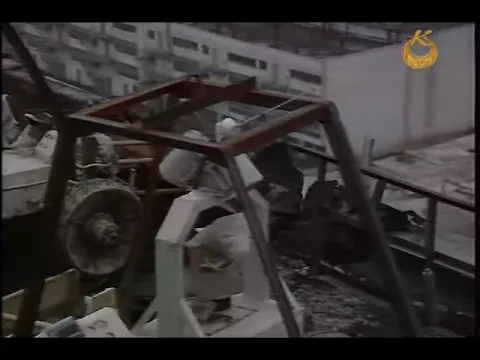

The robot was developed using concepts derived from Soviet lunar vehicles, designed to operate in hostile environments and be controlled remotely. The STR-1 had several important features:
- robust chassis with tracks
- remote control system
- radiation-shielded electronics
- heavy metal structure to withstand impacts
The vehicle weighed about 1.1 tons and was powered by special batteries. It was designed to push radioactive fragments and move materials inside the destroyed reactor.
The Mission on the Most Radioactive Roof on Earth
The STR-1 began operations at the power plant months after the accident. Its task was to clean areas of the roof covered by blocks of graphite and highly radioactive debris. The robot was remotely controlled by operators positioned in radiation-protected areas.
During operations, the vehicle slowly advanced over the roof, pushing fragments into the reactor or to areas where they could be collected later.
Each mission needed to be carefully planned, as the environment was extremely hostile. Even with radiation-shielded electronics, the robot’s circuits also suffered from prolonged exposure to radiation. Nevertheless, the STR-1 managed to operate long enough to remove a significant portion of the material.
The “Biorobots”: When Soldiers Had to Replace the Machines
Despite technological efforts, the robots could not do all the work. Many areas of the roof remained covered with radioactive fragments. It was then that Soviet authorities made a dramatic decision.
Soldiers were sent to manually clean the roof. These soldiers informally became known as “biorobots” because they were replacing the machines that could not operate in that environment. In total, about 3,828 soldiers participated in this operation.
Each of them was authorized to remain in the most contaminated area for only 40 to 90 seconds. During this extremely short time, soldiers had to:
- run to the roof
- collect graphite blocks
- push debris back into the reactor
- quickly return to the safe area
This operation was one of the most dangerous phases of the Chernobyl cleanup.
The Race Against Time to Build the Sarcophagus
Cleaning the roof was just part of a larger objective. Soviet engineers were constructing a massive structure of concrete and steel known as the Chernobyl Sarcophagus.
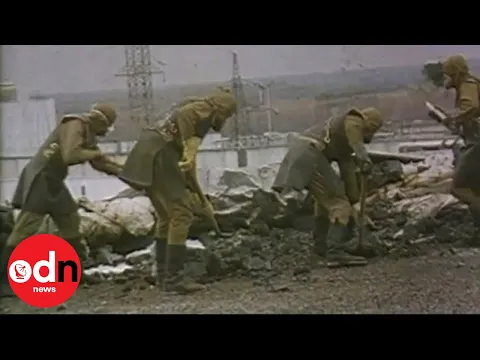
This structure was intended to seal the destroyed reactor and prevent more radioactive material from being released into the environment. For construction to be possible, the roof needed to be relatively clean. Radioactive fragments could fall on workers or interfere with the construction of the structure.
The removal of these materials was crucial to ensure the sarcophagus was completed in 1986.
The Fate of the Robots That Faced Chernobyl
After the cleanup operations, many pieces of equipment used in the disaster became contaminated. Several vehicles, helicopters, robots, and machines were abandoned in areas near the power plant.
These sites became known as the Chernobyl Vehicle Graveyards. There, hundreds of machines that participated in the emergency operation remain to this day. The STR-1 itself was eventually deactivated after suffering radiation damage.
Even so, its participation marked one of the first attempts to use robotics to face a nuclear disaster.
The Technological Legacy of Chernobyl Robotics
The experience gained in Chernobyl had a lasting impact on the development of robots for extreme environments. Since then, similar technologies have been utilized in various fields.
Among them are:
- nuclear reactor inspection
- decommissioning of radioactive facilities
- space exploration
- submarine operations
- response to industrial disasters
The Chernobyl accident demonstrated that, in certain environments, robots can be the only safe way to perform essential tasks.
Even with their limitations, machines like the STR-1 paved the way for a new generation of robots designed to operate where humans cannot go. Today, decades after the disaster, the story of these robots remains an impressive example of engineering applied in an unprecedented emergency situation.







-

Uma pessoa reagiu a isso.