





 Portuguese
  English
  Spanish
  4 min of reading
  1 comment


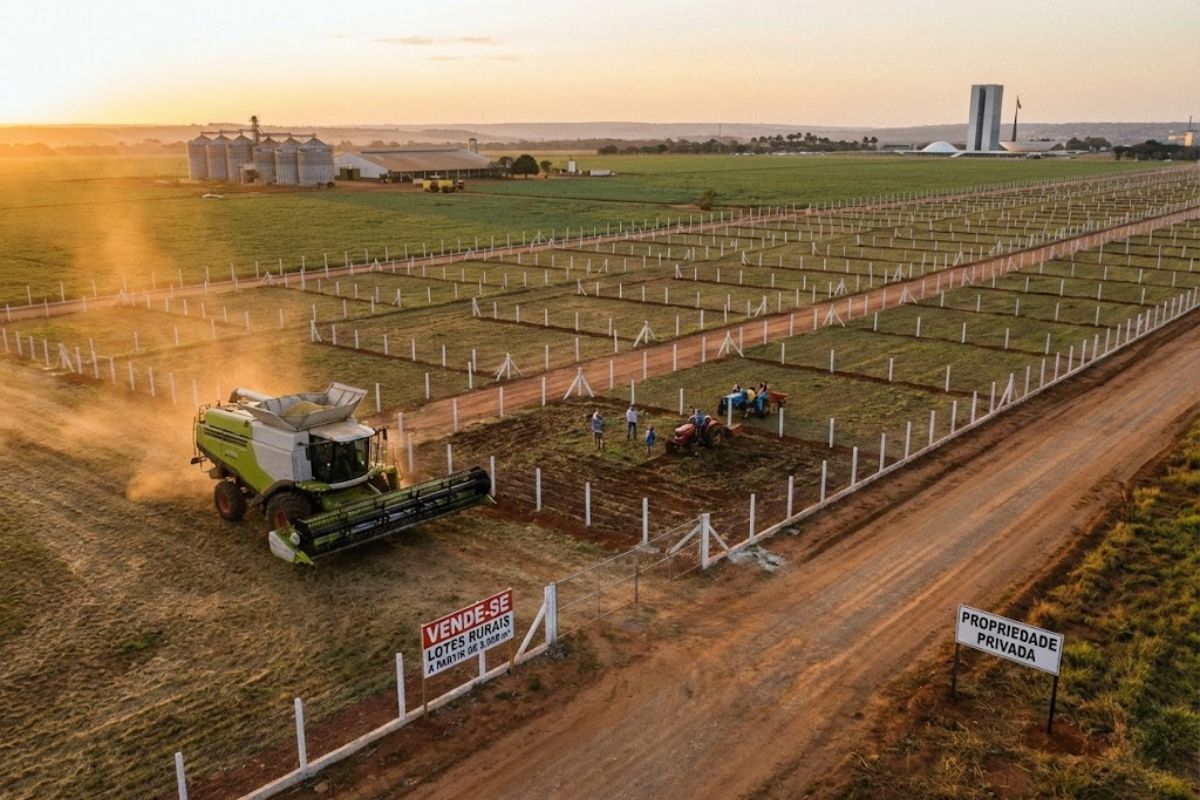


Bill 6088/2023, which Redefines the Minimum Fraction of Rural Property to 0.5 Hectares Nationwide, Advances after Approval in the CCJC and Raises Concern over Negotiations, Registrations, Inheritances, and the Future of Brazil’s Land Structure, by Allowing Smaller Plots in Productive Areas, Especially Horticultural and in Highly Populated Rural Zones.
The bill 6088/2023, which reduces the minimum size of the rural property to 0.5 hectares (5,000 m²) as the minimum subdivision fraction throughout Brazil, has just advanced in Brasília after being approved by the Commission of Constitution, Justice and Citizenship of the Chamber of Deputies. The proposal amends Law No. 5,868, created in 1972, which for over 50 years has guided the land division model in rural Brazil, and now moves on for analysis in the Federal Senate.
In practice, the change directly affects the backbone of the land structure, as it standardizes a rule that today is defined municipality by municipality and rarely allows areas smaller than 2 hectares. The reduction of the minimum fraction of rural property reignites the debate on land concentration, access to productive areas, formalization of properties, and the impact on small producers and heirs.
What Changes in the Minimum Fraction of Rural Property
The minimum fraction for subdividing rural property (FMP) is, in simple terms, the smallest area in which a rural property can be legally subdivided.
-
Banco do Brasil sues famous influencer for million-dollar debt and intensifies debate on delinquency, risks of seizure, and direct impact on Gkay’s credibility.

-
The Senate approves a bill that criminalizes misogyny, hatred, or aversion towards women, and includes the crime in the Racism Law with a penalty of up to 5 years.

-
Chamber Approves Bill That Allows Pepper Spray for Women Over 16 and Imposes Strict Rules for Purchase, Possession, and Use as Self-Defense

-
Chamber Approves Law to Combat Leucaena, Fast-Growing Plant That Dominates Land and Threatens Native Species in Various Regions of the Country


This parameter guides operations such as selling pieces of land, subdivisions, inheritances, and the formation of new small properties.
Today, this minimum fraction varies by municipality and, according to a legal analysis cited in the discussion of the project itself, it usually does not go below 2 hectares.
With the new text, the FMP would be standardized at 0.5 hectares, meaning 5,000 square meters for any rural property in the country.
In practice, it would be allowed to register plots much smaller than those currently accepted in most municipalities, which opens the door for a new design of properties, especially in regions of small-scale intensive agriculture.
How the Minimum Fraction Rule Works Today
Under current regulations, areas below the minimum fraction cannot be registered at the notary or registered with Incra.
This means that even if someone tries to negotiate a piece of land smaller than the permitted minimum, this transaction cannot become a registered rural property, with its own enrollment.
These minimum dimensions are decisive for negotiations, sales, financing, land regularization, and inheritance transfer.
In many cases, it is precisely the minimum fraction that prevents a rural property from being successively subdivided, maintaining a certain minimum size to ensure economic viability or avoid excessive fragmentation.
With the proposed change, it would become possible to register much smaller rural properties, as long as the new minimum of 0.5 hectares set forth in the project is respected.
This opens different scenarios for both those who want to divide property and those who rely on land for production.
Why the Author of the Project Advocates for Smaller Areas
In the official justification, the author of the bill, federal deputy Zé Trovão (PL), argues that technological advancements in the field allow for high productivity even in small areas, ensuring income and sustenance for rural families.
He especially cites the reality of the horticultural sector, where well-managed small plots can generate intense production year-round.
According to this argument, it no longer makes sense to maintain a minimum fraction of rural property thought out in the 1970s, when technology, inputs, mechanization, and technical assistance were very different from today’s scenario.
The reduction of the FMP would, in the parliamentarian’s view, be a way to adapt the law to the current reality of smaller scale production, but with high efficiency.
What Could Change for Businesses, Registrations, and Rural Families
If the project is also approved in the Senate and sanctioned, the new minimum fraction of rural property could directly impact negotiations, real estate registrations, and the land configuration in rural Brazil.
Property owners who today cannot formalize subdivisions below 2 hectares could, in theory, open new registrations starting from 0.5 hectares.
This would have repercussions on purchases and sales, inheritance divisions, the establishment of small properties, and the regularization of areas occupied by rural families, particularly in regions where intensive production in smaller areas is already a reality.
At the same time, experts warn that the redesign of the land structure needs to be closely monitored to avoid distortions and conflicts, since any change in the rule of rural property reverberates for decades in the organization of agricultural territory.
In your opinion, does reducing the minimum fraction of rural property to 0.5 hectares help or harm those who live and produce in rural Brazil?










ACHO QUE AJUDA MUITO, POIS A MUITOS IMÓVEIS RURAIS HOJE NO BRASIL COM AREA ABAIXO DE 1 HECTARES COM MAIS DE UM PROPRIETÁRIO, DEVIDO A DIVISÃO DE HERANÇA PARA VARIOS FILHOS, MAS QUE FICA TODOS EM COMUM, PORTANTO CONCORDO COM O REGISTRO DE 0,5 HECTARES NOS CARTÓRIOS DE IMÓVEIS RURAIS, POIS TENHO MUITOS CLIENTES COM ESSE TIPO DE PROBLEMAS, ENG. JOSÉ ROBERTO NOBILE.