





 Portuguese
  English
  Spanish
  5 min of reading
  1 comment


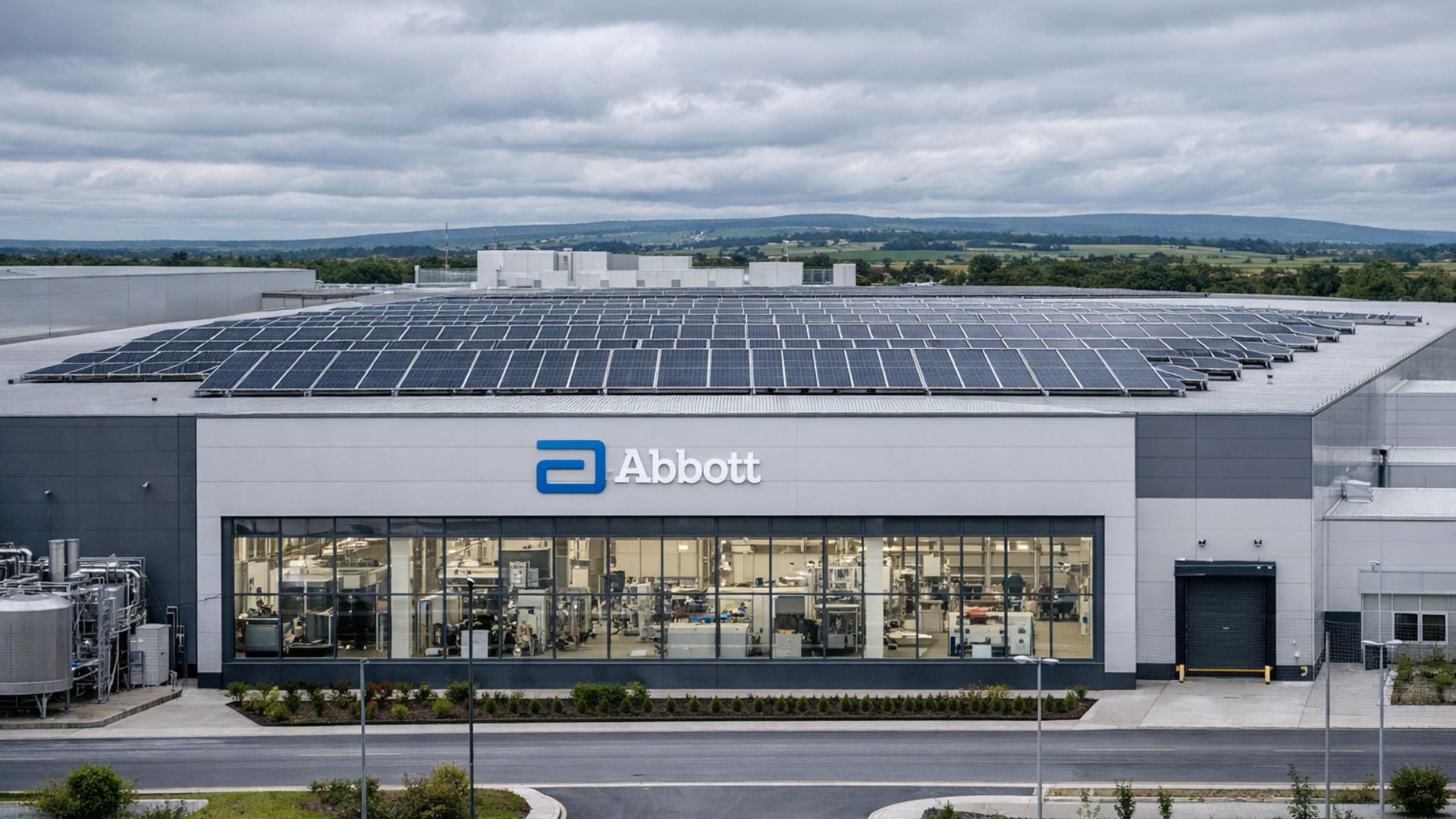


Industrial Investment Combines Production of Diabetes Sensors, Total Electrification of Infrastructure, Rooftop Solar Generation, and Job Expansion in Ireland, Positioning the Country as Strategic Base for Abbott to Meet International Demand for Continuous Glucose Monitoring.
Abbott opened a new factory in Kilkenny, Ireland, on November 18, 2024, covering 30,000 square meters, dedicated to the production of FreeStyle Libre 3 sensors, used for continuous glucose monitoring by people with diabetes.
According to the company, the facility is part of a €440 million investment package in the country, split between Kilkenny and an expansion in Donegal, and has been designed to operate entirely electrically, using heat pumps and solar panels installed on the roof.
According to Abbott, the project is linked to the expansion of industrial capacity to meet the growing global demand for continuous glucose monitoring devices.
-
The section of Serra da Rocinha on BR-285 is now open in Timbé do Sul: 50 m tensioned curtains and top-down technique stabilize the slope, with a stairway duct controlling the water.

-
Scientists use sawdust mixed with clay to create a lighter brick, promising efficient thermal insulation and impressing by transforming waste into a solution for construction.

-
With a DNA shape, this bridge in Singapore draws attention in modern architecture and surprises tourists by transforming a simple crossing into an unforgettable visual experience in the urban heart.

-
Giant underwater pipeline begins to take shape with a R$ 134.7 million project at the Port of Santos: the 1.7 km structure uses 12-meter and 700 mm pipes to supply water to 450,000 people in Guarujá.


In a corporate statement, the company claims that the Kilkenny plant was planned as a global center of excellence in manufacturing for the diabetes care business and will concentrate the highest global production of FreeStyle Libre sensors.
Production of FreeStyle Libre 3 and Global Role of the Factory
The new facility is directly associated with FreeStyle Libre 3, presented by Abbott as the latest version of its continuous glucose monitoring system.
In the material released during the inauguration, the company describes the Libre 3 as “the smallest sensor in the world”, reinforcing the technical attributes of the product within a portfolio that, according to corporate data, is already used by over 6 million people in more than 60 countries.
Although highlighting the increase in production capacity, Abbott did not disclose public estimates of annual production volumes, detailed timelines for industrial ramp-up, or the list of markets that will be supplied from Ireland.
Nonetheless, in stating that the plant will have the largest global production of the Libre line, the company indicated that Kilkenny will play a central role in the international supply chain of the product.
Jobs, Abbott’s Presence in Ireland, and Economic Impact

According to the company, the factory will employ over 800 people.
The inauguration ceremony brought together Abbott executives and Irish officials, including Taoiseach Simon Harris and the company’s CEO, Robert Ford.
The government’s involvement was presented as part of the recognition of the economic impact of the investment.
The state agency IDA Ireland, responsible for attracting foreign investments, highlighted in the announcement that this is Abbott’s tenth facility in the country.
Furthermore, the company stated that its Irish operation comprises around 6,000 employees spread across 10 sites, with activities in different regions.
In addition to the new factory in Kilkenny, Abbott reported that the €440 million package includes an expansion in Donegal, expected to create approximately 200 jobs.
The company did not detail how much of the total investment was allocated to each location nor did it present public export targets specifically linked to the new plant.
100% Electric Infrastructure and Use of Renewable Energy
The “100% electric” nature of the factory was presented by Abbott as part of the project’s engineering concept.
According to the company, the facility was built “with sustainability in mind” and operates entirely on electricity, based on six air-water heat pumps.
The company also reported the installation of about 600 solar panels on the roof of the building.
According to the statement, the complex also has rainwater harvesting tanks, used in internal processes of the plant.
These elements were described as part of the project’s infrastructure, without the disclosure of detailed quantitative indicators.
No information was provided, for example, on the installed capacity of the photovoltaic system, the fraction of total consumption supplied by solar generation, the estimated annual energy consumption, or data on electrical redundancy or emergency generation.
The available information so far is limited to what was officially disclosed by Abbott and reported by the press.
Industrial Electrification and Limits of Technical Transparency
The adoption of an entirely electric model in an industrial plant often attracts attention because manufacturing processes usually concentrate a large part of energy consumption on climate control, water heating, and environmental control.
Industry experts point out that this type of infrastructure is particularly relevant in environments that require strict temperature and humidity control, such as those related to the production of medical devices.
In the specific case of Kilkenny, Abbott has not made a complete technical report of the project public.
What is known, based on the information released, is that the company opted for air-water heat pumps as the central element of the system, combined with rooftop solar generation and water reuse.
There is currently insufficient public data to assess the detailed energy performance of the facility or its long-term operational indicators.
Continuous Glucose Monitoring Market and Capacity Expansion
The factory opening comes at a time of expansion in the global market for diabetes technologies and continuous glucose monitoring.
Specialized reports highlighted the opening of the facility as part of Abbott’s strategy to increase production capacity for Libre 3, in a scenario of rising adoption of this type of device.
The Irish Times described the Kilkenny plant as the largest worldwide production center for these sensors.
Abbott, in its communications, related the investment directly to the need to meet a growing international demand, without detailing which regions will be prioritized for supply from Ireland.
Irish Government Strategy and Regional Development
Irish authorities treated the investment as a reinforcement of the country’s positioning in the health and advanced manufacturing sector.
In the material released by Abbott, Simon Harris linked the new facility to the company’s historical presence in Ireland and the relevance of the medical technology sector to the local economy.
IDA Ireland also associated the project with a strategy for decentralizing jobs, focusing on attracting investment to regions outside major urban centers, such as Kilkenny.
This approach appears repeatedly in official announcements, alongside data on job creation and expansion of the industrial base.
At the same time, technical issues related to energy consumption, the autonomy of the electrical system, and specific efficiency targets remain publicly undisclosed, which limits more in-depth analyses of the operational reach of the adopted model.







Robert Ford é brasileiro de são Paulo