





 Portuguese
  English
  Spanish
 3 min of reading
  0 comments


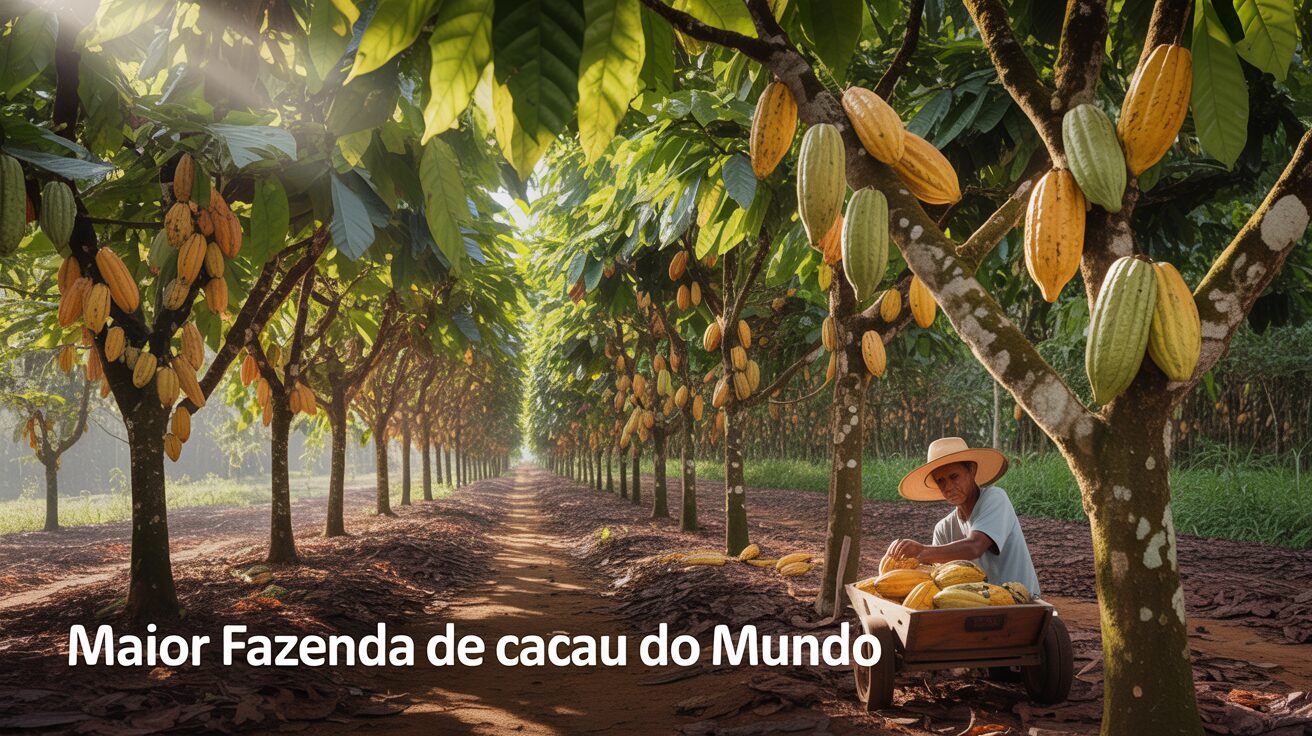
World’s Largest Cocoa Farm in Bahia to Receive US$ 300 Million Investment and Promises to Generate New Jobs and Income. Understand Why the Owner of Schmidt Agrícola is Called the ‘King of Cocoa’.
A new and ambitious project was announced on April 28 and promises to radically transform the global cocoa market. This is the establishment of the world’s largest cocoa farm, which will be built in the cerrado of west Bahia, a region that until now was not traditionally associated with the cultivation of this commodity. Leading the project is businessman Moisés Schmidt, of Schmidt Agrícola, who gained national and international prominence after being nicknamed the King of Cocoa for revealing an impressive investment of US$ 300 million in the sector. The initiative not only reposition Brazil as a strategic player in global cocoa production but also signals a new era for high-performance agriculture in Bahia.
With cutting-edge technology, modern cultivation techniques, and a focus on industrial scale, the expectation is that the venture will boost the local economy and alter the balance of the global supply of the raw material used in the production of chocolates and derivatives.
Brazil Could Become a Major Player in the Global Cocoa Market
The million-dollar investment will be directed to Riachão das Neves (BA), an area larger than the island of Manhattan, fortified, irrigated, and aimed at the production of high-yield cocoa trees. According to the King of Cocoa, he believes that the country will become the cocoa hub of the world and is confident that Brazil can gain significant prominence and leadership in the segment.
-
With 74% of companies facing difficulties in hiring, technicians and engineers in renewable energy are becoming scarce in Brazil and are essential to support the expansion of solar, wind, and green hydrogen projects.

-
Historic bankruptcy of Centauro shocks the market, and the century-old company puts more than 500,000 products, machines, and complete infrastructure up for online auction.

-
New shoe factory in Ceará is expected to create 400 jobs and strengthen the local economy.
-
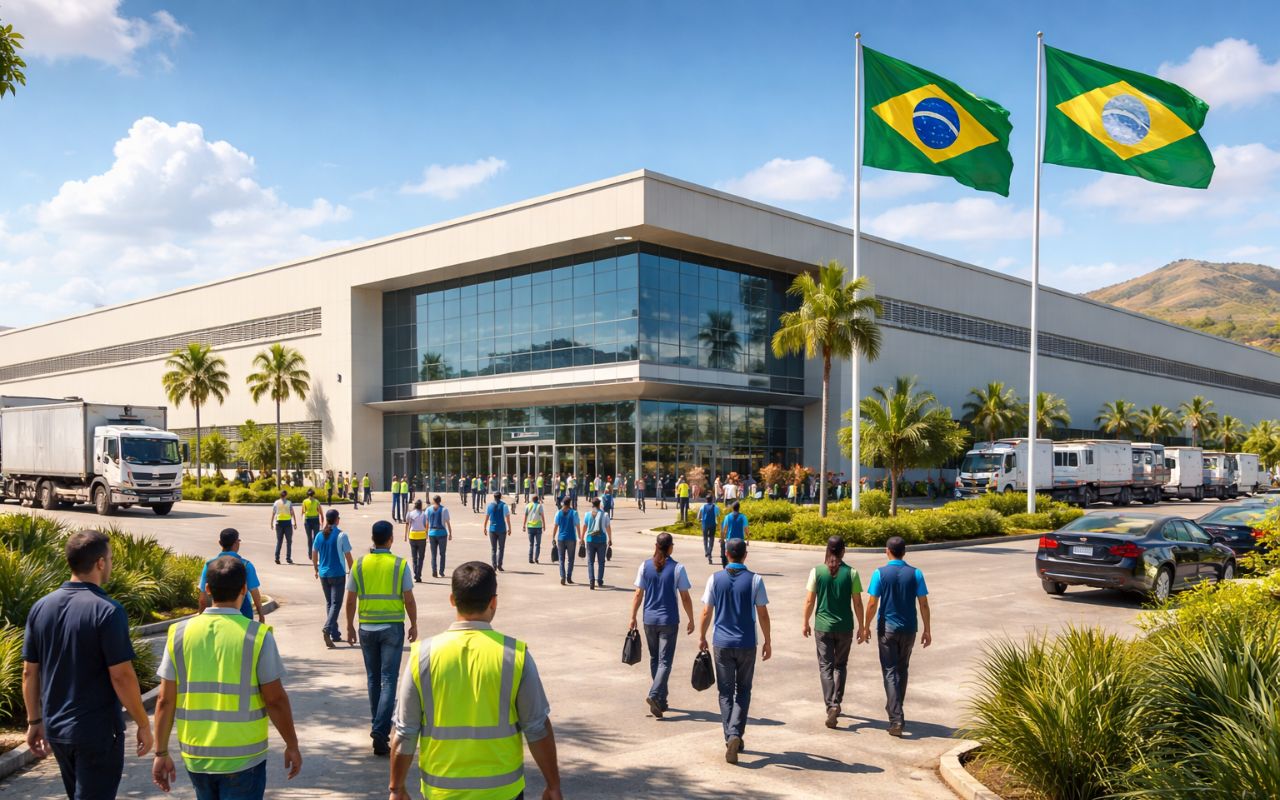
No one imagined it, but a mixture of sawdust with a mineral that fights fires surprises scientists with a result that changes the course of fire-resistant construction.

The plan involves the deployment of cocoa trees on 10,000 hectares, with a density of 1,600 trees per hectare, while conventional plantations have around 300. The expectation is to revolutionize productivity: the first 400 hectares already show productivity of 3,000 kg per hectare, which is 10 times above the national average and 6 times higher than that of Ivory Coast. The goal is to reach 4,000 kg per hectare.
The world’s largest cocoa farm in Bahia utilizes micro-sprinkler irrigation technology, precision agricultural management, and seedling propagation through positive selection. To ensure high-quality seedlings, the businessman also created BioBrasil, the world’s largest cocoa seedling nursery, with a production capacity of up to 10 million seedlings annually.
Megaproject Partners with Industry Giants
According to Tales Rocha, an agronomist at TRF Consultoria, the method used at the farm is revolutionary. Within 5 years, everything currently known about cocoa production may be outdated. The venture of the “King of Cocoa” is attracting the interest of industry giants.
Cargill, for example, is involved in the initial phase of cultivation and is negotiating the expansion of the partnership. The world’s largest supplier of cocoa and chocolate products, Barry Callebaut, has also signed an agreement to establish a 5,000-hectare farm in Bahia. Meanwhile, Mars, the manufacturer of M&Ms and Snickers, has set up a testing field close to the project.
For the producer, the investment remains viable even at prices of US$ 4,000 per ton, becoming highly profitable above US$ 6,000, the current market level. Currently, about 5 million tons of cocoa are consumed annually worldwide, but demand could reach up to 10 million by 2050, according to the International Cocoa Organization.
Main Challenges of the World’s Largest Cocoa Farm in Bahia
Despite the excitement, the venture also raises some concerns. Karina Peres Gramacho, a plant pathologist at CEPLAC, warns of the risks of mass use of genetic clones, which may favor the spread of diseases such as Witches’ Broom, responsible for decimating plantations in the 1980s.
Moreover, there are doubts about the sensory quality of cocoa grown in full sun. However, tests by Mars and the Cocoa Innovation Center show that there is no noticeable loss of quality, reinforcing that the greater differentiator lies in post-harvest care, such as fermentation and drying.
According to Moisés Schmidt, there is technology, qualified professionals, and now a historic opportunity for Brazil to dominate this new era of cocoa cultivation.








Seja o primeiro a reagir!