





 Portuguese
  English
  Spanish
  3 min of reading
  0 comments


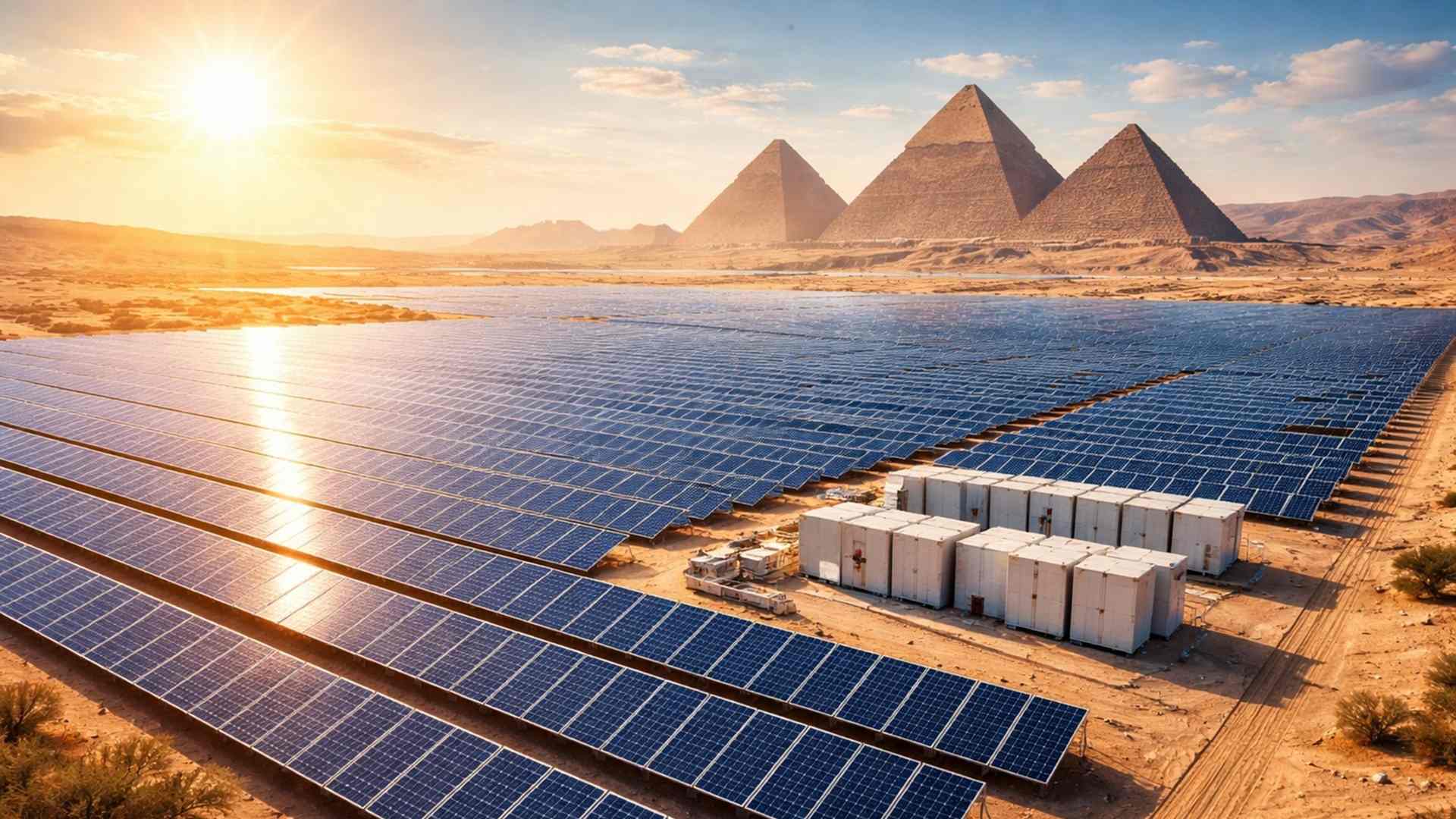
With Installed Capacity of 1 GW in Solar Energy and Storage System of 100 MW/200 MWh, the Hybrid Project Led by Scatec in Southern Egypt Reaches Financial Close with Support from the African Development Bank and Consolidates the National Strategy to Increase Renewables by 2030
Egypt signed a financial close agreement with the Norwegian Scatec for the construction of a 1.0 gigawatt solar hybrid project with 100 megawatts/200 megawatt-hours battery storage, marked by financing from multilateral institutions, in a significant step of the national strategy to increase renewables by 2030.
International Investment and Financing Confirmed
The Egyptian government and renewable energy company Scatec ASA reached a financial close in June 2025 for the 1 GW solar project, according to an official statement and a report from Reuters.
The agreement allows the venture to enter the construction phase, with a total estimated investment of around US$ 600 million, according to an official statement from the Egyptian cabinet.
-
Seagri’s headquarters invests in solar energy with Neoenergia Coelba and promises to cut electricity costs, highlighting a strategic advance in sustainability and energy efficiency within state public administration.
-
Solar Pyramid draws attention by converting solar energy into million-dollar savings and repositioning the City Hall of Curitiba as an example of innovation, sustainability, and intelligent use of public resources.
-
Europe records strong euro economy with solar energy in March and sparks curiosity about which country leads growth that redefines the energy market and reduces costs.
-
Piauí reaches a historic milestone in energy transition: State records nearly 160,000 households powered by solar energy and leads growth in the Northeast.
A substantial part of the financing comes from development institutions, including the European Bank for Reconstruction and Development (EBRD), the African Development Bank (AfDB), and the British International Investment (BII), in a non-recourse project financing model.
Technical Structure and Operational Capacity of the Project
The project combines photovoltaic solar energy with a battery storage system with a capacity of 100 MW and 200 MWh, integrating generation and flexibility to provide energy more consistently to the grid.
Development will occur in planned phases, with a technical completion forecast by mid-2026, according to planning estimates released by the AfDB, which supports the venture.
This installed capacity places the project among the largest solar energy investments with storage in Africa, considering the increased share of renewables in the national and regional power matrix.
Role of Multilateral Institutions in Financing
The African Development Bank (AfDB) confirmed significant financial support for the project, with the prospect of completing the financing cycle and supporting its operation until the third quarter of 2026.
The AfDB stated that the project is expected to generate approximately 2,772 gigawatt-hours of clean energy per year once fully operational, reinforcing its contribution to carbon emissions reduction and increasing installed renewable capacity.
This co-financed mobilization exemplifies the collaboration between development institutions and private actors to enable large-scale infrastructure in emerging countries, according to clean energy promotion policies.
National Energy Strategy and Renewables Targets
Egypt has set a target to achieve 42% of its electricity generation matrix from renewable sources by 2030, according to widely reported official statements in international news.
Despite the country’s strong solar potential—benefiting from high irradiation rates—the government acknowledges that the expansion of projects of this scale depends on the continuity of partnerships and international financing to integrate large-scale generation and storage.
Additional Renewable Energy Agreements in Early 2026
In January 2026, the Egyptian government announced renewable energy agreements worth US$ 1.8 billion, including solar and storage projects with international companies, expanding the scope of investments beyond the 1 GW project.
Among these agreements is the development of a project with a total capacity of up to 1.95 GW of solar energy and 3.9 GWh of storage under a power purchase agreement (PPA) with the state-owned Egyptian Electricity Transmission Company (EETC), involving Scatec and other institutions.
These contracts are part of a broader effort to accelerate the energy transition, but officials warn that the 42% target may be compromised without additional support and capital.
Expected Impacts and Challenges
The construction of projects like the 1 GW battery installation helps alleviate the country’s dependence on fossil fuels and strengthens electrical infrastructure with more stable and cleaner sources.
However, analysts and development institutions highlight that such ventures require not only robust financing but also regulatory cadences, network interaction planning, and long-term agreements for effective integration into the national power system.
The advancement of these renewable energy projects with storage also positions Egypt as a relevant player in the expansion of clean technologies on the African continent, in line with sustainable development initiatives and national and international climate goals.
This article was based on reports from Reuters and official statements from the African Development Bank (AfDB),









Seja o primeiro a reagir!