





 Portuguese
  English
  Spanish
  3 min of reading
  0 comments


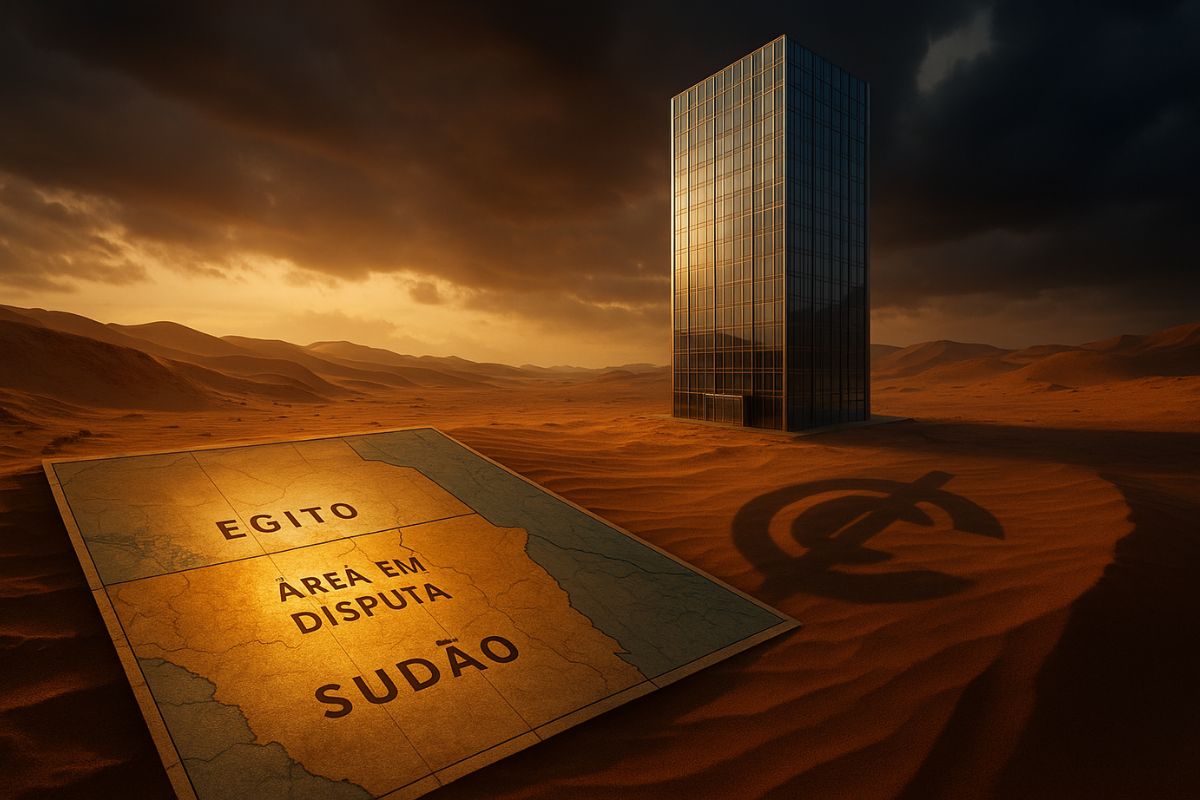
The 1st Corporate Country on the Planet Emerges as Bold Proposal from Writer J. Helios, But Experts Warn of Megalomania and the Dangers of Replacing Politics with Business Models.
The so-called Taured Project gained international attention by proposing the creation of the 1st Corporate Country on the Planet, governed entirely as a private company. The initiative, publicized by the author J. Helios and reported by Monitor Mercantil, envisions the purchase of disputed lands between Egypt and Sudan to found a nation managed by a chairman and CEO, in a system dubbed Corporarchy.
Although marketed as innovation, the plan raises serious concerns. Analysts consulted by Monitor Mercantil argue that the proposal mixes concepts of sovereignty with corporate management, which opens the door to concentration of power, democratic risk, and uncertainties regarding fundamental rights. The idea prompts debates about how far corporations can influence global political life.
How the “Country-Company” Would Work
According to J. Helios, the state would be indistinguishable from the corporation.
-
New 100% clean fuel produced in Brazil could retire diesel.

-
Plastered walls become a trend and end up being the perfect choice for finishing; the secret of the 2 coats that prevent waste in painting.

-
With 333 meters and equivalent to a 20-story building: China launches a supertanker that transports 2 million barrels, has 540,000 m² of area, and saves $5 million per year.

-
Brazil becomes a beacon of hope for ending plastic waste by leading a global plan that could prevent millions of tons from entering the oceans.


The president would simultaneously serve as chairman, while the prime minister would act as CEO.
In practice, all executive, legislative, and judicial functions would be subservient to business logic.
According to the author, this model would ensure greater administrative efficiency, with quick decisions and a focus on results.
However, critics point out that this format may eliminate the essential checks and balances fundamental to democracy.
Without traditional elections or separation of powers, the risk of corporate authoritarianism becomes evident.
Why the Proposal Concerns Experts
Monitor Mercantil notes that large corporations already exert strong influence over governments worldwide.
The difference, in this case, would be the absence of any “institutional facade”: in Taured, political power would be openly privatized.
The intended territory is located in a disputed international area between Egypt and Sudan, which adds diplomatic tension and may legally invalidate the project.
There are also questions about how labor rights, social security, and citizenship would be handled in a country where everything operates on a corporate contract.
Megalomania or Vision for the Future?
For supporters of the idea, Taured could represent a new frontier of political and economic experimentation, attracting investors interested in creating a global innovation hub.
However, most analysts see the project as a trait of megalomania, comparing it to private utopias that have failed in the past, such as autonomous cities promised by mega-tech investors.
The central question is whether the Corporarchy model could actually work without sacrificing civil liberties and democratic guarantees.
For critics, turning citizens into “shareholders” does not resolve the dilemmas of inequality, sovereignty, and social justice.
What Is at Stake
If pursued, the Taured Project would set a dangerous precedent: the institutionalization of countries governed by companies.
This could inspire new attempts in other regions, especially in disputed or hard-to-manage territories.
For defenders of democracy, the warning is clear: the proposal may be less a political revolution and more a risky experiment that prioritizes profit over people.
The Taured Project raises a crucial debate about the future of nations and the influence of corporations in politics.
For some, it could be a laboratory for innovative governance; for others, a shortcut to the loss of democratic rights on a global scale.
And you, do you believe that the 1st corporate country on the planet would be a revolution or a risk to democracy? We want to hear your opinion in the comments.








Seja o primeiro a reagir!