





 Portuguese
  English
  Spanish
  4 min of reading
  0 comments



More Than R$ 2 Billion in Research and Technology Put Brazil in the Lead of the Food of the Future and Promise to Shake Up Traditional Markets in 2024.
In recent years, as observed, the Brazilian food industry has entered a new phase.
Therefore, national startups are betting on biotechnology and fermentation processes to create animal-free milk and meat, accelerating a true food revolution.
With so many billion-dollar investments, the sector is advancing rapidly, as The Good Food Institute Brazil released data in August 2024.
Cow-Free Milk and Alternative Proteins Gain Space on the Plate
If we analyze the scenario, Future Cow, a startup founded by Leonardo Vieira, surprises by using precision fermentation to produce milk proteins without any cow presence.
Everything happens in bioreactors, therefore genetically modified microorganisms produce casein and whey that are identical to natural ones.
The method eliminates lactose, cholesterol, and hormones, thus providing a safer and more accessible product.
Moreover, the process reduces water usage by up to 99% and energy usage by 60%, according to industry numbers in 2024.
-
Airbus and Mercedes take the G-Class to the skies: the ACH145 helicopter priced at R$ 78 million debuts in São Paulo, unit goes to Brazilian, AMG cabin, 5-blade rotor, and a 2-year wait.
-
New material could change everything: it is the thickness of an atom, 200 times stronger than steel, and 100,000 times thinner than a human hair.

-
A new study published in Nature reveals that the SLIT3 protein can increase calorie burning by activating brown fat in the body, functioning as a kind of “biological switch.”

-
New signals detected by NASA suggest that the Moon may hide accessible underground cavities, after data from Mini-RF indicated a conduit over 60 meters beneath a lunar pit.


- Consequently, hybrid products are already increasing national dairy production by up to 30%.
- Even though Brazil faces challenges, the country stands out globally for its abundance of water, sugar, and renewable energy.
- The project has received investments from the Antler fund, Big Idea Ventures, Embrapii, FAPESP, and Sebrae.
- Finally, large-scale industrialization is expected for 2027.
Mushroom Meat, Mycelium Burger: A New Brazilian Flavor
If we analyze, Typcal, another national foodtech, has bet on mycelium, the structure of filamentous fungi, to create alternative meats since 2021.
In 2022, the company had already validated the technology in the lab.
The following year, it launched mycelium burgers and pizza in partnership with establishments in São Paulo.
Thus, the product surprised consumers with its texture, versatility, and quick preparation.
Production is efficient, as each batch yields seven thousand times more protein per square meter than soy, and everything is ready in just 24 hours.
- Additionally, there is no residual flavor, which facilitates industrial use.
- As a result, the process is carried out in state-of-the-art bioreactors, with minimal environmental impact.
- Therefore, acceptance among customers and businesses is growing rapidly.
Brazilian Tempeh Gains Market with Traditional Fermentation
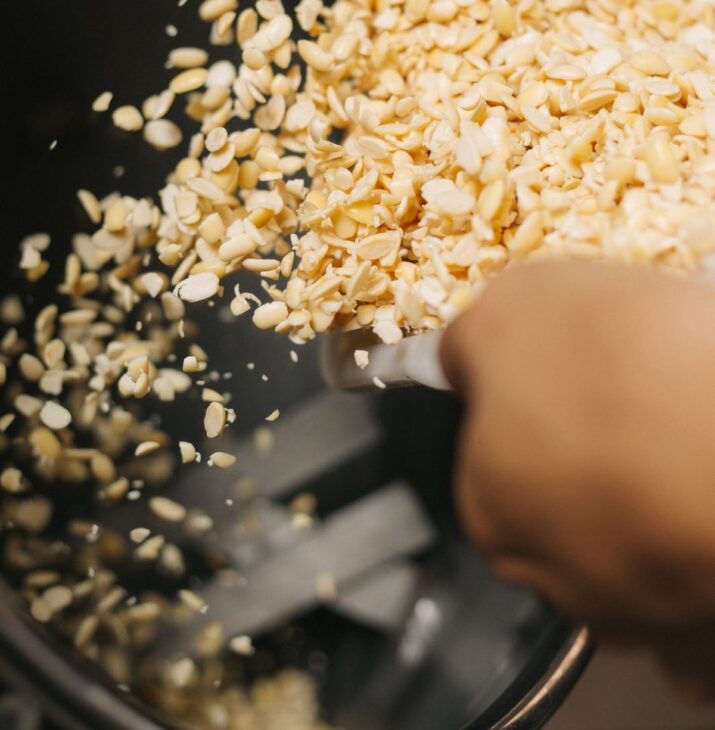
Mun Alimentos brought tempeh to Brazil in 2016 and, therefore, expanded the options for fermented plant proteins.
According to Thomas Hendee, the company’s director, the challenge was to introduce this ingredient to local consumers, but adoption has been steady.
Currently, Mun’s tempeh is available in over 300 points of sale, mainly in São Paulo.
The food is known for its high protein content, fibers, and prebiotics, and for its low carbohydrate and fat content.
Moreover, the global tempeh market generated US$ 4 billion in 2023, with a projection to reach US$ 7 billion by 2030.
Regulation Fuels Confidence and Attracts Foreign Investment
The National Health Surveillance Agency (ANVISA) published, in December 2023, Resolution RDC No. 839.
It defines clear rules for new foods and innovative ingredients, in addition to including those obtained through fermentation.
- Ingredients from genetically modified microorganisms follow Law No. 11,105 of 2005, overseen by CTNBio.
- Thus, the regulatory environment stimulates research and investments in Brazil’s food sector.
Research, Biotechnology, and Artificial Intelligence Accelerate Transformation
According to Alessandro Pansanato Rizzato, from the National Confederation of Industry, despite all the innovation, Brazil still needs to invest more in research to lead globally.
Nevertheless, giants like JBS have invested over US$ 50 million in cultivated protein centers between 2023 and 2024.
For this reason, biotechnology is already reducing costs, expanding decarbonization, and transforming the national industry.
Thus, the sector walks side by side with Nova Indústria Brasil, a government project to boost sustainability.
The Future of Lab-Made Food Has Already Arrived in Brazil
- Researchers from the SENAI Institute of Innovation, such as Eamim Daidre Squizani, argue that precision fermentation and cultivated meat will be vital for the country’s food security.
- Additionally, artificial intelligence accelerates the development of new products, reducing costs and optimizing processes.
- Finally, projections indicate that biotechnology will also create cotton, leather, and wood more efficiently in the coming years.
As startups innovate and scale up, Brazilian consumers are starting to experience the taste and convenience of lab-made food.
The revolution has already begun: less environmental impact, more opportunities, and a new chapter for national food.
Finally, what do you think? Does the future of Brazilian food really pass through the lab? Can fungi turn into meat, and can milk exist without cows? Share your opinion!








Seja o primeiro a reagir!