





 Portuguese
  English
  Spanish
  6 min of reading
  0 comments



The generation that grew up in the 60s and 70s developed an emotional resilience forged by consequences without explanations, but that same hardness created adults unable to ask for help, and research from JAMA Pediatrics shows that the price of this resilience persists decades later.
There is a phrase that summarizes what happened to millions of people born in the 1950s and 1960s: “No one was coming to save us, and that lesson took root so deeply that, sixty years later, we still can’t ask for help.” The generation that grew up in the 60s and 70s did not become tough because they wanted to. They became tough in the same way leather becomes resilient: through repeated exposure to harsh elements until the surface changed on a deep level. By the age of twelve, most had already learned that discomfort was not an emergency, that hunger would pass, and that complaining changed nothing.
The problem is that this resilience, necessary for survival at that time, transformed into something different decades later. The generation that grew up in the 60s and 70s mastered the art of enduring, but never learned the art of asking for support. The stoicism for which they were praised their entire lives reveals, under psychological analysis, as a way to avoid emotions disguised as strength. Confusing not needing anyone with independence, and insensitivity with resilience, are patterns that mental health professionals identify as direct consequences of a childhood where vulnerability meant danger.
How the world taught the generation that grew up in the 60s and 70s to solve everything on their own
The training was gradual and relentless. In this generation’s childhood, failure was not softened by participation trophies or second chances. Those who fell off their bikes got up with pebbles in their knees. Those who answered back to the teacher faced consequences at school and worse at home.
-
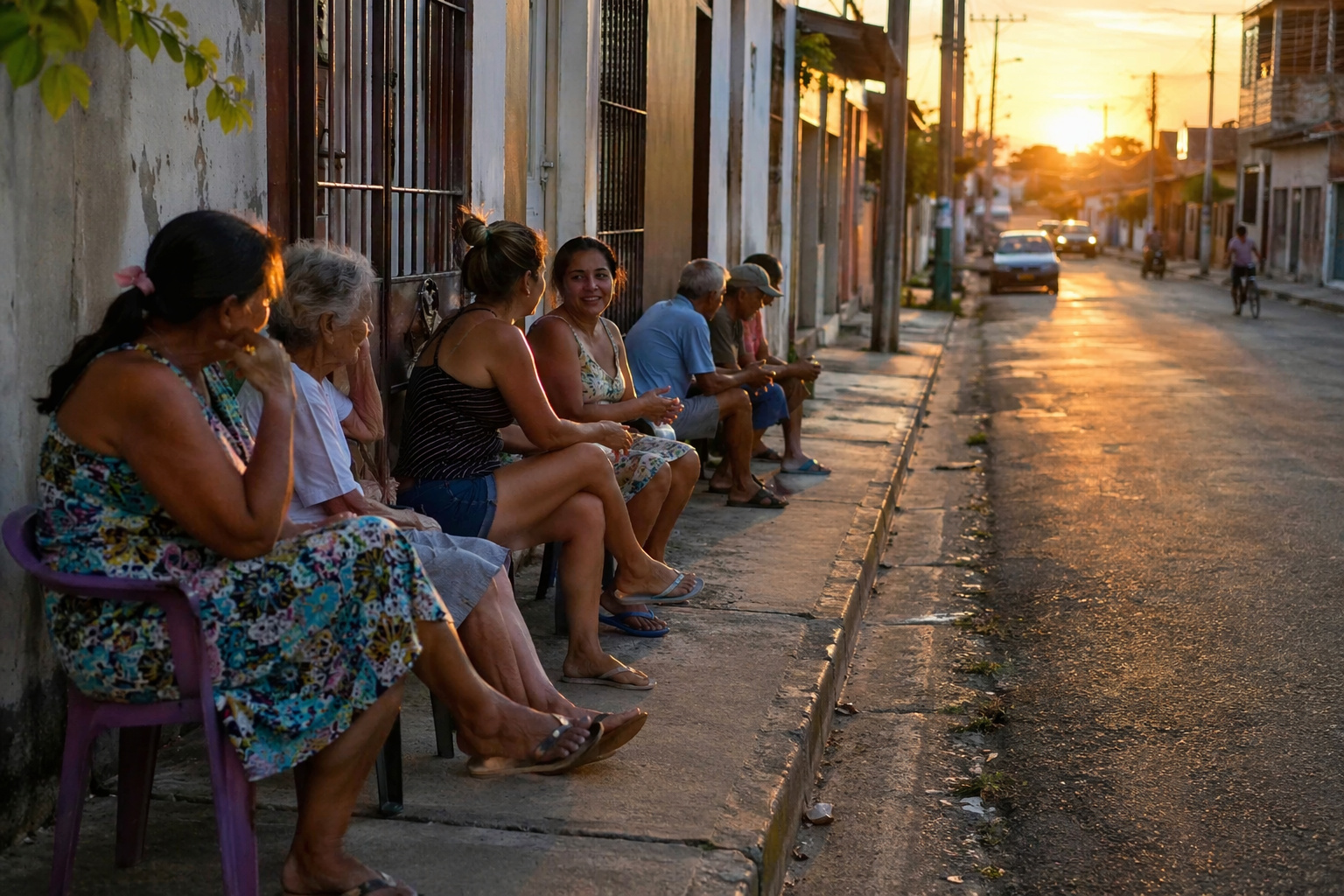
Sitting on the sidewalk at the end of the afternoon: the simple habit that brought neighbors together, slowed down the routine, and reveals why social interaction was stronger before the digital age.
-
Daughter of a public servant, a young woman from MA turns her fight for the environment into a victory and secures a full scholarship at a university in the USA.

-
The lemon that grows alone in Brazilian backyards has powers you can’t even imagine: it lowers high blood pressure, prevents kidney stones, fights cholesterol, and even removes rust from any surface.

-
In the midst of one of the most arid regions on the planet, circles of up to 1 km appear in southeastern Libya as visible marks from space and reveal giant farms that pump fossil water hidden beneath the desert for thousands of years.

Those who lost their lunch money went hungry until dinner. No one negotiated with teachers over a bad grade, and no one called another parent when there was a fight in the yard.
The generation that grew up in the 60s and 70s reached toughness through a thousand small lessons that subsequent generations rarely received. An author who studied this period expressed it accurately: “In the previous decades, these small failures were part of everyday life. They were uncomfortable, but not catastrophic.
When adults remove all obstacles, children may be deprived of opportunities to gradually develop resilience.” The key word is “gradually.” No one woke up tough overnight. It was a slow process of repeated exposure to discomfort that permanently altered how these individuals process difficulties.
Safety nets existed, but did not protect the emotions of this generation
There is a common misconception about the generation that grew up in the 60s and 70s: the idea that they were completely abandoned. A UCLA study found that federal programs from the 1960s and 1970s, such as Head Start and the expansion of the food stamp program, significantly reduced poverty and improved educational outcomes, leading to higher high school and college graduation rates among participants.
The American Economic Review published results showing that these programs had long-term positive effects on health and economic status.
But these were structural safety nets, not emotional ones. The government provided material support that prevented families from going hungry, but no one offered emotional support. No one taught children how to deal with feelings. The generation that grew up in the 60s and 70s had economic programs, not therapy sessions.
The safety nets prevented them from going hungry, but not from experiencing emotional hardships without any support to process them. The consequence was a deep disconnection between the ability to survive materially and the ability to understand what survival cost them inside.
The price the generation that grew up in the 60s and 70s still pays according to science
The consequences did not stay in the past. Research published in JAMA Pediatrics indicates that children exposed to adversities in early childhood, including lack of emotional safety nets, scored lower on neurocognitive tests.
These experiences have lasting negative effects on cognitive development. The generation that grew up in the 60s and 70s may have survived, but survival came at a price that many are still paying in their 60s and 70s.
The involuntary training shaped this generation’s ability to wait and persevere, but also created behavioral patterns that now work against them. People who spent decades not asking anything from anyone do not know how to start asking, even when the need is urgent.
The extreme independence that helped the generation that grew up in the 60s and 70s survive made it impossible to accept support when it is needed. The emotional repression that allowed them to overcome tough times now prevents genuine connections with their own families.
The difference between independence and inability to connect that defines this generation
Research shows that the generation that grew up in the 60s and 70s produced resourceful and capable adults who do not wait to be rescued. But it also produced adults who cannot admit they are in trouble, who see therapy as failure and who prefer to suffer in silence than appear vulnerable.
The same armor that protected them in youth has turned into a prison in maturity. The hardest thing for a person forged by adversity is not to face yet another difficulty. It is to admit that it exists.
The generation that grew up in the 60s and 70s became so competent at not needing support that they forgot how to accept it. The irony is brutal: those who learned early on that discomfort was not an emergency now treat real emotional emergencies as if they were passing discomfort.
A writer who lived this experience described the moment he started therapy at 61: “The hardest part was not talking, but admitting that I had something to talk about.” Sixty-one years lived with the mindset formed at twelve.
Learning to unlearn: the final challenge of the generation that grew up in the 60s and 70s
At 60 and 70 years old, many members of this generation are discovering that needing to be saved does not mean failing. The generation that grew up in the 60s and 70s took the lesson of self-sufficiency too far, confusing lack of emotional connection with independence and insensitivity with strength.
Now, the challenge is to unlearn what took decades to build, a slow process for those who spent their entire lives believing that slowness was weakness.
Surviving and living are two different things. The first keeps you standing. The second allows you to feel that standing is worth it. The generation that grew up in the 60s and 70s mastered the first with mastery.
The second is still being learned, one therapy session, one honest conversation, and one request for help at a time. Perhaps the greatest proof of strength is precisely this: recognizing that the resilience that saved them in youth is costing them dearly in maturity, and that asking for help does not make anyone weak. Refusing help when it is needed, does.
Do you identify with this description of the generation that grew up in the 60s and 70s? Do you know someone who has spent their whole life not asking for help and is now paying the emotional price of that resilience? Leave a comment. This is the kind of reflection that crosses generations and can change how parents and children understand each other.








Seja o primeiro a reagir!