





 Portuguese
  English
  Spanish
  6 min of reading
  0 comments


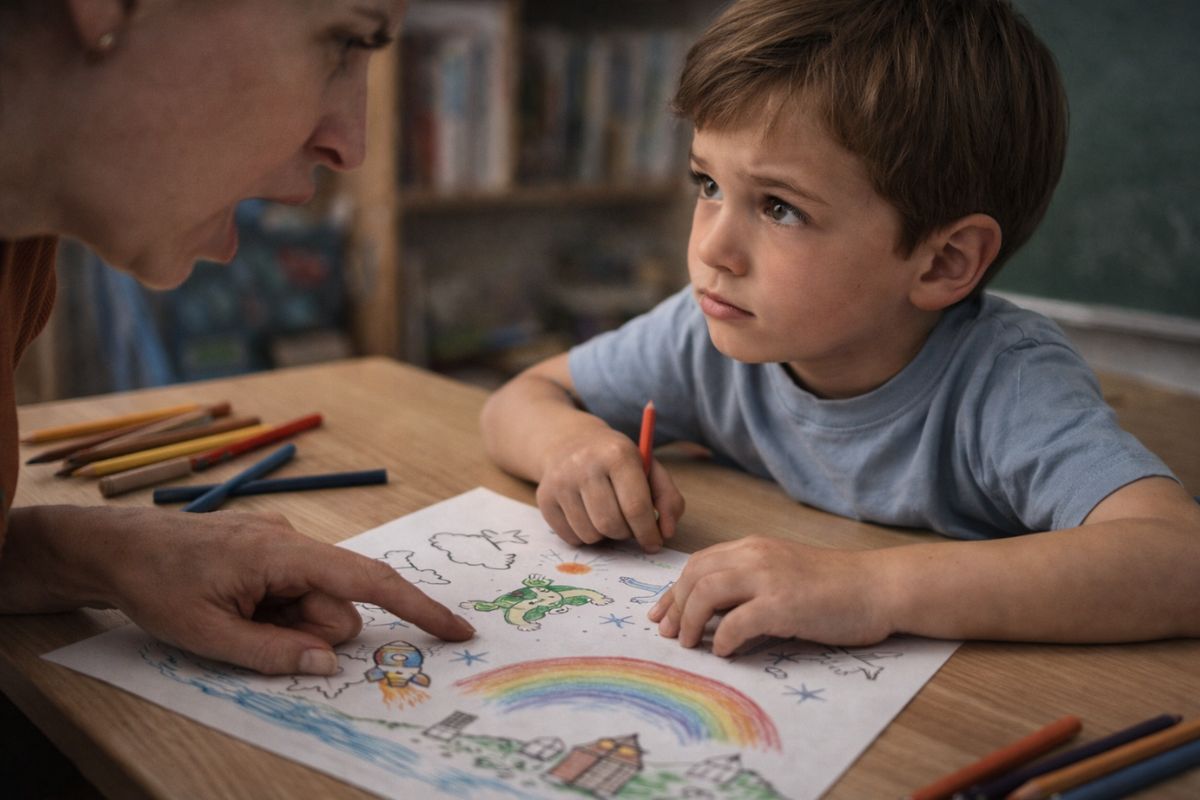
Behavioral scientists claim that creativity does not die in adulthood because it is murdered in childhood, usually on any random afternoon by someone well-intentioned, and the weapon is almost never cruelty but rather a note, an empty praise, or a comparison offered at the exact moment when the child was trying to show something that mattered to them
You probably know someone who says “I am not creative” with the same naturalness as someone talking about the color of their eyes. As if it were a biological fact, a characteristic defined at birth, like height or blood type. Psychology says that most people believe creativity is distributed unevenly and that some children are “artistic” while others simply are not.
However, behavioral science is showing that this story is wrong.
According to a report from The Artful Parent published on April 8, 2026, and based on research by behavioral scientists, most adults who describe themselves as “not creative” are not describing a lack of ability. They are describing a wound so small and so old that they confused it with a personality trait.
-
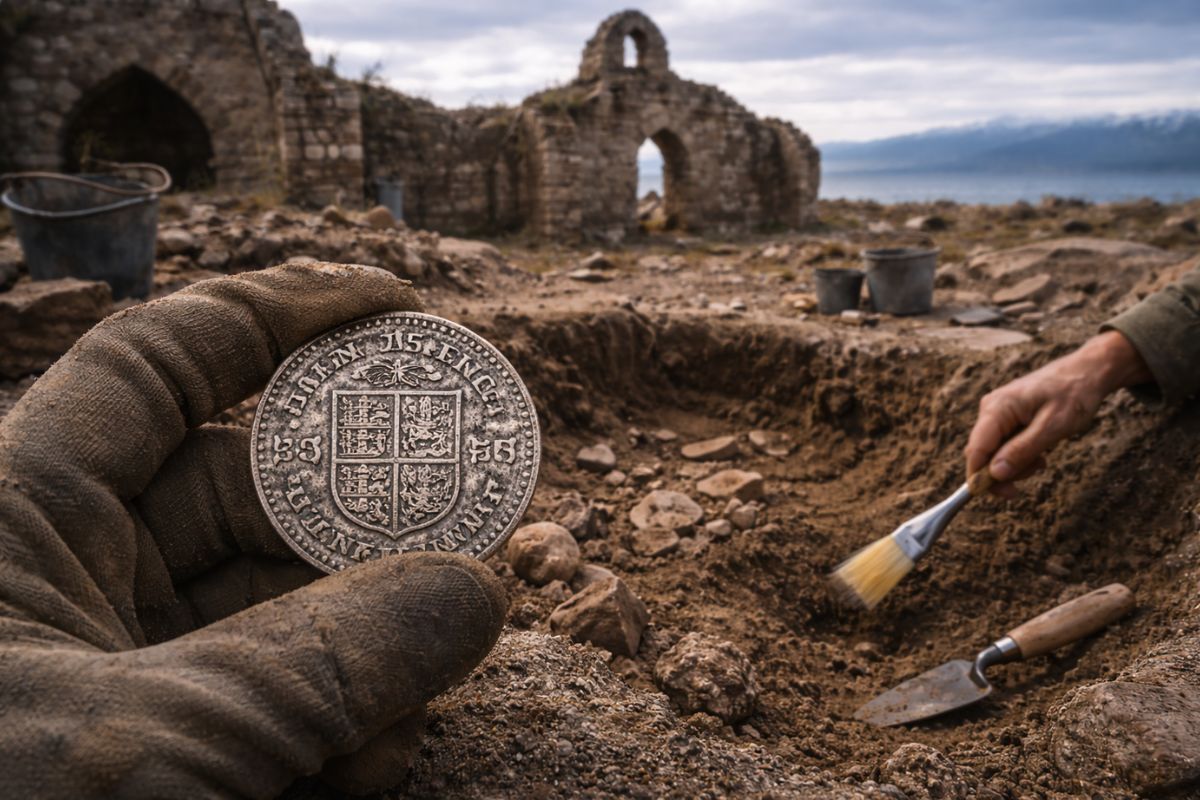
Archaeologists found a 440-year-old silver coin buried under the ruins of a church in the Strait of Magellan, and it revealed the exact location of a Spanish colony where 300 people were abandoned and died of hunger in the place that the English renamed Puerto del Hambre.
-
Elected for the 9th time as the happiest country in the world, Finland has created a program that offers a free 7-day trip with all expenses paid for foreigners to learn how to live like Finns, including a companion, sauna, lake, and complete disconnection from their cell phones.

-
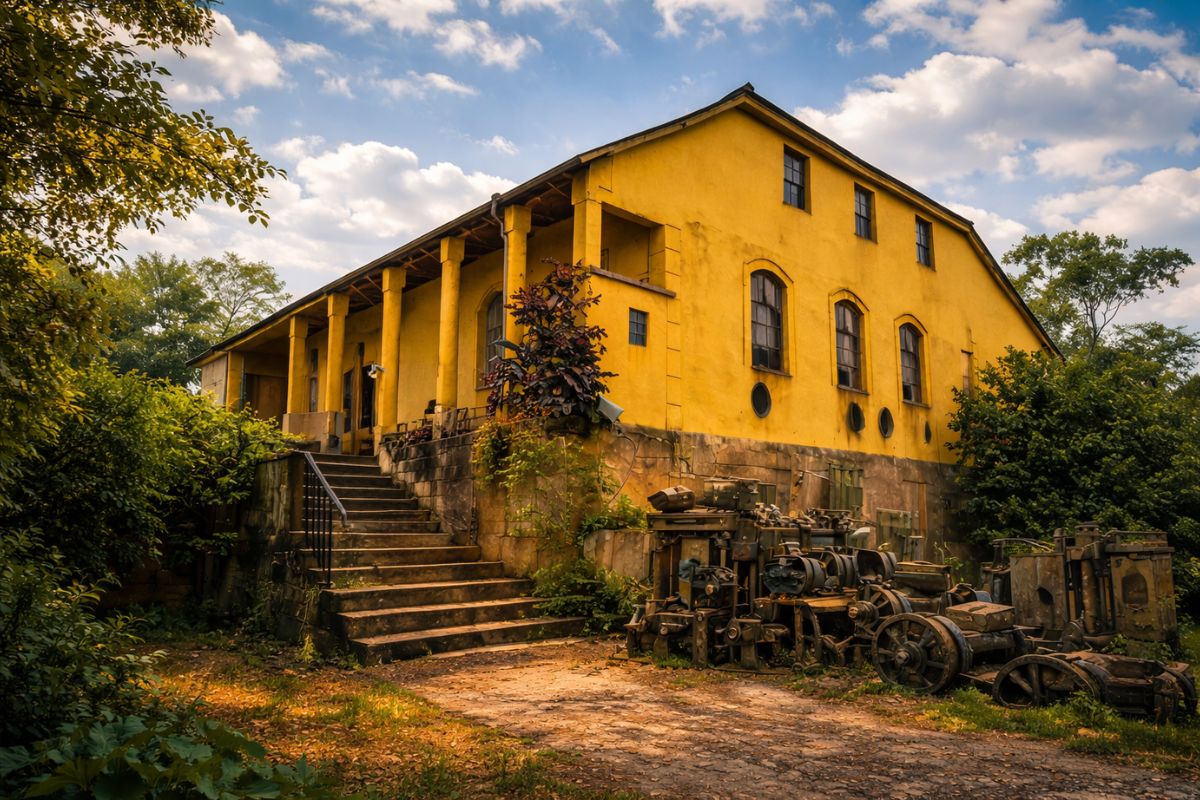
Explorers enter a preserved mansion with a factory inside and find an attic and basement full of rarities: never-used suitcases, new dishes, bags of coins, and a 1964 Monarque motorcycle from a single owner that seemed like an unfinished resting place.
-
Japan transforms glass bottles destined for waste into lightweight “pumice stone”: a factory in Hiroshima crushes, dries, burns at 900°C, and expands Super Sol for construction, gardens, and agriculture.

And this wound almost always has a very specific moment of origin.
What happened at that moment in childhood?
The pattern identified by researchers is surprisingly consistent. The “non-creative” adult almost always can pinpoint a moment in childhood when they showed something they made to someone and received an evaluation instead of curiosity.
A teacher who graded their drawing. A parent who asked “what is that?” in a tone that meant “that doesn’t look like anything.” A peer who laughed. A well-intentioned adult who said “how nice” in a tone that communicated closure, not interest.
The interaction lasted seconds. The identity it created lasted decades.
What makes this so hard to see is that evaluation feels like attention. A grade feels like recognition. “How beautiful” feels like praise. None of these responses seem harmful, and that is exactly why they are so effective at silencing something. The child does not experience rejection. They experience purpose. The conversation about what they created ends on the surface and never reaches what it meant, what it was for, what world it came from.
What is the difference between praising and asking?
This is the central discovery that changes everything. When an adult praises a child’s work, the child contracts. When an adult asks what it means, the child expands.
The author Allison Price from The Artful Parent described a scene that perfectly illustrates this: her five-year-old daughter brought a painting full of purple and brown with a small green circle near the edge. The mother’s first impulse was to say “how beautiful!”. But something made her stop. She asked what the green circle was.
The girl lit up. She said it was “where the worms live when it rains.” And she spent ten minutes explaining the world of worms, their rules, their climate, their emotional dynamics. The painting was a map. If the mother had said “how beautiful,” the girl would have smiled, said thank you, and gone to wash her hands. The world of worms would have died there.
Research on intrinsic versus extrinsic motivation, well documented in psychology, explains why. Extrinsic motivation (praise, grades, stars, parental approval) works well for repetitive tasks. But for creative work, it works like a subtle poison. When the reward comes from outside, the reason to create shifts from “I had something to say” to “I want them to tell me I’m good.” And the moment that shift happens, the child loses the thing that made them creative: the willingness to do something without knowing if it would be approved.
How does the fear of failure kill creativity?
Research suggests that the fear of failure paralyzes creative expression. And where does this fear come from? From the space between creating something and having that something judged.
Children who learn early that their creations will be evaluated develop anticipatory anxiety about creating. They start to edit themselves before they begin. They self-censor. They choose safe colors. They draw the house with a triangular roof because they know it will be recognized and approved.
Eventually, they simply stop drawing.
It’s not that they failed. It’s that they withdrew. Silently. Without drama. Without anyone noticing. And twenty years later, they sit at a work table and say “I am not creative” as if it had always been that way.
Researcher Carol Dweck, known for her work on fixed and growth mindsets, shows how this belief becomes a self-fulfilling prophecy. When children internalize the idea that creativity is something you either have or don’t have, every act of creating turns into a test instead of an exploration. And the moment creating becomes a test, the child who is not sure they will pass simply stops taking the test.
What happens to these adults?
The author of The Artful Parent, who taught early childhood education for seven years, describes what she saw when offering community art classes for adults: people sit at the table with their hands in their laps and say things like “I need to warn you that I can’t even draw a stick figure.” They laugh when they say this, but their bodies are rigid.
They are genuinely afraid. Afraid of being seen doing something that will be evaluated and deemed insufficient. And they carry this fear since they were six or seven years old.
The most revealing thing is that it doesn’t help to say “everyone is creative!” and expect it to work. Because a well-intentioned adult trying to convince them of something about their own abilities is exactly the same dynamic that dissuaded them in the first place.
What works is putting materials in front of them and asking a question. Not “what are you going to make?” but “what are you thinking about today?”. The question needs to come before the product. The interior needs to matter before the exterior appears.
Sometimes they cry. Not out of sadness, exactly. Out of recognition. Realizing that no one has asked what they were thinking in a creative context since childhood.
The door was never locked
This may be the most important part of everything researchers have discovered. The door to creativity is not locked. It never was. It just has never been reopened by someone willing to ask the right question.
Not “did it turn out nice?”. Not “what is that?”. But: “What does this mean to you?”
This question, asked with genuine curiosity, is the only tool needed. The rest takes care of itself.
The next time a child shows you a drawing that looks like a blot, resist the urge to say “how beautiful”. Ask about the blot. There may be an entire world of worms waiting for someone to ask where they live when it rains.
With information from The Artful Parent, and references to research by Carol Dweck on fixed mindset and studies of intrinsic motivation in behavioral psychology.






Seja o primeiro a reagir!