





 Portuguese
  English
  Spanish
  5 min of reading
  0 comments



Psychology shows that adults who avoid conflicts have not developed higher emotional maturity, but carry marks from childhood where expressing emotions resulted in punishment, and today reproduce silence and fear as a strategy for protection in all relationships.
There is a popular belief that people who avoid discussions are more balanced, more mature, and more peaceful than others. Psychology suggests otherwise: adults who avoid conflicts at all costs are often not choosing peace; they are repeating a pattern learned in childhood. When a child grows up in an environment where expressing discontent, sadness, or anger results in punishment, they learn very early that silence is the only safe way to exist. This defense mechanism, effective in childhood, transforms into an emotional trap in adulthood.
According to studies from the APA (American Psychological Association), the problem is that this behavior does not disappear when the person grows up and leaves home. It takes root. Adults who avoid conflicts carry with them the feeling that disagreeing is dangerous, that saying no can lead to abandonment, and that expressing true emotions puts the stability of relationships at risk. What seems calm is often an automatic response to fear. And what society celebrates as patience can actually be an inability to fight for oneself built over years of silencing.
Why children learn to silence their own emotions
When the family environment reacts with aggression or indifference to a child’s emotional needs, they quickly realize that expressing themselves is risky.
-
Goodbye pet hair on clothes: a washer with an internal filter promises to remove up to 5 times more hair than regular machines and uses an XL trap dryer system to capture what remains.

-
The most overlooked waste in the electricity bill doesn’t come from the refrigerator or the air conditioner; it escapes through almost invisible cracks in doors and windows, operating all day long and can steal up to 20% of the energy used for climate control, while a low-cost seal takes just a few hours to eliminate this loss.

-
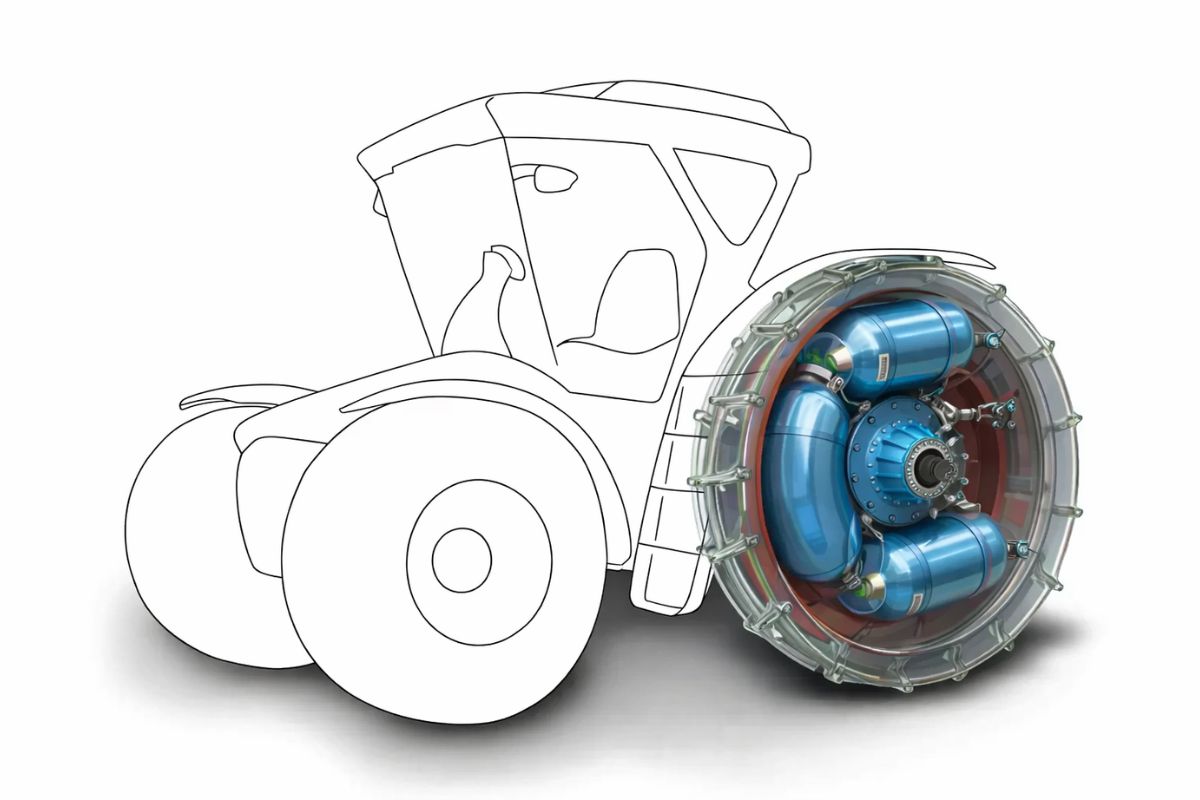
German engineers had an idea that no one had tried before: to hide the hydrogen tank inside the tractor’s wheels so that the machine can operate all day in the field without needing diesel.
-
China has created its first space exploration school, an academic structure with 14 areas, 22 new subjects, and a focus on interstellar propulsion to prepare for missions beyond the Moon and Mars.


The fear of suffering physical or emotional retaliation causes the child to suppress any display of discontent. Crying leads to scolding. Complaining leads to punishment. Disagreeing leads to coldness. The message the child absorbs is clear: their feelings are a bother and need to be hidden for coexistence to work.
Over time, the mind associates sincerity with suffering and creates a pattern of withdrawn behavior that extends throughout life. The home that should be a space of welcome transforms into an environment of constant surveillance, where spontaneity is seen as a threat.
Adults who avoid conflicts almost always had childhoods where hiding feelings was the only viable way to maintain peace at home. It was not a choice. It was survival.
How childhood silence manifests in adult relationships
The reflections appear in almost every area of life. Adults who avoid conflicts often have a huge difficulty in establishing clear boundaries, whether with partners, friends, or colleagues.
They accept uncomfortable and unfair situations just to avoid any type of direct confrontation. They say yes when they want to say no. They agree when they disagree. They swallow emotions and frustrations until the body reacts with anxiety, insomnia, or illnesses that seem to arise without explanation.
The inability to say no reflects the fear of being rejected or punished again, as happened in childhood. The person becomes a spectator of their own life, allowing others to make important decisions in their place without showing visible resistance.
The accumulation of unexpressed emotions generates chronic stress that seriously compromises the quality of life and the health of relationships. Those who live with adults who avoid conflicts often notice that something is not right, but cannot identify exactly what is being hidden behind the apparent tranquility.
The signs that reveal a conflict avoider in everyday life
Identifying these patterns in oneself or in close people requires attention to automatic reactions in the face of disagreements. Often, immediate agreement hides a desire to escape the situation as quickly as possible to ensure emotional safety.
Adults who avoid conflicts develop subtle strategies that go unnoticed in daily life but are consistently repeated in any tense context.
Some frequent behaviors that reveal this pattern are telling. Changing the subject quickly when the conversation heats up. Taking the blame without having done anything wrong, just to end the discussion. Feeling physical anxiety before a difficult conversation, with a racing heart, sweaty hands, or stomach pain. Hiding divergent opinions for fear of the other person’s reaction.
Apologizing excessively, even when there is no reason. If you recognize yourself in three or more of these behaviors, it is likely that the pattern has deeper roots than a simple preference for avoiding fights.
Why society confuses the fear of conflict with emotional maturity
Popular culture values those who remain calm and avoid discussions, labeling these people as peaceful and balanced. However, there is a fundamental difference between choosing peace out of wisdom and being unable to fight for oneself due to fear.
Adults who avoid conflicts are not internally calm. They are containing an emotional pressure that constantly and silently consumes mental energy.
The false appearance of maturity serves as a shield for those who cannot express their true desires. Maintaining this facade of balance requires a drain of psychic energy that often results in exhaustion, sudden irritability, or emotional crises that seem to arise out of nowhere.
The person spends months or years accumulating what they did not say until the weight becomes unsustainable. Recognizing that this behavior originates in childhood, and not in a supposed virtue of character, is the first step to begin to change.
What psychology recommends for those who want to learn to express themselves without fear
Overcoming the barrier of silence requires the development of new forms of communication that allow for the safe expression of feelings. Practicing honest speech in welcoming environments helps recalibrate the nervous system and shows that disagreeing does not mean being punished.
Adults who avoid conflicts need to relearn something that was taken from them in childhood: the right to have a voice and to use it without destructive consequences.
Strengthening self-esteem and working on emotional regulation are fundamental in this process. The American Psychological Association provides guidelines on how to process experiences of punishment in childhood and rebuild healthier communication patterns.
The goal is not to become a combative or aggressive person. It is to be able to say what you feel clearly, to hold a position without panicking, and to understand that the discomfort of a difficult conversation is infinitely smaller than the cost of a lifetime in silence.
Do you recognize yourself in the profile of adults who avoid conflicts? Have you noticed that your difficulty in disagreeing may have roots in how you were treated in childhood? Leave your story in the comments. This is the kind of conversation that helps many people understand their own behavior and take the first step to change.









Seja o primeiro a reagir!