





 Portuguese
  English
  Spanish
  5 min of reading
  0 comments


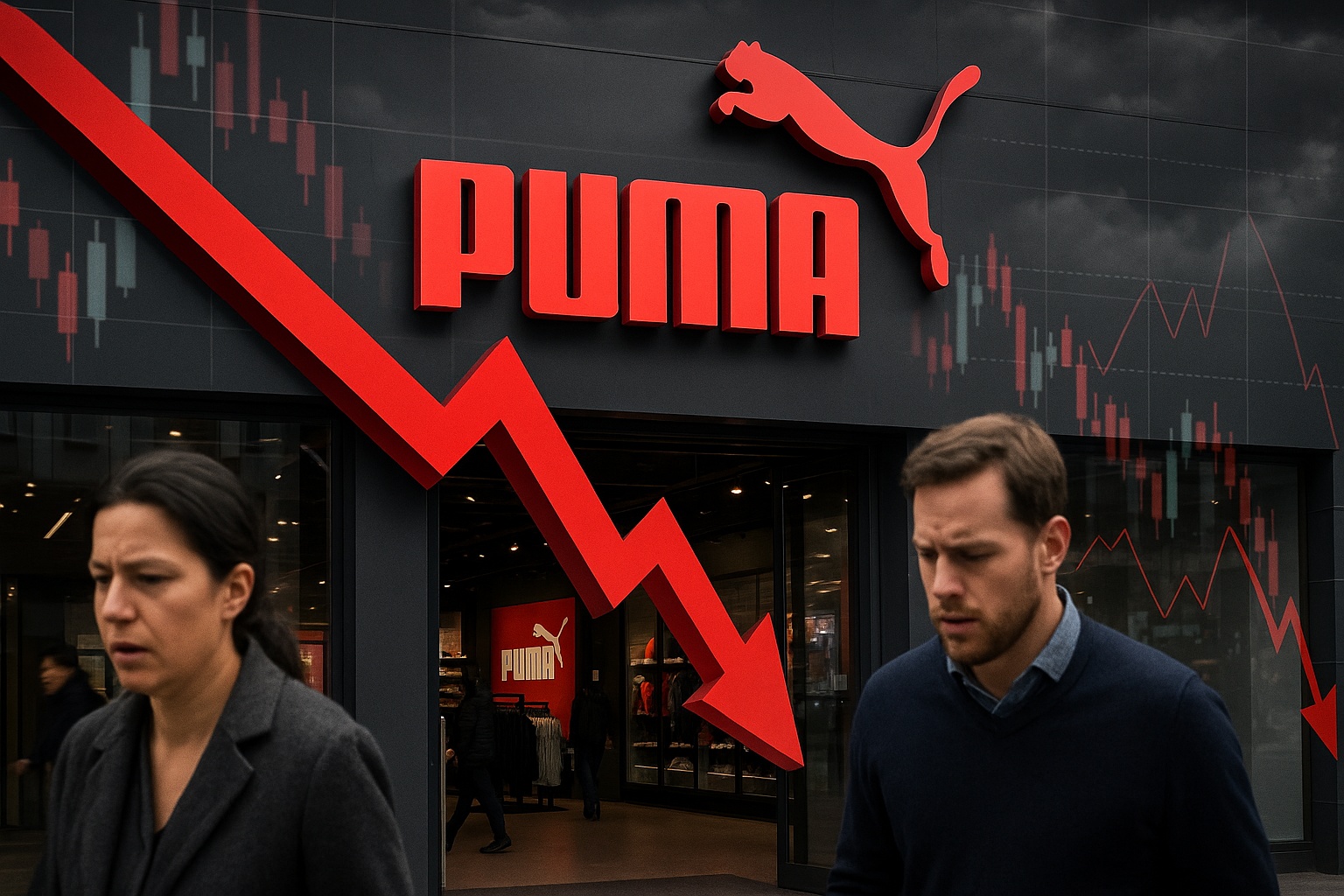
The Sports Brand Puma Faces Crisis After Reporting Falling Shares and Losing Half Its Market Value in 12 Months. With Investors Selling Shares, Puma’s Future on the Stock Exchange Remains Uncertain
The Pinault family, through Artemis, is considering selling its approximately 29% stake in Puma after the sports brand suffered a 50% drop in the stock market over the past 12 months. The move triggered an immediate market reaction, with Puma’s shares soaring by up to 20%, as selling investors accelerated reflections on the company’s strategic future. The timing of this potential transaction raises doubts about the company’s survival in the global competitive landscape.
Puma Loses Value: The Most Important Facts
Puma’s recent trajectory highlights a delicate moment:
- The company lost about 50% of its market value in 12 months; since its peak in 2021, the cumulative decline is almost 80%.
- The Pinault family, via Artemis, holds 29.3% of the company and is considering selling this strategic stake.
- Potential buyers include Anta Sports, Li Ning, US sports brands, and sovereign funds from the Middle East.
- The market reacted explosively: shares rose by up to 21% following the news, recording the largest daily gain in over 20 years.
50% Drop in the Stock Market: Why Did This Happen?
Puma has been recording consistent losses in the stock market in recent years. The accelerated decline can be explained by several factors:
-
The largest food company on the planet, JBS, has just opened a 4,000 square meter laboratory in Florianópolis to develop customized proteins that modulate muscle mass gain, immune response, and metabolic performance.

-
After nearly 30 bids and competition among industry giants, a Spanish company purchases one of the largest airports in Brazil for almost R$ 3 billion and takes over the management of Galeão in a concession that will last until 2039.

-
The Federal Revenue Service now automatically cross-references everything you declare with data from banks, credit cards, brokerage firms, and insurance companies, and any discrepancy between your income and your expenses triggers an alert in seconds.

-
Amid global tensions, Brazil blocks the United States’ proposal at the WTO and paves the way for a trade crisis and possible retaliations.


- Weaker demand for sports clothing and footwear.
- Tariffs imposed by the United States that directly impacted import costs and margins.
- Leadership transition following the departure of CEO Bjorn Gulden, which weakened investors’ confidence.
- Strategic errors in product differentiation compared to global competitors.
Since the beginning of 2024, the company has not managed to reverse the trend, and pressure from competitors such as Nike, Adidas, On, and New Balance has made Puma’s loss of market share even more evident.
Immediate Reaction in Puma’s Shares
Despite the challenging scenario, the announcement of a potential sale triggered a momentary turnaround.
The falling shares reversed trajectory and recorded a record rise in a single trading day. The explanation lies in the speculative relief in the market: a potential new investor could mean financial breathing room and global repositioning.
Nevertheless, experts warn that the surge is momentary. Without structural changes in product strategy, marketing, and international expansion, the appreciation is likely to dissipate over time.
Strategy of the Pinault Family and Artemis
Artemis’s decision to seek buyers is not isolated. The holding had already conducted a €500 million operation through convertible bonds, which was ultimately settled in cash after Puma’s poor performance.
Now, in evaluating the sale of the 29% stake, the group seeks to reduce exposure to a company that does not deliver consistent results.
The stake is valued between €800 million and €930 million. Despite being substantial, it represents only a fraction of Artemis’s portfolio, which controls major assets like Gucci, Balenciaga, and Saint Laurent.
Investors Selling Shares: The Impact on the Market
The movement of investors selling Puma shares reveals the distrust looming over the sports sector. The apparel and footwear segment faces changes in consumer profiles and strong competition from emerging brands that thrive on digital appeal and engaged communities.
The pressure from minority shareholders also forces Puma’s management to seek quick repositioning alternatives. If Artemis confirms the sale, the company may gain momentum. However, the risk of becoming just another brand in giant portfolios remains on the radar.
Puma Loses Value: Potential Buyers and Their Interests
Anta Sports
Anta is one of the largest manufacturers of sporting goods in China and already has experience in acquisitions. It led the purchase of Amer Sports, owner of Salomon and Wilson, for about €4.6 billion. For Anta, acquiring Puma would mean expanding its global presence.
Li Ning
Founded by former Chinese gymnast Li Ning, the company has gained relevance as a premium brand in the Asian market. A purchase of Puma would allow the company to accelerate its international expansion and compete directly with Nike and Adidas.
Middle Eastern Sovereign Funds
The funds from the region have been seeking diversification in global consumer assets. Acquiring Puma would fit into the strategy of adding international brands to their portfolios, enhancing visibility in the West.
What Could Change for Puma on the Stock Market?
A potential change of control could bring:
- Capital Injection to accelerate innovation and marketing.
- Expansion in Asia, especially with support from Chinese groups.
- Repositioning of the Brand, focusing on athletes and urban lifestyle.
On the other hand, there remain risks of cultural integration, regulatory pressures, and the need to correct internal management issues. The change of shareholders does not alone eliminate the company’s challenges.
Long-Term Analysis: Future of the Sports Brand Puma
The future of the sports brand Puma depends less on who the new controller will be and more on its ability to face profound changes in the sports sector. The digitization of sales, sustainability in the supply chain, and creating a clear identity for the consumer are critical points.
If there is no strategic repositioning, Puma risks remaining a secondary brand amidst more established giants. On the other hand, a solid buyer could transform the current crisis into a growth opportunity.
In this context, Puma’s story serves as an example of how even century-old companies can quickly lose ground if they do not keep pace with the speed of the market.
Possible Scenarios for the Coming Years
- Completed Sale to an Asian Player: Strengthening in Asia, but risk of cultural shock in management.
- Acquisition by a Sovereign Fund: Financial breathing room, but uncertainty about strategic direction.
- No Sale Completed: Maintenance of Artemis as a shareholder, with the risk of prolonging instability.
In all cases, Puma’s performance will depend on its ability to innovate and differentiate itself in a sector where established brands no longer guarantee automatic consumer loyalty.
What Is at Stake for Puma and Its Investors
The dramatic 50% drop in the stock market over 12 months and Artemis’s decision to evaluate the sale of its stake show that Puma’s future is open. For the market, the signals are clear: high volatility, caution from analysts, and a repositioning that needs to be urgent.
The situation reveals that Puma is at a turning point. The company can reinvent itself and regain part of its global relevance, or continue to lose ground to more innovative competitors. The outcome will depend on the strategy chosen by the new — or current — controllers.







Seja o primeiro a reagir!