Commuters heading to Pune’s Hinjewadi IT Park will ride the new 23.2-km elevated Metro Line 3 from 6 a.m. on November 4, but the longest trip on the privately built line will cost ₹62, almost double the ₹35 top fare on the city’s existing metro.
The date was announced on October 31 at a press conference at the headquarters of the Pune Metropolitan Region Development Authority (PMRDA) in Akurdi, the Hindustan Times reported.
Prime Minister Narendra Modi is scheduled to inaugurate the line on November 3 at 10:30 a.m., at the Shri Shiv Chhatrapati Sports Complex in Mahalunge-Balewadi. Passenger service begins the next morning.
The corridor, also called the Puneri Metro or Pink Line, links Maan and the Rajiv Gandhi Infotech Park in Hinjewadi with Shivajinagar, one of the city’s main administrative and commercial areas.
-
Turkish Transport Minister Abdulkadir Uraloglu says a US$10 billion rail push will build a 2,000-km freight corridor from China to Europe by 2031, with an $8 billion line over the Bosporus that lifts capacity from 3 to 50 million tons

-
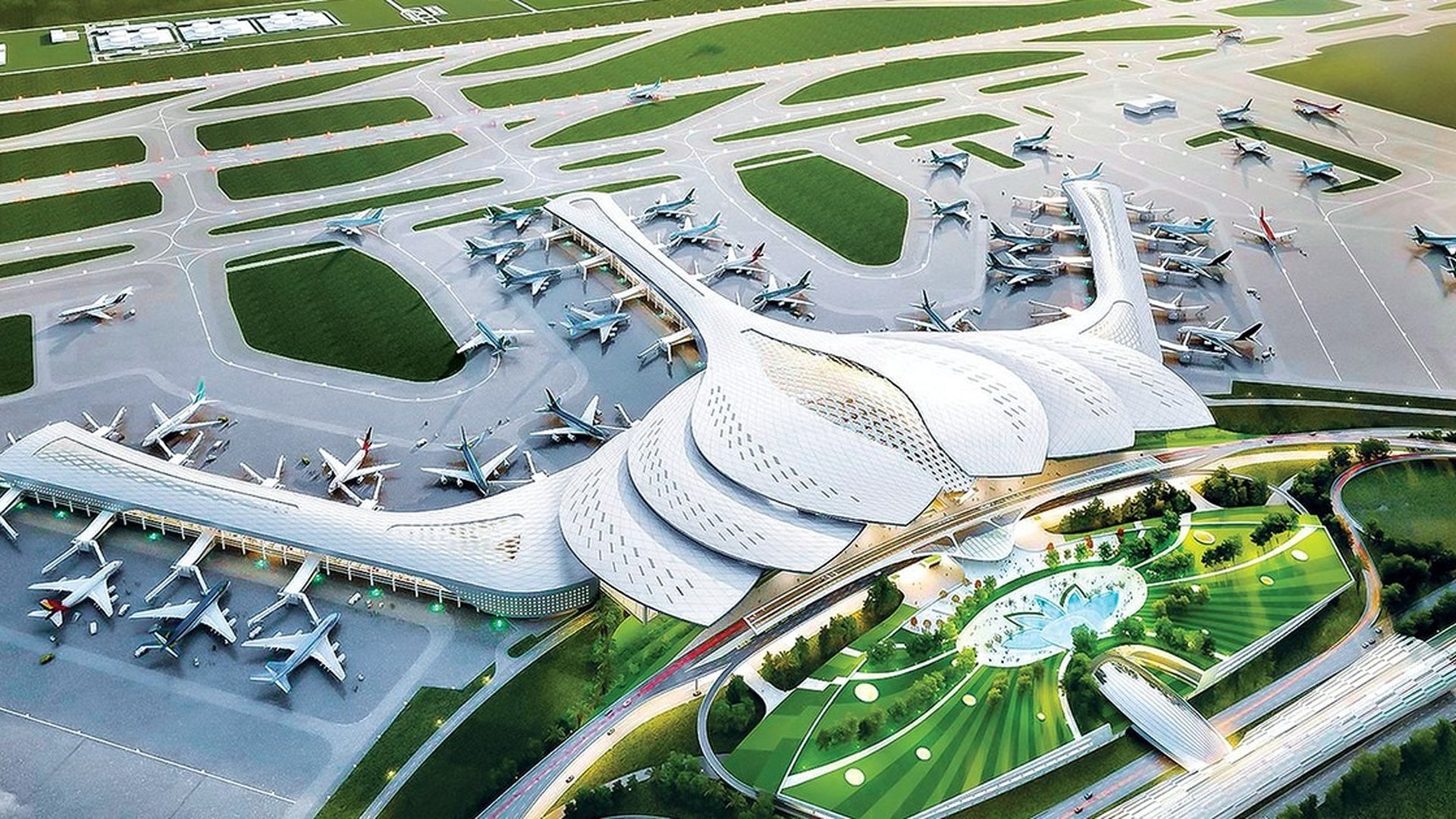
Travelers in southern Vietnam will start flying from Long Thanh International Airport at midnight on December 24, when the 5,000-hectare hub opens with up to 366 flights a week and room for 25 million passengers a year
-
Retired tax officer Glenwood Hoskin Jr., 60, watched 1,207 films in one year at his local Regal cinema in Pennsylvania, about 3.3 a day, and Guinness World Records says he beat the old mark of 777 by 430 movies
-
Baton Rouge outdoor-store owner Michael Mathews, 43, skied on all seven continents in 295 days, from a volcano in Japan on January 1 to another one in Antarctica, and now waits for Guinness to verify it



23 stations, 17 open on day one
The line has 23 stations along its 23.203 km, PMRDA commissioner Abhijit Chaudhary said. Only 17 of them will open to passengers at first.
At seven of those 17 stations, only one staircase will be available. The other ten, including Hinjewadi Phase 1, Wakad Chowk, Aundh and Savitribai Phule Pune University, will have both staircases working.
Work on stations 13 and 14 is in its final stage and should end by late November. Stations 15, 16, 20 and 22 will be completed in phases by January 2027.

₹8,313 crore and a first for India
The project’s estimated cost is ₹8,313 crore, including land acquisition and the relocation of utilities and services, according to PMRDA.
It is the first metro in India built under a public-private partnership in the design, build, finance, operate and transfer model, following the National Metro Rail Policy of 2017.
The builder and operator is Pune IT City Metro Rail Limited, a special purpose company formed by TRIL Urban Transport and Siemens Project Ventures GmbH under a concession agreement with PMRDA.
Why the fares are higher
That private model explains the price. Fares were set according to the concession agreement, PMRDA commissioner Abhijit Chaudhary told the Hindustan Times, unlike the government-funded Pune Metro.
The base fare is ₹10 for the first 2 km, and the calculated fare of ₹12.36 is rounded off to ₹12 for actual collection.
From there, the price rises to ₹25 for 2 to 4 km, ₹37 for 4 to 8 km, ₹43 for 8 to 12 km and ₹49 for 12 to 18 km.
Any journey longer than 18 km will cost ₹62. On the existing Pune Metro, the minimum fare is ₹10 and the maximum is ₹35, with ₹30 for trips of 8 to 16 km.
“Compared to other Metro projects developed under the PPP model, the fares are not high,” Chaudhary said. The operator promised to review the fare structure after six months.
200,000 riders a day expected
PMRDA expects the line to carry 200,000 to 250,000 passengers a day, a figure the operator’s CEO, Anilkumar Saini, repeated when discussing the fares.
Trains will run every six minutes at peak hours and every 12 minutes at other times. The last train from Maan will leave at 10:30 p.m.
The last service from the District Court station toward Maan will depart at 11:40 p.m., Saini said at the press conference.
Three lines meet at one station
At the District Court station in Shivajinagar, Line 3 connects with MahaMetro’s Line 1, from Pimpri-Chinchwad to Swargate, and Line 2, from Vanaz to Ramwadi.
A common mobile app has been developed for ticketing and travel across the existing MahaMetro network and the new Line 3 corridor, according to the operator.
The authorities expect the line to ease traffic around the IT park and along the Aundh, Baner, Balewadi, Mahalunge, Ganeshkhind Road and Shivajinagar stretches.
Safety checks done in two stages
The Commissioner of Metro Railway Safety cleared the first 12.6-km section, from Maan to the RK Laxman Museum in Balewadi, on July 23. The remaining five-station section was approved on September 23.
The whole corridor has also undergone inspection by the Research Designs and Standards Organisation, according to the Hindustan Times report on the press conference.
About 350 security staff from the Maharashtra State Security Corporation have been deployed at the stations, and new passenger information and ticketing systems are in place, according to PMRDA.
Solar power and women at the controls
The line has 7.6 MW of solar panels, 6.1 MW at stations and 1.5 MW at the depot, expected to supply about 30% of the project’s electricity.
Around 100 women train pilots will drive the trains. Women are also expected to fill about half of the station jobs, including controllers, ticketing staff and attendants.
28,000 tonnes of CO₂ avoided
PMRDA chief engineer Rinaz Pathan said using ground granulated blast furnace slag in the concrete avoided about 28,000 tonnes of carbon dioxide emissions during construction.
The project also saved around 2,000 tonnes of steel and 60 crore litres of water, he said. A double-decker flyover was built at University Chowk on Ganeshkhind Road.
To compensate for trees affected by the works, 5,500 new trees were planted, and 750 were transplanted with an 80% survival rate.
Parking for drivers who switch to the train
The Pune Municipal Corporation built a parking area of about 30,000 square feet near station PMR-11 in Balewadi and another of 21,000 square feet near PMR-14 in Baner.
PMRDA says it is building an integrated transport network around the stations to improve last-mile connectivity for passengers getting on and off the new line.
Buses, auto-rickshaws, app-based taxis and e-bikes will serve the stations, with pick-up zones, cycle tracks and wider footpaths around them.
Will IT workers pay more to skip traffic?
Metro systems are opening fast in Asia and Africa, from Wuhan’s 59.9-km loop to Cairo’s Metro Line 4, where tunnel crews made their first breakthrough last week.
Pune’s test is different: a private line with fares almost twice as high as the public network next to it, aimed at one of India’s busiest IT corridors.
When the gates open at 6 a.m. on November 4, will commuters in Hinjewadi accept paying up to ₹62 to leave the traffic behind?