





 Portuguese
  English
  Spanish
  3 min of reading
  0 comments


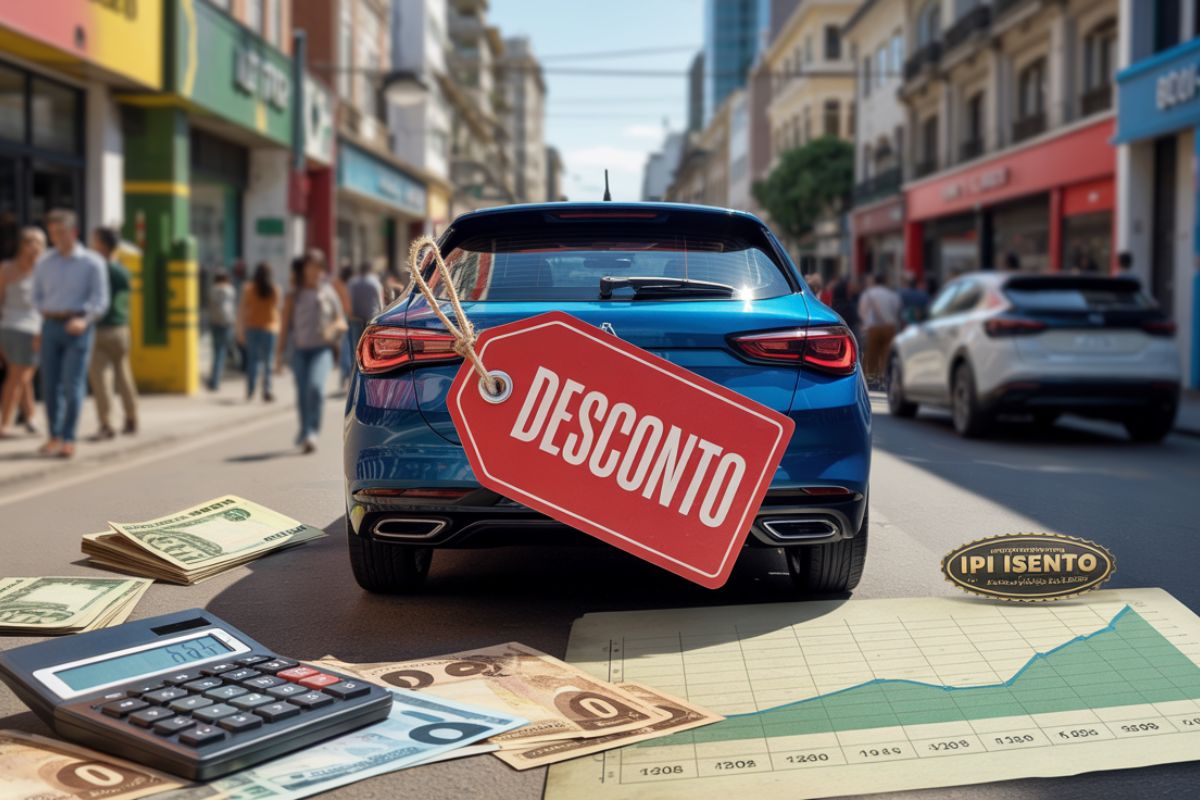
The Government Announced The IPI Exemption For More Sustainable Cars, And Manufacturers Revealed Great Offers. But Is The Discount From Manufacturers Real Or Just A Marketing Move?
In recent days, the automotive market has been flooded with announcements about the “Green IPI” and the anticipated discount from manufacturers for new cars. The measure, part of the Mover program (Green Mobility and Innovation), exempts tax on compact and flexible-fuel vehicles that meet sustainability criteria, such as low CO₂ emissions and high recyclability rates. The promise was for cheaper cars for consumers.
However, behind the advertisements of “unmissable offers”, there is a strategy that deserves attention. The truth is that many of these “new” discounts were already practiced by the market well before the IPI exemption. What we are seeing is a maneuver to boost retail sales, which have been declining, without companies actually needing to reduce their profit margins.
What Is The Green IPI?
The “Sustainable Car” plan, valid until the end of 2026, eliminates the IPI (Tax on Industrialized Products) rate for vehicles that meet specific rules. Currently, that rate is 5.27%. In theory, this reduction should be fully passed on to consumers. With this measure, manufacturers such as Fiat, Renault, and Volkswagen announced reductions that, combined with “factory bonuses”, amount to more than R$ 10,000 on popular models like the Mobi and Kwid.
-
BRICS is building its own payment system that could be operational by 2030, and experts say it could increase trade between the countries by up to 10% per year and add 3% to the GDP of each member of the bloc.

-
Government suspends over 3 million traffic fines in Brazil and drivers breathe a sigh of relief.

-
Iran has just approved toll charges for ships in the Strait of Hormuz and has completely prohibited the passage of vessels from the United States and Israel in the world’s most important maritime route for the global energy market.

-
Government cancels R$ 25 million “celebration” for Brasília’s anniversary and allocates funds to health.


Prices That Rise To Then “Fall”
The major problem is that the official price list of cars in Brazil often serves only as an artificial reference. With sales to individuals declining — surpassed by “direct sales” to rental companies and fleet owners — manufacturers have already been commonly offering significant discounts off the list price to attract the end consumer.
The strategy is simple and old:
- The official price of the car is increased: Days or weeks before the announcement of the IPI exemption, several manufacturers raised the prices of their cars. The Renault Kwid, for example, exceeded R$ 80,000 in its base version.
- The “discount” is applied: With the IPI exemption, the price returns to the level that was already practiced in previous promotions.
A clear example was exposed in videos on social media: a dealership was advertising the Renault Kwid for R$ 64,990 as a great offer of the “Green IPI”. However, the week before, the same dealership was already selling the same car for the exact same price. The same happened with the Fiat Mobi, which was already found with R$ 10,000 in bonuses months before the government measure.
Who Really Benefits From The Discount Of Manufacturers?
In practice, what happens is that the discount from manufacturers, which was once a factory bonus to stimulate sales, has simply been replaced by the tax exemption. The amount that the government is not collecting is, in many cases, being pocketed by the manufacturers themselves, who keep the final price to consumers practically unchanged.
The measure, which was supposed to benefit buyers, ends up serving as a marketing tool for companies and a relief for their cash flows. For the consumer, the feeling is that they are making a great deal when, in fact, they are just paying the same amount that was already practiced in previous promotions.
The Reality Of The Market: Cars Even More Distant
This situation only reinforces the difficult reality of Brazilian consumers. Even with tax exemptions, popular cars continue to have prohibitive prices for most of the population. The dream of a brand-new car becomes increasingly distant, and the used car market, with models like Gol and Uno, which have already been discontinued, remains the main alternative for most.
The discount from manufacturers, in this context, sounds more like a big ‘problem’ to mask a much deeper issue: access to new cars in Brazil is becoming increasingly restricted.
And you, what do you think of this strategy? Do you believe that the “Green IPI” will really help the consumer or is it just a way to benefit manufacturers? Leave your opinion in the comments.







Seja o primeiro a reagir!