





 Portuguese
  English
  Spanish
  4 min of reading
  0 comments


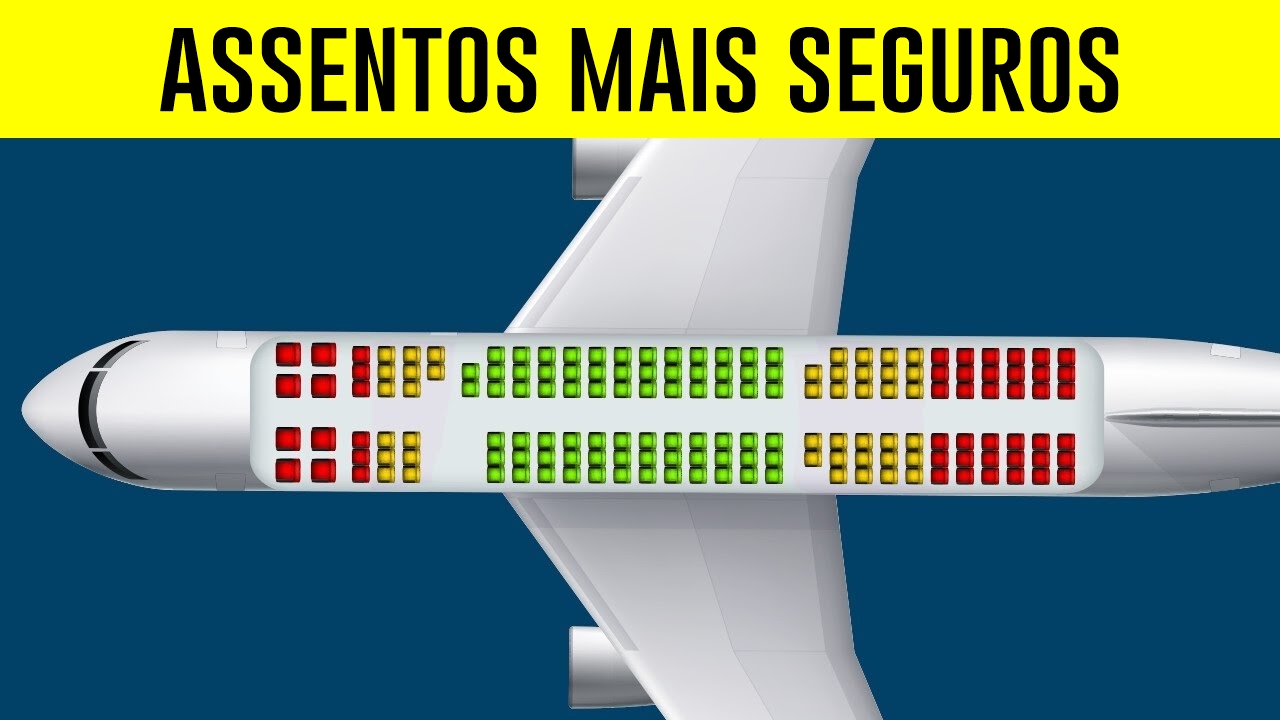
Studies And Experts Indicate The Seats With The Greatest Chances Of Survival In Case Of Emergencies. Know Which Ones Are!
Traveling by plane is one of the safest forms of transportation, even surpassing walking in terms of statistical safety. However, air accidents still occur, and it’s natural for concerned passengers to ask: what is the safest seat on a plane?
The answer to the question “safest seat on a plane” involves a careful analysis of accident statistics, safety regulations, and factors related to the features of modern airplanes.
Additionally, factors such as aircraft design and the materials used also contribute to safety.
-
He started running at 66 years old, broke records at 82, and is now a subject of study for having a metabolic age comparable to that of a 20-year-old, in a case that is intriguing scientists and inspiring the world.

-
Oldest tree on the planet reappears after 130 years of searches: Wattieza, 385 million years old, was 10 meters tall and had no leaves or seeds; Gilboa fossils in New York solved the mystery in 2007.

-
A 48-square-meter house assembled in hours with 4,000 bricks made of recycled plastic that does not absorb moisture, has natural thermal insulation, and costs less than 90,000 reais in a complete kit.

-
Luciano Hang revealed that Havan’s air fleet has already accumulated more than 20,000 landings, 10,000 flight hours, and 6 million kilometers traveled, and he says that without the planes, the company would never have grown so quickly.


The Safety Of Commercial Aviation
In recent decades, advancements in aviation technology and safety regulation have drastically reduced the number of fatal accidents.
In 2022, for example, there were over 32.2 million commercial flights worldwide, with only five recorded accidents, according to the International Air Transport Association (IATA).
This demonstrates an impressive safety record. Comparatively, driving a car presents a much higher mortality rate.
According to a study by the Massachusetts Institute of Technology (MIT), the risk of death on commercial flights has halved every decade over the past 20 years.
In regions like the US, Europe, and Japan, the chances of a fatality in flight are 30 times lower than in countries with looser regulations.
The introduction of technologies such as automated collision avoidance systems and improvements in maintenance protocols also contribute to this positive scenario.
The safety of aviation is also due to the stringency of protocols adopted by regulatory authorities, such as the Federal Aviation Administration (FAA) and the European Union Aviation Safety Agency (EASA).
Brazil is not far behind. The National Civil Aviation Agency (ANAC) has been internationally recognized for its achievements and commitment to safety in civil aviation. In 2023, Brazil achieved a score of 95.1% in the global assessment of the Universal Safety Oversight Audit Programme of the International Civil Aviation Organization (ICAO).
What Is The Safest Seat On The Plane?
>A study conducted by Popular Mechanics analyzed various air accidents to determine the seats with the highest survival rates. The results show that:
- Rear Seats: Have the highest survival rate, about 69%.
- Middle Seats On The Aircraft: Have a survival rate of 56%.
- Front Seats: Show the lowest survival rate, with only 49%.
Specifically, center seats at the back of the plane are considered the safest. This is because, in the event of impact, the front absorbs most of the energy, while the rear is more likely to remain intact.
Additionally, data from the National Transportation Safety Board (NTSB) indicates that passengers sitting in the rear have more time to react to an emergency evacuation.
Studies from the Civil Aviation Authority (CAA) also indicate that aisle seats, while offering more space to move, are more exposed to impacts from objects during severe turbulence. Meanwhile, window seats provide additional protection against side impacts and less contact with other passengers, reducing germ exposure.
Positioning Of Emergency Exits
Being near an emergency exit is also a crucial factor for safety. Studies indicate that passengers seated within five rows of an exit have a higher chance of successfully evacuating in an emergency.
However, seats near the wings, where the fuel tanks are located, may pose a greater risk in the event of fires or explosions.
For those who travel frequently, choosing a seat near the exits may mean greater peace of mind, as it allows for a quick evacuation if needed.
Moreover, passengers closer to the exits can assist in directing others during an evacuation, increasing overall survival chances.
Other Ways To Increase Safety
In addition to choosing the right seat, there are other precautions that can increase the chances of survival in a plane crash:
- Pay Attention To The Safety Briefing: Knowing where the exits are and how to use them properly can be decisive.
- Keep Your Seatbelt Fastened: Unexpected turbulence is one of the leading causes of injuries on flights, according to the FAA.
- Avoid Synthetic Clothing: Fabrics like polyester and nylon can melt in a fire, increasing the risk of burns.
- Stay Hydrated: The dry cabin air can cause dehydration, contributing to medical conditions such as deep vein thrombosis (DVT), according to the World Health Organization (WHO).
- Avoid Excessive Carry-On Luggage: This can hinder evacuation in emergencies and increase the risk of injury from loose objects.
- Choose Flights On Newer Aircraft: Newer planes typically have more advanced safety systems and structural improvements.
The Impact Position
In an impending impact situation, the recommended position is to lean forward, with your head between your knees and your hands protecting your head.
This position reduces the risk of cervical spine injuries and protects against objects that may be projected. Tests conducted by the FAA demonstrate that this position reduces the chance of serious injury by up to 50%.
With information from Popular Mechanics









-

2 pessoas reagiram a isso.