





 Portuguese
  English
  Spanish
  4 min of reading
  1 comment


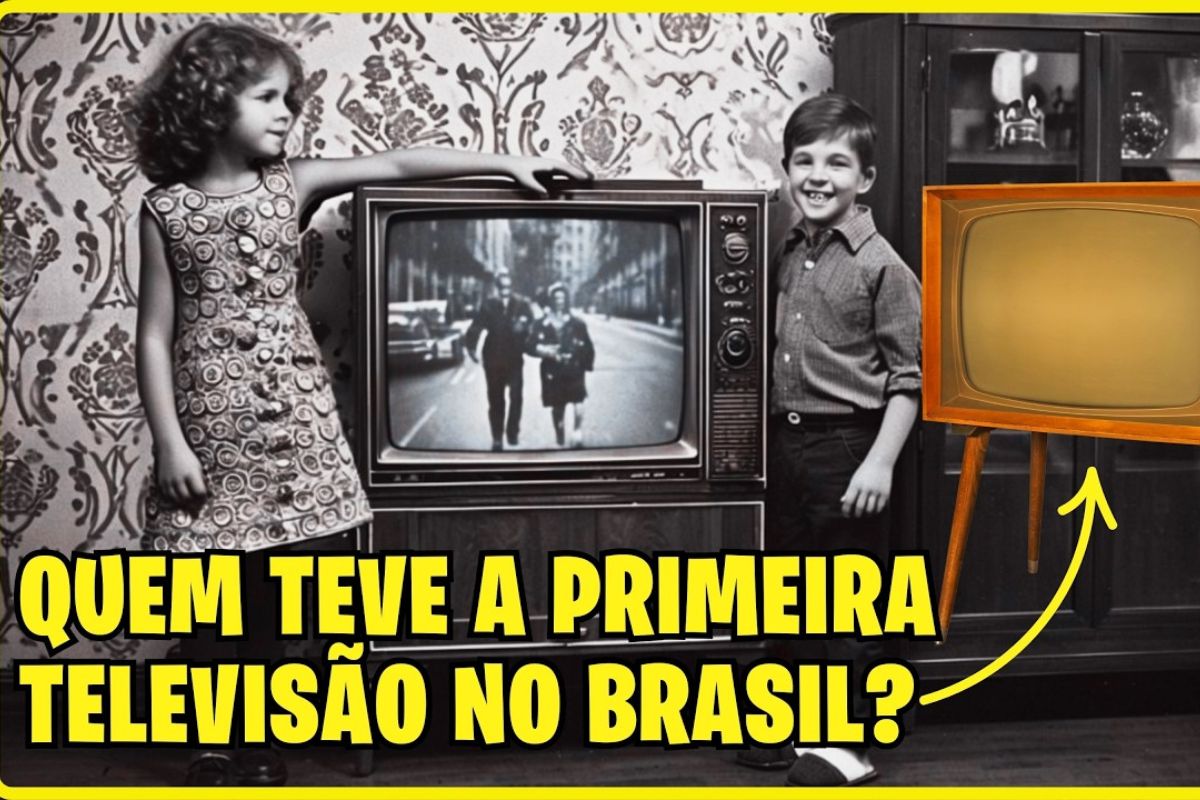


From the Debut of TV Tupi in 1950 to the Smartphone Era, the History of Television in Brazil Reveals How a Device Transformed Leisure, Culture, and the Interaction Between Generations.
In the early years of the history of television in Brazil, watching TV was a collective event. Neighbors brought popcorn, cake, and coffee to the home of the person who had the only set on the street, and everyone gathered in the living room to watch the first broadcasts. The device was a symbol of status and technological curiosity. The country became, in 1950, the fourth in the world to have its own broadcaster, behind only the United States, England, and France.
This novelty, however, was born full of improvisations. Defective cameras, delays in the debut, and lack of technical planning marked the initial transmission of TV Tupi, created by Assis Chateaubriand. Nevertheless, the impact was immediate Brazil officially entered the era of moving images, marking the beginning of a revolution in domestic and cultural habits.
The Birth of Brazilian Television
On September 18, 1950, at 5:30 PM, a six-year-old girl, Sônia Maria Dór, opened the broadcast with the phrase: “Good evening, Brazilian television is on the air.”
-
In a flooded well, archaeologists found a 1,700-year-old Roman egg that still contains clear and yolk intact inside the very thin shell.

-
Something is happening around the Earth: Inside the huge explosion of fireballs in 2026

-
A hot air bubble coming from Argentina expands over Brazil, causing thermometers to exceed 38 degrees with a thermal sensation of 40 degrees in late March, affecting 6 states at once.

-
The radish leaf that almost everyone throws away has more polyphenols, flavonoids, and fiber than the consumed root, and a 2025 study showed that the leaf contains compounds that protect the intestine, combat inflammation, and may inhibit the growth of cancer cells.


The first broadcast of TV Tupi, in Alto do Sumaré, in São Paulo, had technical failures and improvisation, but made history.
Assis Chateaubriand, owner of the Diários Associados, invested heavily: he bought 200 televisions in the United States and installed them in squares and public places so that people could see the new invention.
Few households had access to TV, starting with Chateaubriand’s own house and those of his sponsors.
The first national model was manufactured in 1951 by Semp, costing the equivalent of R$ 46,000 today. It was the size of a wardrobe and required four men to lift.
TV as a Social Event and Status Symbol
In the 1950s, those who owned a television became the center of the neighborhood. Windows opened to the backyard, and entire families gathered to watch live programs, many of which were adapted from radio such as radio dramas and musicals.
The programming was short: most of the day showed only the image of an Indian, the symbol of TV Tupi, with background music. When the signal returned, there was celebration and anticipation.
Having a television was a luxury and a sign of power. The habit of covering the device with handmade crochet covers showed care for the household “treasure.”
Watching in groups reinforced community bonds, turning each program into a ritual of coexistence.
From Black-and-White Images to Colors That Changed the Country
While the BBC and other European networks tested broadcasts since the 1930s, Brazil took almost two decades to popularize the sets.
And colors only truly arrived in 1972, with the first color transmission made from Rio Grande do Sul, during an experimental event.
Before that, those who wanted “color” improvised: they placed colored plastic sheets over the TV.
There were blue, red options, and even “rainbow” models, which tinted the whole image in artificial shades an eccentric luxury for the time.
Color television became synonymous with modernity and consolidated the medium as the main means of communication in the country in the 70s and 80s.
TV as a Cultural Mirror of Brazil
With the arrival of colors and the popularization of sets, television became the stage for great Brazilian cultural transformations.
Soap operas, musicals, news programs, and comedy shows created references that spanned decades. Radio artists migrated to the screen, and the audience gained faces and expressions for the voices they already knew.
From the 1970s, the sets became more accessible. Even so, in 1977 a TV still cost twelve times more than a popular 40-inch model today, according to a study by USP.
But the investment was worth it: TV unified accents, habits, and imaginations, becoming a mirror of urban and modern Brazil.
From the Living Room to Pocket Screens: The Decline of Protagonism

Today, 97% of Brazilian households have at least one television, but the protagonism has changed. Smartphones, tablets, and streaming platforms transformed the way people watch, and collective habits gave way to individual consumption. The crowded sofa of neighbors became a shared screen via apps.
Still, television remains a symbol of unity and national memory.
It was in front of it that the country witnessed World Cups, disasters, soap operas, and elections, and it is still where the major simultaneous audience events come from, capable of stopping the country for a few minutes.
More than an object, television is a portrait of Brazil in transformation.
From the Indian of TV Tupi to the voice-activated remote control, from the improvisation in black and white to ultra definition in 4K, the country has followed every step of modernization technology at the rhythm of everyday life.
The history of television in Brazil is, at its core, the story of how we learned to see the world and to see ourselves reflected on screen.
And you, do you still remember when watching TV was an event with neighbors and popcorn? Or are you part of the generation that watches everything on mobile? Share in the comments; we want to know what your most memorable moment in front of the screen is.








Sou de 1954 e me lembro que eu assistia tv nas casas até que em 1980 comprei uma