






 Portuguese
  Spanish


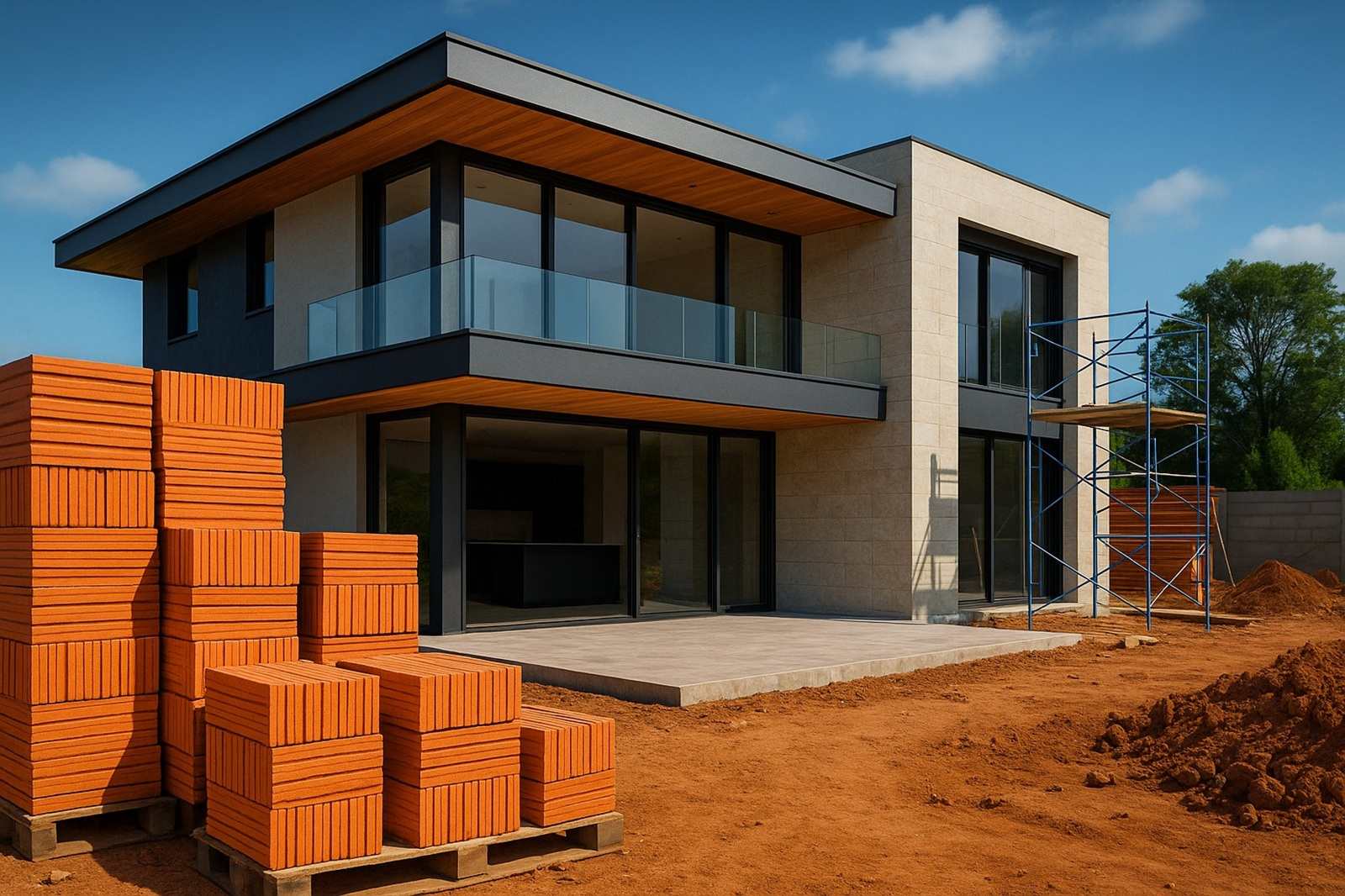


How Finishes, Installed Systems, and Structural Choices Influence the Budget of a Modern Residence, Showing How Each Criterion Contributes to Defining the True Standard of the Construction and the Final Cost per Square Meter.
The search for understanding how much it really costs to build a high-standard house in Brazil grows as more people realize that this type of project involves much more than just choosing sophisticated materials.
The question often arises, especially among those starting the planning process believing that simply selecting expensive finishes will automatically deem the property luxurious.
However, when one observes the process as a whole, it becomes clear that the final standard depends on factors that go far beyond aesthetics.
-
How to Prevent Brown Recluse Spider Bites: Common Hiding Spots and Free Tips to Reduce Risks

-
Natto: The Unusual Japanese Superfood Gaining Popularity on Social Media and Driving Record Exports
-
Brazilian Mayor Goes Undercover as Homeless for 24 Hours to Assess Public Services

-
15-Year-Old Entrepreneur Malu Lira Publishes 20 Children’s Books on Financial Education, Earns $500,000, and Expands Her Project to the Amazon Rainforest




This difference is evident in the visible materials, the installed systems, and how the structure and spaces are conceived.
Each set of decisions alters the budget and defines the level of the construction. By analyzing these criteria, it is possible to understand how the cost per square meter is determined and, consequently, the investment required to achieve the desired standard.
Additionally, a real case helps illustrate how, in practice, direct and indirect expenses can transform the budget of a project.

Aesthetics as a Starting Point
The first criterion that differentiates a basic house from a high-standard residence lies in the visible elements. Flooring, coverings, fixtures, countertops, frames, and finishing details make up the first layer of perception of the property.
This is the factor that most attracts the attention of those visiting a house and is often the most remembered when discussing high standards.
Basic coverings, for example, can have more accessible pricing, while imported porcelain tiles reach much higher figures.
This difference directly affects the total cost because the variation between simple options and sophisticated materials can significantly multiply the budget.
The same occurs with marble works. A granite countertop remains among the most economical materials, but quartzites and special synthetic surfaces easily exceed high prices.
The choice of fixtures follows the same logic. Basic faucets and valves work well in a large house, but more sophisticated versions, which vary in design, finish, and technology, considerably raise the price. In the case of frames, the difference is even more pronounced.
In simple constructions, it’s common to use ready-made aluminum or tempered glass models, easily found at construction supply stores.
In high-standard projects, however, custom frames prevail, featuring sturdier profiles and special glass, which increases both manufacturing and installation costs.
These decisions carry significant weight in visual perception and the sense of quality, but by themselves, they do not define a project as high standard.
An expensive covering transforms the environment but does not guarantee, on its own, the sophistication that the market considers a reference. For this reason, finishes function as a gateway, representing only a part of the overall definition of the final standard.

Installed Systems: The Comfort That Doesn’t Show but Costs
The second criterion involves less visible elements, yet essential for transforming the experience of living in the house.
Climate control, pressurization, heating, solar energy, and automation form a set of systems that directly influence the comfort and level of the property.
Climate control is one of the standout items in this group. In high-standard homes, it is common to install air conditioning in all environments.
This decision requires prior planning to embed all the infrastructure, from drainage to electrical points and piping.
When this preparation occurs during construction, the process is simpler and reduces rework that, besides being frustrating, can generate considerable costs.
The pressurization of the hydraulic network is also a decisive factor. Pressurization pumps ensure that showers and faucets have adequate pressure, creating an experience similar to hotel stays.
Without this system, even a house with expensive finishes may offer a less satisfactory shower, showing that comfort relies much more on the invisible set than on aesthetics.
Water heating with solar energy is another significant differentiator, reducing dependence on electric showers, improving pressure, and lowering energygia.
It works in conjunction with photovoltaic solar energy systems, which require initial investment but drastically reduce the electricity bill over the months.
Adding to all this are automation systems, capable of controlling lighting, curtains, audio, internet, and security.
When installed in an integrated manner, they enhance functionality and increase the sense of modernity. These systems demonstrate how high standards extend beyond what is visible, reinforcing that the true differentiator lies in the experience offered to residents.
Spacious Areas and Reinforced Structure
The third criterion pertains to how the areas connect with one another. Amplitude, integration, and large spans are part of the high standard concept and have a direct impact on the project cost.
In basic constructions, environments are compartmentalized, with smaller, separate rooms. The result is visual barriers and less fluid circulation.
In high-standard houses, the opposite takes place. Integrated environments, glass facades, large openings, and high ceilings create a sense of continuity and enhance natural light. This type of project requires a reinforced structure.
To create large spans without visible pillars, more steel, more concrete, and specialized labor are necessary. In two houses with the same square footage but different levels of integration, the structural difference can significantly raise costs.
These structural choices demonstrate that high standards do not limit themselves to aesthetics. Engineering needs to support the architectural concept, which requires greater investments in execution and materials.
The final result, however, often justifies the cost: spacious and well-lit areas make the living experience more comfortable and increase the property’s market value.

How the Sum of These Factors Impacts the Cost per Square Meter
After analyzing the three criteria, it becomes easier to understand the variation in cost per square meter. In the basic standard, simple frames, small environments, economical coverings, and conventional structure keep the cost at a lower level.
In the intermediate standard, larger environments, moderate integration, and higher quality materials begin to appear.
In the high standard, the sum of custom frames, reinforced structure, complete systems, and sophisticated finishes places the initial cost at a high level.
This value increases in accordance with the owner’s choices, as each personalized detail adds to the final investment. The cost includes materials and labor but does not consider the land, which in valued areas can exceed all other project expenses.
A Real Case Shows How the Total Cost Goes Far Beyond the Construction
The criteria above help understand how high standards are defined, but nothing better explains the financial impact than a real case. In a detailed account shared on a YouTube channel, an investor disclosed that the land cost R$ 220,000. From there, he started the construction, which consumed R$ 500,000 in materials and labor.
Before the construction, he had to cover mandatory expenses, such as technical projects, financing fees, city hall costs, and the land transfer tax (TBI), totaling R$ 30,000. During construction, an additional R$ 53,000 was incurred in construction interest, construction social security, inspection fees, and condominium fees.
The property was listed for sale at R$ 1,300,000. But selling also comes with costs. He estimates he will pay R$ 80,000 in real estate commission and R$ 40,000 in capital gains tax.
This example highlights how building for sale can be advantageous but requires rigorous planning. Indirect costs — interest, fees, taxes, and commissions — significantly impact the budget.
External Factors That Further Expand the Price Difference
Besides the internal criteria of the project, external factors elevate the cost of high-standard homes. Among them are:
- Land: large areas, gated communities, privileged views or waterfront locations.
- Project and architecture: custom cabinetry, landscaping, swimming pools, spas, elevators, and security systems.
- Services and condominium: internal clubs, marinas, helipads, and enhanced security.
- Exclusivity: few lots, limited units, or unique properties increase value.
- Urban location: prestigious neighborhoods, schools, fast roads, and full infrastructure.
- Local market: regions with high demand for premium properties increase final value.
The Construction of High Standards as a Result of the Sum
The analysis of the criteria, combined with the real case, shows that building a high-standard house means considering much more than finishes.
The standard is the result of the sum of aesthetics, installed systems, structure, land, and all operational costs of the project. When these parts align, the property reaches a level that clearly distinguishes itself from a conventional construction.
Even with high costs and various stages requiring attention, high standards continue to attract investors and buyers.
When well planned, the project can lead to superior comfort, increased property value, and, as illustrated in the presented example, significant financial profit.
Building a house of this level requires strategy, technical knowledge, and strict control over each decision, as this combination determines how much the project will cost — and how much it may yield in the future.








Se a pessoa tem 1 milhão na mão, é melhor colocar num CDI que irá render esses 300 mil em 2 anos sem dor de cabeça e nem riscos. Já nesse caso parece que a obra foi financiada, aí até da para entender que vale a pena desde que a pessoa tenha mão de obra qualificado para o serviço, um bom conhecimento do mercado imobiliário e disciplina financeira.
Infelizmente não colocou o tamanho da obra
Qual a vantagem de investir um milhão para lucrar 300k?
Fora a dor de cabeça, principalmente com mão de obra, escassa e pouco qualificada.
O **** ele investil 720 mil ,220 lote e 500 da construção