





 Portuguese
  English
  Spanish
  3 min of reading
  23 comments


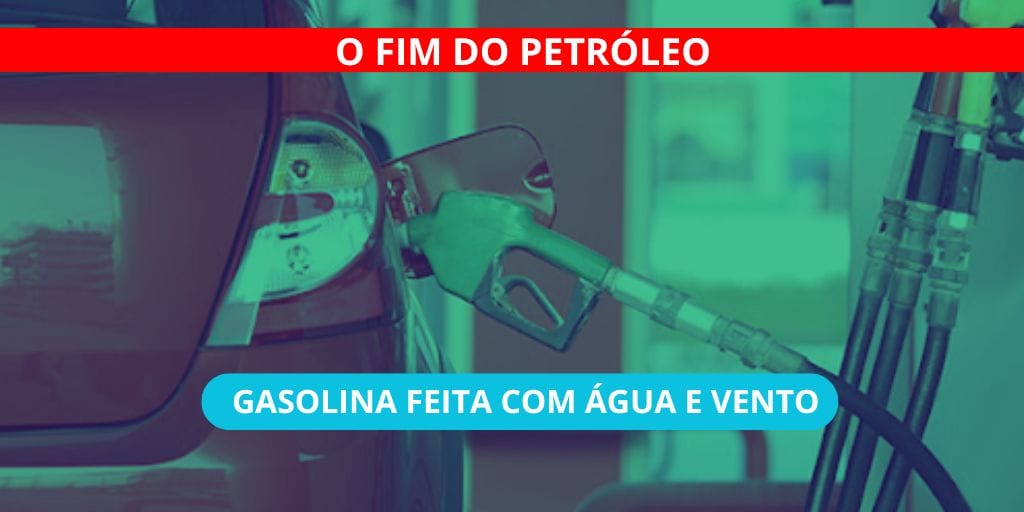

Porsche Launched the First Gasoline Factory Without Oil, Made from Wind and Water. The e-Fuel, with a High Initial Price, Promises to Revolutionize the Automotive Industry. Tested in Brazil, It Proved to Be Viable and Compatible with Traditional Engines.
Porsche took a bold step into the future by opening the first commercial synthetic gasoline factory, named e-Fuel, in Chile. This innovative fuel is produced without oil, using only wind and water, and promises to revolutionize the global automotive industry. However, the burning question is: how much will a liter of this sustainable fuel cost in Brazil?
Demonstration in Brazil: Technology and Performance
As published by CPG in May, Porsche held an event in Brazil to demonstrate the technical viability and performance of e-Fuel. The company imported 600 liters of e-Fuel from Chile and invited journalists to test models like the 911 and Cayenne fueled with the new fuel.
The results were impressive: at the event, there were no reports of mechanical issues, proving that e-Fuel can be used without adaptations in conventional engines.
-
It surpassed the T-Cross, Creta, and Tracker: with nearly 8,000 units sold, the Volkswagen Tera was the best-selling SUV in March 2026.
-
Honda performs miracles in fuel consumption with a hatch that marks 13.2 km/l in the city and 15 km/l on the highway, leaving Polo, HB20, 208, and Onix behind and becoming a reference among compact cars without resorting to turbo or hybrid systems.

-
China alone accounts for 70% of trade within the BRICS, while Brazil establishes itself as an essential supplier of food and minerals: understand how the group, which already represents nearly 40% of the world’s GDP, is changing the game.

-
Starting in May, those who do not have registered biometrics will not be able to apply for Bolsa Família, sickness benefits, or unemployment insurance: understand the new rule that changes access to benefits for millions of Brazilians.

How e-Fuel, the Gasoline Without Oil, Is Made?
The production of synthetic gasoline is an innovative process. Using electrolyzers, water is split into oxygen and hydrogen with the help of wind energy.
Carbon dioxide captured from the atmosphere is then filtered and combined with hydrogen to produce synthetic methanol, which is subsequently converted into e-Fuel.
This method ensures that the fuel is sustainable and contributes to the reduction of carbon emissions.
Current and Future Cost of e-Fuel
Currently, the production of e-Fuel is expensive, reflecting in the price of the fuel. If it were available in Brazil today, a liter of e-Fuel would cost between R$ 23.26 and R$ 32.08, including taxes.
However, this price is expected to decrease as production increases. Porsche plans to raise production to 55 million liters per year by 2030, which may significantly reduce costs.
This Porsche project, named “Haru Oni”, located in the Chilean Patagonia, currently has a production capacity of 130,000 liters per year.
The name, which means “land of winds” in the local dialect, reflects the use of wind energy in the production process.
e-Fuel is designed to be used in any internal combustion engine, whether in classic or high-performance cars. When burned, it releases only the CO₂ captured during its production, creating a closed and carbon-neutral cycle.
Cost Table for Gasoline Without Oil in Brazil:
| Production Phase | Annual Capacity | Price per Liter (R$) |
|---|---|---|
| Initial | 130,000 liters | 23.26 to 32.08 |
| Expansion (2030) | 55 million liters | To be defined (expected reduction) |
Future of the Fuel Industry
Porsche is not alone in the search for sustainable alternatives to oil. Other automakers and energy companies are also investing in synthetic fuels and green technologies, signaling a significant shift in the global automotive and energy industries.
In this sense, the introduction of e-Fuel by Porsche could mark the beginning of a new era for fuels. The possibility of using a sustainable and carbon-neutral fuel in traditional engines without the need for adaptations is a great advantage.
Although the current price is still high, the expectation is that, with increased production, costs will decrease, making e-Fuel a viable and attractive alternative to fossil fuel.
And you, would you be willing to pay more for a fuel that helps save the planet? Leave your opinion in the comments!









Prestem atencao. : no futuro o co2 sera a fonte de oxigênio para as células. E os gases serão reciclados liberando oxigênio biosfera e capturando apenas o carbono.
Vc estão quase entrando nessa bioeconomia . E o resultado será um novo ciclo atmosférico . Se perturbarem os planos divinos na Terra vão sofrer ate perder suas cidades e quebrar suas empresas e vidas. Acertar o alvo tecnologico é o sonho divino na Terra. E dar vida abundante e criar riquezas para desfrutar .
Esse é o objetivo disso tudo. Fazer a vida dar certo na Terra.
Facam o que digo:
No setor fora da mineração de sólidos e fora da construcao civil em geral :
40 a 60% da frota ativa vai ser de motores a combustão. Podendo ter biocombustíveis de origem vegetal nesse mercado . O co2 emitido sera reciclado. Aos poucos vão transformar óleo cru e carvao natural em reservas de co2 para o futuro sustentável da energia do carbono na Terra. Nao perturbem os planos. Facam isso..vai dar certo. Era isso que existia no Eden. E vcs perderam tudo por decidir errado.
Esse tipo de combustível deve ser usado em máximo 40 % a 60 das frotas ativas fora do setor da mineração de solidos e construção civil em geral . A mineração de solidos e a construção civil vai continuar usando petroleo de origem natural ( óleo cru) até terem uma economia reciclável de CO2 . Isso vai alimentar a reciclagem de co2. No futuro vai extinguir as reservas de óleo cru. E vao precisar ter as 2 economias de energia de combustivel. Uma fase de transicao longa . Ate terem dominado a reciclagem de co2. 7
Vcs vao usar e.fuel na frota ativa de 40% até 60% da frota ativa . Despoluindo cidades. E abrindo o mercado para a economia sem petróleo em motores de veículos em geral. Assim vao comecar a fase da transição energética.
Para construir cidades novas vai ser necessário muito petróleo cru e muita gasolina reciclável. Vcs precisam entender que é impossível soltar a economia de construção civil com a atual política errada do petróleo e dos combustíveis. Acertar isso é o segredo para começar as obras e não prejudicar a Biosfera e a economia. Uma jogada da vida na Terra.