





 Portuguese
  English
  Spanish
  7 min of reading
  2 comments


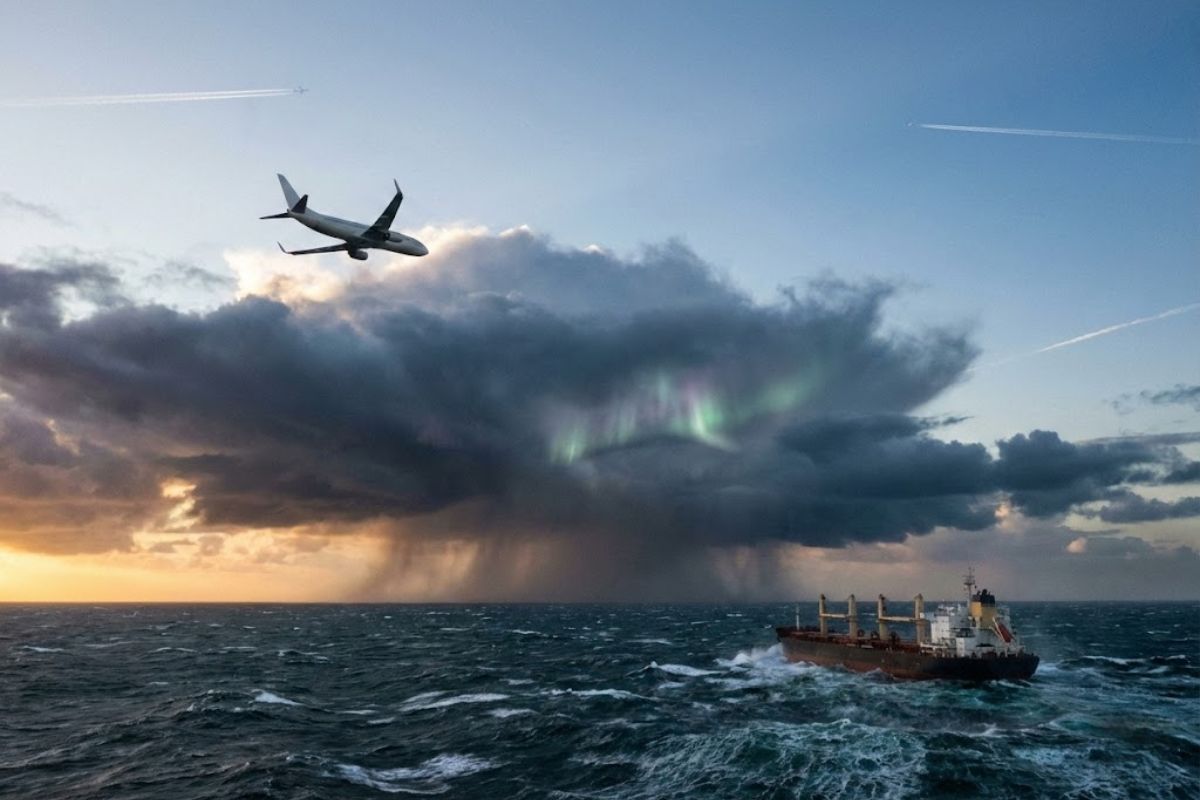


While More Than 100 Thousand Daily Flights Connect The Planet, The South Atlantic Remains Almost Empty Of Passenger Planes, With Rare Routes Between Africa And South America Due To Lack Of Demand, Income, Global Hubs, And Consistent Historical Links Capable Of Sustaining High Frequencies And Modern Fleet On Both Sides
Every day, more than 100 thousand flights take off around the world, connecting cities on nearly every continent. Still, when looking at the route map, it’s easy to notice a big void: almost no planes cross the South Atlantic directly linking South America to Africa, despite both regions having nearly two billion inhabitants.
Over more than a century of aviation, there have been phases when the South Atlantic was even considered a more viable corridor than the North Atlantic, with flights between Europe, Africa, and Brazil as early as the 1920s and Zeppelins operating from Frankfurt to Rio de Janeiro between 1931 and 1937. Today, however, the main explanation for the almost empty sky between Africa and South America is not technical, but economic and demographic, supported by colonial history, income concentration and low business connectivity.
Geography And Emergency Routes Are Not The Main Problem
At first glance, geography does not seem to justify the absence of planes connecting both sides of the South Atlantic.
-
Chaos On Airplane Could Be Expensive: Proposal Aims To Prevent Disruptive Passengers From Flying For Up To 1 Year In Brazil And Face Fines Of Up To R$17,500

-
Man Arrested After Halting Takeoff of Fire Department Helicopter During Child Rescue in Guaratuba

-
With 37 Tons of Cargo, Over 8,000 km Range, and Ability to Land on Unpaved Runways, the Airbus A400M Demonstrates How Europe Created a Military Giant That Transports Armored Vehicles, Aerially Refuels Fighters, and Operates in Conflict Zones and Humanitarian Missions Worldwide

-
Emergency Landing in Campos Amarais After Bird Strike on Small Plane


The city of Natal, in Brazil, with about 1.5 million inhabitants in its metropolitan area, is approximately 2,900 kilometers from Freetown, the capital of Sierra Leone, which also has a population of around 1.5 million.
It’s a significant distance, but shorter than New York–London, which exceeds 5,500 kilometers and is one of the busiest routes on the planet.
From a safety perspective, twin-engine jets must maintain capacity to reach an airport within 60 minutes of flight in case of engine failure, according to usual operational rules.
In the South Atlantic, there are few emergency landing alternatives: St. Helena, almost 2,000 kilometers from the coasts of Angola and Namibia; Ascension Island, about 1,300 kilometers northwest of St. Helena, with a military runway used even in emergencies of commercial flights; and Fernando de Noronha, approximately 350 kilometers from the Brazilian coast.
These limitations create a range in which a twin-engine plane would be beyond the 60-minute window, but do not make the corridor unviable.
Four-engine aircraft do not face this same restriction, and historically there have been operations crossing the South Atlantic. In other words, geography and emergency airports complicate matters but do not alone explain the empty sky.
First Flights, Zeppelins, And The Past When The South Seemed Easier
The first transatlantic flight over the South Atlantic was carried out in 1922, when a Portuguese crew completed the route from Lisbon to Rio de Janeiro in several stages. In 1927, a French team made the first non-stop flight over the South Atlantic, also heading to Brazil.
In the 1930s, French, Italian, and German operators ran regular routes between Africa and South America, even using dirigibles.
Between 1931 and 1937, the famous Zeppelin Graf Zeppelin, fueled by hydrogen, frequently flew from Frankfurt to Rio de Janeiro, crossing the South Atlantic.
At that time, the North Atlantic was considered more dangerous due to adverse weather and the more northern location of cities like New York, Toronto, and much of Europe, exposed to more turbulent high-altitude jets.
With the end of direct colonialism over much of Africa and the reconfiguration of air traffic throughout the 20th century, companies shifted their investments to corridors with higher economic returns, especially between North America and Europe.
The result is that historical flows over the South Atlantic have dwindled, and the few remaining routes have come to concentrate on specific niches.
Dispersed Population, Low Average Income, And Economy Concentrated In The North
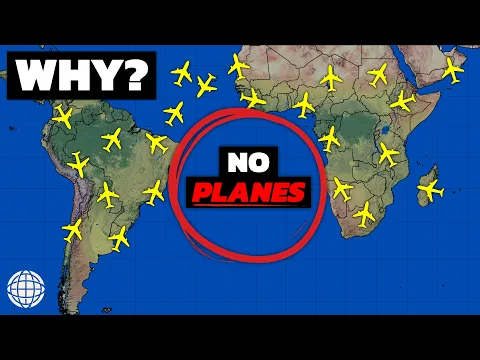

Africa has around 1.5 billion inhabitants, while South America totals about 450 million, totaling approximately 2 billion people, one quarter of the world’s population. Still, almost no planes directly connect the two continents.
The main reason lies in the combination of population density and available income for air travel.
Africa has an area of over 30 million square kilometers, with large uninhabitable or sparsely populated regions, such as the Sahara Desert and the Congo rainforest.
This reduces the number of large urban agglomerations with sufficient income to sustain frequent intercontinental routes. North America and Europe combined have just over 1.3 billion people, fewer than Africa and South America combined, but concentrate economies of nearly 30 trillion dollars per year on each side.
In contrast, South America has a GDP of around 4.3 trillion dollars, while Africa does not reach 3 trillion.
In practice, Africa and South America have more people, but about a tenth of the money of Europe and North America, which drastically limits the number of passengers willing and able to pay for intercontinental tickets.
Without sufficient money circulating, no airline maintains a plane crossing the South Atlantic on a large scale.
Few Hubs, Real Routes, And Almost Absolute Dominance Of Brazil
Within Africa, a few hubs stand out. South Africa, with around 64 million inhabitants, concentrates major cities like Johannesburg and Cape Town and is practically opposite the Brazilian coast.
There are direct flights to São Paulo, both from Johannesburg and Cape Town, forming part of the little air traffic between Africa and South America.
Ethiopia, with around 130 million inhabitants, operates another rare link: a flight that departs from Addis Ababa to São Paulo and continues to Buenos Aires, indirectly connecting Ethiopia, Brazil, and Argentina.
There are also links between Brazil and Angola and between Brazil and Cape Verde, supported by historical and linguistic ties from former Portuguese colonies.
On the South American side, almost everything converges to Brazil, which has more than 210 million inhabitants, about half of the continent’s population.
This means that, in practice, a transatlantic flight linking Africa and South America almost always has São Paulo as a hub, with very few connections outside this circuit.
The lack of other high-income, high-traffic hubs reduces the incentive for companies to open new direct routes.
North Atlantic Crowded, South Atlantic Empty: Demand Comparison
In the North Atlantic, the scenario is the opposite. About 2,000 flights cross the ocean daily between North America and Europe, connecting almost all major cities on both sides.
A European or North American city typically has direct flight links to half a dozen or more destinations on the other continent.
This density of routes arises from developed and highly specialized economies, with jobs concentrated in areas like finance, technology, engineering, pharmaceuticals, entertainment, and diplomacy.
Companies and governments engage intensively and need constant travel, sustaining higher fares and elevated frequencies.
The immense network of planes over the North Atlantic is, to a great extent, a direct reflection of where the money is.
In Africa and South America, however, the productive base is less integrated.
There are fewer multinational corporations directly connecting these markets, fewer business trips between both sides, and few high-spending tourist flows that would justify a daily flight between African and South American capitals.
When there is international demand, it tends to target Europe or North America.
Migration, Income Aspiration, And Preferred Routes For Those Who Can Fly
Patterns of migration also help explain why there are few planes in the South Atlantic.
People seeking a better quality of life tend to migrate to countries with higher incomes and more diverse labor markets.
For many qualified Africans, the logical route is to move to Europe; for many South Americans, the goal is North America, mainly the United States and Canada.
Migration from Africa to South America or vice versa generally does not offer the same perceived income elevation, which reduces the pressure for direct routes.
As a result, there is a lot of demand for flights going north and little for the east-west axis via the South Atlantic. An African or South American passenger wishing to cross to the other continent often ends up connecting in Europe, where the availability of flights and schedules is much greater.
African Growth And The Hypothesis Of A Busier South Atlantic Future
Despite the current picture, the long-term trend may be different.
Macroeconomic analysis shows that Africa is home to 11 of the 20 fastest-growing economies in the world, indicating potential for increased income, consumption, and travel in the medium term.
If Africa and South America increase their GDPs and middle classes, the demand for direct connections between the two continents may finally justify more planes over the South Atlantic.
There is a clear correlation between level of economic development and frequency of international flights.
As these regions industrialize, consolidate high-value-added services, and strengthen companies with bilateral operations, routes currently considered unviable may become financially sustainable.
In this scenario, the current empty sky between Africa and South America would cease to be an exception and become yet another relevant corridor in the global network.
Knowing all this, if the economies of Africa and South America grow and new flights emerge, can you imagine boarding a plane directly across the South Atlantic between the two continents or would you still prefer connections in Europe?










Nada disso!! Esse preconceito contra a América do Sul veio dos bancos escolares das instituições de educação do Hem. Norte, sempre éramos enxergados como povos primitivos não civilizados.
As mazelas se perpetuam até hoje.
Os artistas, cantores e bandas do Norte do Desenvolvimento, NUNCA vieram fazer shows aqui. Após as vendas de CDs, DVDs despencarem perderem significado (Lucro) na linguagem clara; a Am. do Sul deixou de ser invisível, terra de índios,etc
A água fria bateu na **** deles.
Somente por isso, senão estaríamos INVISÍVEIS.
Simples, só não vou contribuir agora.
Ok
Nada disso! A América do Sul era discriminada nas aulas de Geografia nos países do Norte do Desenvolvimento.
Éramos conhecidos e chamados de índios aqui.
Bandas de rock, Beatles, Paul Mactney, e muitos outros cantores e bandas da Europa e Eua sempre IGNORARAM
a Colônia do Sul. A partir do momento que os CDs zeraram às vendas; a internet, os streaming da vida tomaram espaço.
Zeraram o CAIXA, e a água fria bateu na **** deles; aí viraram mortos de fome, começaram dar tiros pra todos os lados.
Começaram MENDIGAR para os “índios” do hemisfério sul, porém com a garrafa de álcool escondida no camarim para desinfetar as mãos caso cumprimentassem alguém, a comida exigida a risca. Enfim, mudou quase nada!!
Por isso, NÃO VOU contribuir com esmolas em qualquer show.