





 Portuguese
  English
  Spanish
  3 min of reading
  0 comments


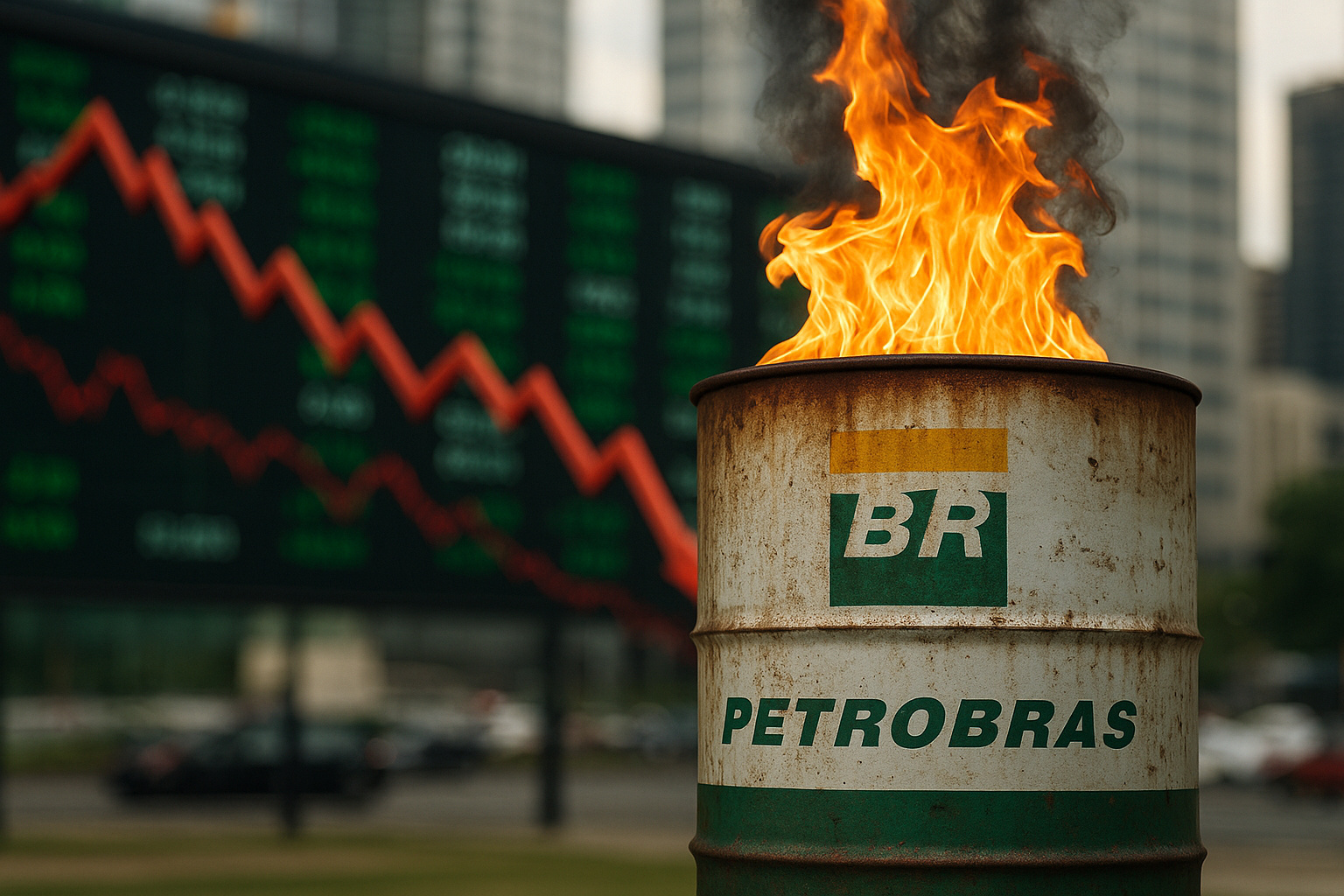
Markets React With Risk Aversion After Trump’s Threats to China and Pressure International Oil Prices
The shares of Petrobras (PETR3; PETR4) and other Brazilian oil companies closed Friday, October 10, 2025, with strong devaluation, driven by the sharp drop in oil prices in the international market.
In addition, new trade threats made by Donald Trump against China increased risk aversion in the markets, which penalized energy sector assets widely.
Oil Drops With Increased OPEC+ Supply and Geopolitical Tension
According to the New York Mercantile Exchange (Nymex), WTI oil for November delivery closed down 4.24%, falling US$ 2.61 and trading at US$ 58.90 per barrel.
Meanwhile, Brent oil, the global benchmark on the Intercontinental Exchange (ICE) in London, depreciated by 3.82%, down US$ 2.49, quoted at US$ 62.73.
In the week ending October 10, WTI accumulated a loss of 3.25%, while Brent fell 2.78%, amplifying the market’s negative trend.
This scenario was intensified by the increase in production by OPEC+, which has been expanding supply for months, challenging global demand.
As a result, prices remain under pressure, and instability intensifies.
In light of this, investors adopted caution, prioritizing defensive assets and avoiding high-risk stocks.
Petrobras and Junior Stocks See Sharp Decline
In this unfavorable environment, Petrobras stocks could not withstand the negative tide.
The preferred shares PETR4 fell 0.89%, priced at R$ 29.94, while the ordinary shares PETR3 recorded a decline of 0.75%, closing at R$ 31.91, according to B3 data.
However, the reaction was even more intense among junior oil companies, which exhibit higher volatility.
PRIO (PRIO3) dropped 3.38%, closing at R$ 36.02.
Additionally, PetroReconcavo (RECV3) fell 3.04%, to R$ 11.81, and Brava Energia (BRAV3) lost 2.50%, ending at R$ 15.63.
These numbers illustrate how global instability directly affects the sector’s most sensitive assets.
-
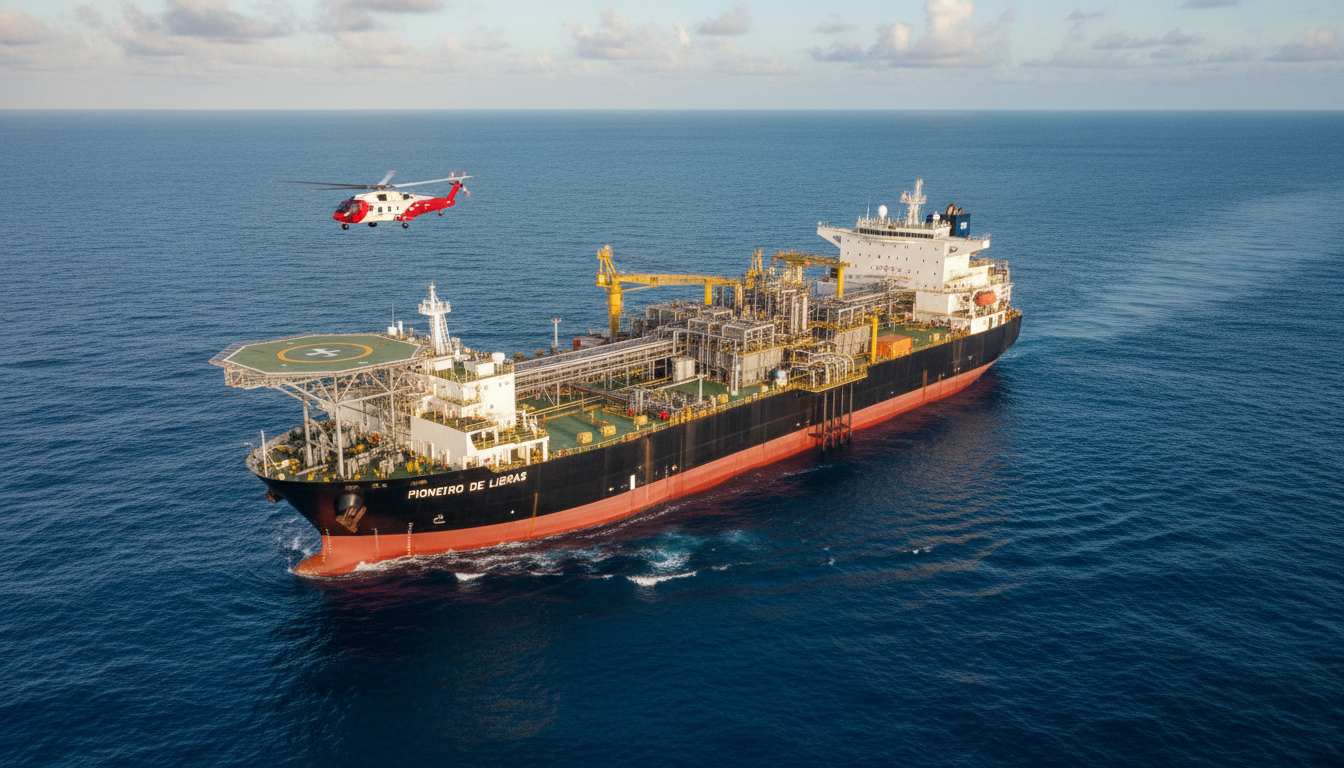
With the war silencing the wells of Iran, Brazil set a record of 5.3 million barrels per day and rose in the global oil ranking without anyone noticing — the pre-salt now accounts for 80% of everything that comes from the seabed.
-
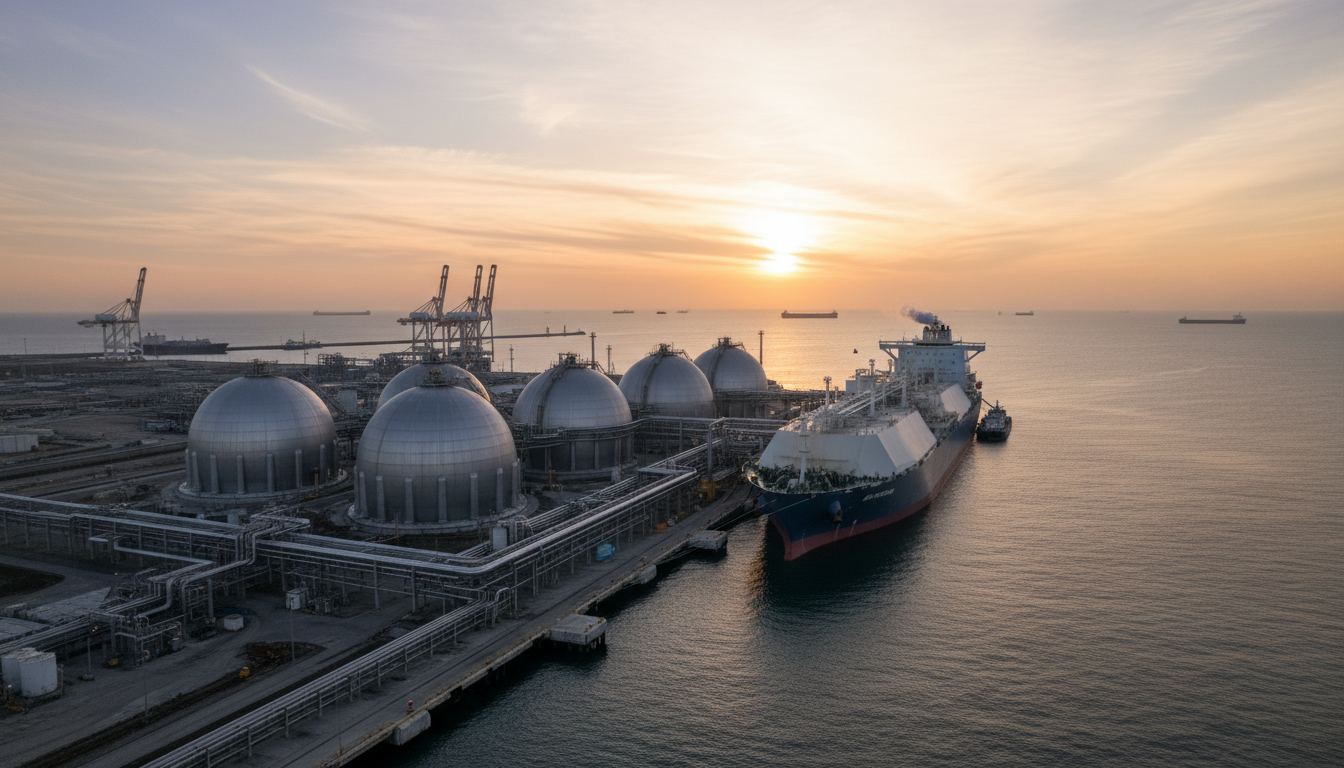
After years of delays and billions invested, the Golden Pass megaterminal in Texas is about to start exporting liquefied gas and will reshape the global energy map amid the Middle East crisis.
-
The artificial intelligence market within the oil industry is worth billions today and will more than double by 2033, and those who do not get on board now with the race for digital twins and autonomous drilling will be left behind.

-
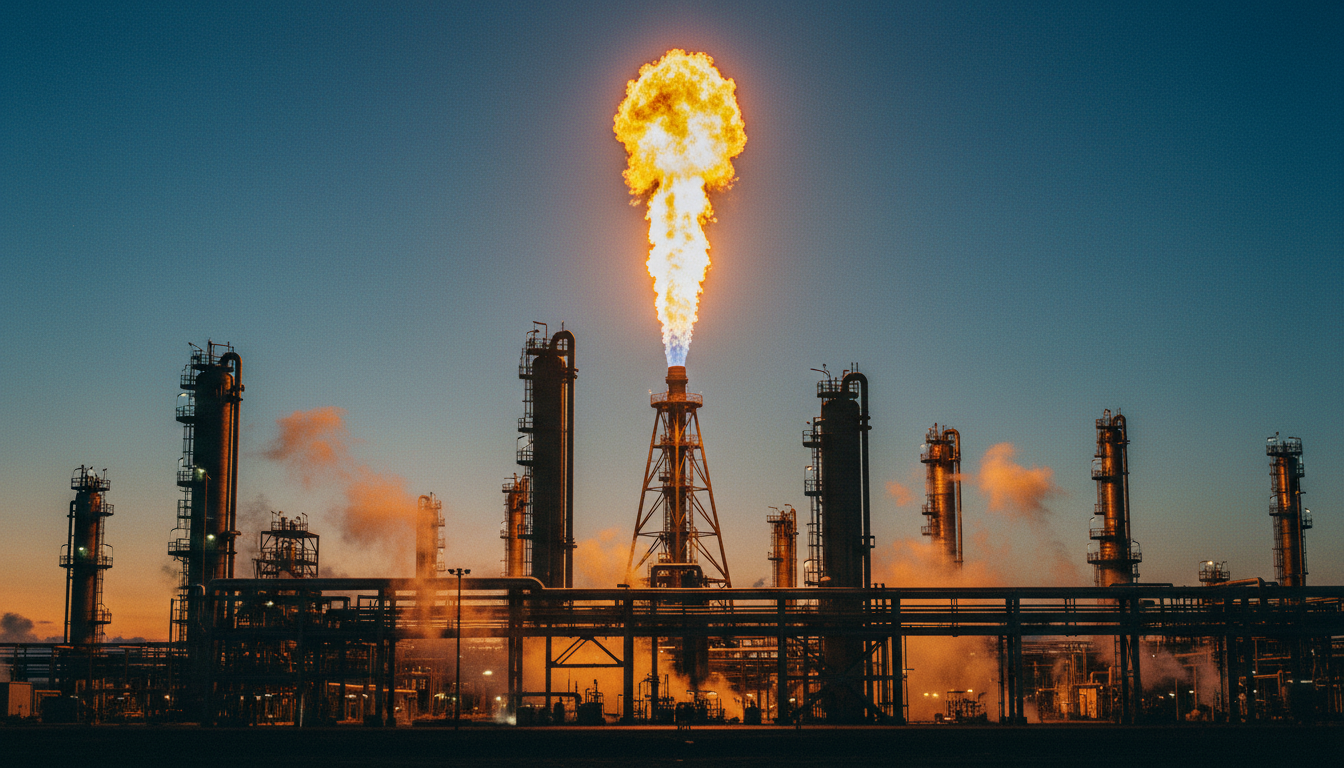
Petrobras quietly installed an artificial intelligence system called Smart Tocha in six of its largest refineries, and the technology independently controls the burning of gases to reduce emissions without any operator needing to intervene.
U.S.-China Trade Dispute Worsens Scenario
The drops were driven by statements from former U.S. President Donald Trump made on Thursday, October 9.
He stated that he intends to impose new tariffs on Chinese products.
This retaliation occurred after Beijing increased controls over the export of rare earth minerals.
As a result, fears of a new trade war between the U.S. and China were reignited, directly impacting the commodity market.
Consequently, global investors reduced exposure to risk assets.
Among them, oil-related stocks were among the most affected.
This episode reinforces the sector’s sensitivity to international political decisions.
Outlook Remains Challenging for the Sector
In addition to trade tensions, the market is closely monitoring the OPEC+ strategy, which continues to increase supply despite the slowdown in global demand.
This makes the environment even more volatile for companies in the sector.
Meanwhile, the debate over energy transition and the future of oil in a decarbonization scenario is growing.
In this way, companies like Petrobras face uncertainties both in the short and long term.
Investors, for their part, remain cautious.
They seek to understand the extent to which the combination of external risks may affect the sector’s performance.










-

Uma pessoa reagiu a isso.