





 Portuguese
  English
  Spanish
  3 min of reading
  0 comments


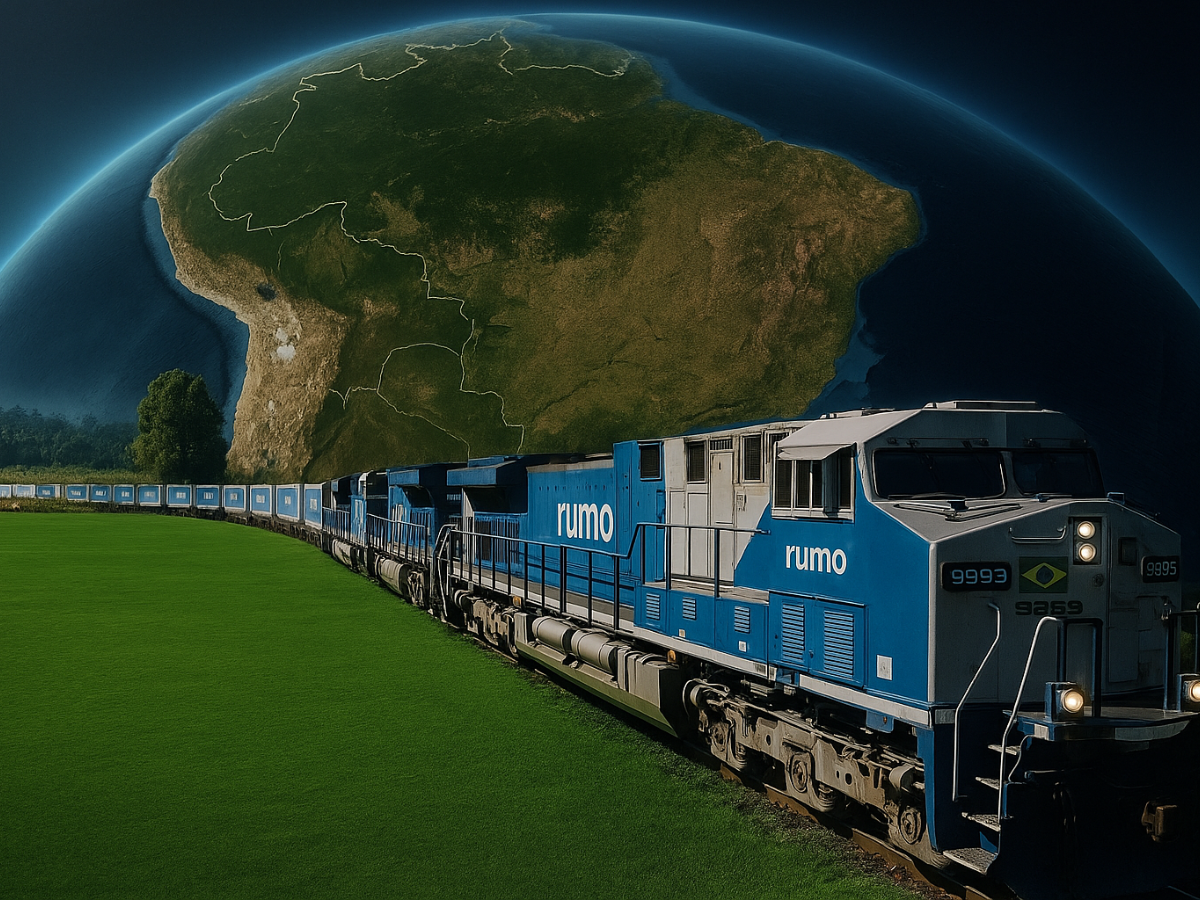
Part of the Cosan Group and with Relevant Foreign Capital, Rumo Logistics Dominates the Flow of Agriculture and Reconfigures the Map of National Infrastructure. Get to Know the Company, Its Structure, and Its Plans
Rumo Logística S.A. has established itself as the largest railway operator in the Country, becoming a central piece in the puzzle of cargo transport, especially for agriculture. In a country of continental dimensions and historically dependent on road transport, Rumo’s rise raises crucial questions about the control of national railway infrastructure.
Understand Rumo’s trajectory, from its creation and strategic merger with ALL to its current power structure, market dominance, and ambitious expansion plans that promise to continue redefining Brazilian logistics.
The Merger That Created the Largest Railway Operator in the Country
Rumo’s origin is linked to the Cosan Group, one of Brazil’s largest conglomerates. However, the watershed moment in its history was the merger with América Latina Logística (ALL), completed in April 2015. This move united Cosan’s financial strength and strategic vision with ALL’s extensive reach and operational experience.
-
Inside an active volcano in Africa, residents use volcanic rocks to build houses in an impressive setting.
-
After 14 years of waiting, a rammed earth mansion built in 1702 in the North Zone of São Paulo will become a park with leisure facilities and green areas, with a million-dollar investment.

-
With 2 unfinished nuclear reactors, up to 25 billion in costs, and proven fraud, the Nukegate case has left 800,000 consumers still paying today for energy that will never be produced.

-
The household appliance that consumes the most energy in Brazilian homes is not the air conditioner; it is located in the smallest room of the house, is used daily, and can account for up to 25% of the electricity bill, while an alternative in the same outlet can reduce this cost by up to 75%.

ALL was already a giant, having pioneered the privatization of Brazilian railways in the 1990s and expanding its network through strategic acquisitions. The merger allowed Rumo to drastically accelerate its entry into the sector, inheriting an extensive railway network but also the challenge of modernizing sections suffering from years of underinvestment.
Operational X-Ray, the Railway Network of Rumo and the Focus on Agriculture
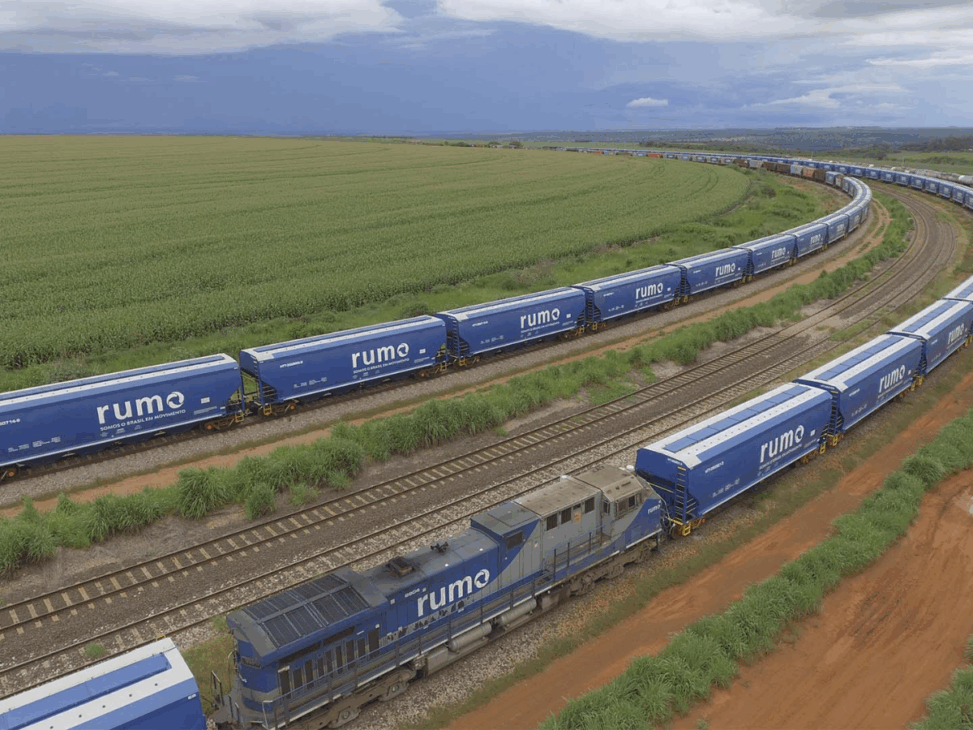
Rumo Logística operates a vast network of approximately 13,500 kilometers of railway lines, with a fleet of about 1,200 locomotives and 33,000 cars. Its network is divided into five main systems: Northern Network, Southern Network, Western Network, Paulista Network, and Central Network.
The main focus of operations is agriculture. The Northern Network, for example, is the primary route for the flow of grains (soybeans and corn) and meal from Mato Grosso to the Port of Santos. The company is also crucial in the transport of sugar, fertilizers, and increasingly, ethanol, establishing itself as the logistical backbone for the export of Brazilian commodities.
Who Really Controls the Largest Railway Operator in the Country?
The control of Rumo Logística is formally in Brazilian hands, through the Cosan Group, led by businessman Rubens Ometto Silveira Mello, who presides over the Board of Directors. However, the capital structure includes the presence of relevant foreign capital.
Shareholder Julia Dora Antonia Koranyi Arduini, residing in Switzerland, holds a stake that grants her the right to appoint a member to the Board of Directors, formalizing a channel for foreign influence in the governance of the company. Rumo’s structure demonstrates a complex dynamic between national control and the participation of global investors.
The Market Share and Competitive Position of Rumo
Rumo has solidified a dominant position in the corridors in which it operates. In 2024, the company achieved a market share of 46% in the transport of grains from Mato Grosso. At the Port of Santos, its share of grain exports reached an impressive 77% in the fourth quarter of 2024.
The total volume transported by Rumo in 2024 was 79.8 billion tons per kilometer useful (TKU), a 3% increase compared to 2023. The company’s main competition does not come from other railways, but rather from road transport, which still holds the largest share of Brazil’s cargo transportation matrix.
Billion-Dollar Investments and the Expansion of the Railway Network
Rumo’s growth is supported by aggressive investments. In 2024, investment (CAPEX) totaled R$ 5.5 billion, a 47.8% increase compared to the previous year. The most prominent project is the extension of the Northern Network in Mato Grosso, a 730 km stretch that will connect Rondonópolis to Lucas do Rio Verde, with an estimated investment of up to R$ 15 billion.
The company is also investing in technology, such as the Positive Train Control (PTC 2.0) system, to increase efficiency and safety, allowing for greater traffic on existing lines. Rumo positions itself as the main player in the modernization and expansion of Brazil’s railway infrastructure, playing a decisive role in the future of national logistics.







Seja o primeiro a reagir!