





 Portuguese
  English
  Spanish
  3 min of reading
  0 comments



Meta Decided to Jump In the Race for Artificial Intelligence with Bold Plans. Mark Zuckerberg Revealed Billion-Dollar Projects to Create Giant Superclusters, Like Prometheus and Hyperion, That Promise to Put the Company Ahead of Rivals Like OpenAI and Google.
Meta revealed a new and ambitious step in the global race for artificial intelligence. CEO Mark Zuckerberg announced billion-dollar plans to develop one of the largest AI infrastructures in the world. The bet is clear: to surpass rivals like OpenAI and Google.
Superclusters to Lead the AI Race
Zuckerberg stated that Meta is investing “hundreds of billions of dollars” to build a network of AI superclusters.
The first of these, called Prometheus, is set to be operational in 2026. Another even larger project, Hyperion, is designed to achieve an impressive 5 gigawatts of computing capacity.
-
Artificial intelligence is skyrocketing energy consumption, raising emissions from tech giants and pushing Google, Microsoft, and Meta closer to natural gas.

-
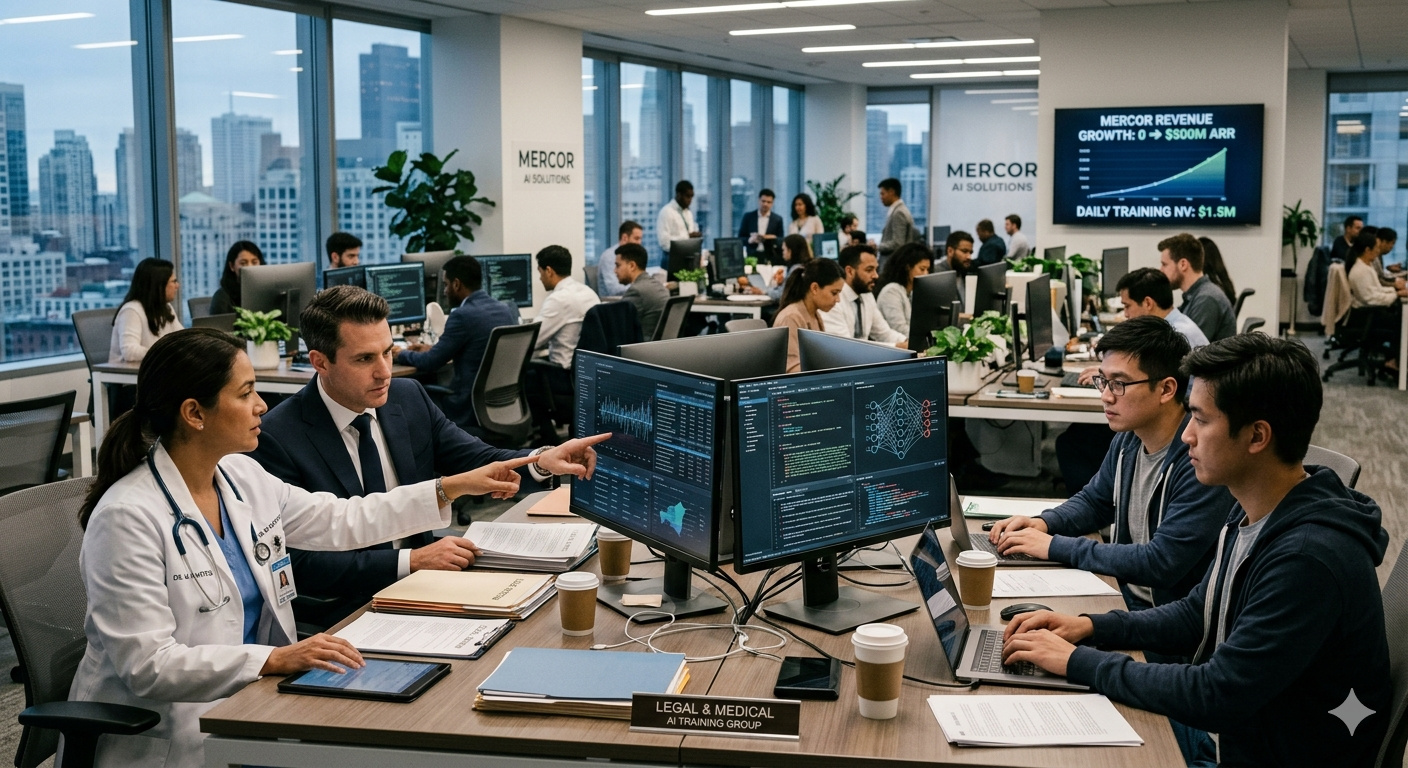
Mercor paid $1.5 million per day for doctors, lawyers, and former Goldman Sachs bankers to teach artificial intelligence to do their jobs, and in 17 months, it went from zero to $500 million in annual revenue while its own contractors accelerated the replacement of their own work.
-
Casio Unveils Moflin, Robotic Pet With Artificial Intelligence Designed To Provide Emotional Comfort And Simulate A Permanent Affectionate Bond

-
Google Maps Revolutionizes GPS Navigation With Gemini Artificial Intelligence, Ask Maps Feature, and Advanced 3D Visualization for Route and Travel Planning

According to him, the company is also building several other giant clusters. One of them would occupy an area comparable to a significant part of Manhattan. “We are calling the first one Prometheus… We are also building Hyperion, which could reach 5 GW,” wrote the CEO on his Facebook account.
The SemiAnalysis report cited by Zuckerberg states that Meta is on track to become the first AI lab to launch a supercluster with over one gigawatt of computing capacity.
Power to Train More Complex Models
These superclusters are considered essential for the advancement of generative AI, computer vision, and robotics. The structures will serve to train larger models and perform more demanding tasks.
“Meta Superintelligence Labs will have industry-leading computing levels and, by far, the highest computing per researcher,” declared Zuckerberg. He positioned the project as the center of the company’s long-term ambitions in the field of artificial intelligence.
Reaction to Competition
The announcement comes amid pressure for more robust results in the AI sector. In 2024, Meta’s Llama 4 models received a lukewarm reception. Since then, the company has decided to accelerate its strategy.
Zuckerberg expressed frustration with the pace of previous progress and stated that he is reshaping the company’s approach to AI development. “I’m focused on building the most talented and elite team in the industry,” he declared.
Heavy Bet on Talent and Partnerships
Meta is also placing a big bet on hiring talent. In June, it launched Meta Superintelligence Labs, bringing together top engineers and researchers in the field. The new organization will be led by Alexandr Wang, former CEO of Scale AI, and Nat Friedman, former head of GitHub.
This move came after an investment of US$ 14.3 billion in Scale AI. Additionally, Zuckerberg stated that he is offering job offers of up to US$ 100 million to attract the best professionals in the industry.
The company has already hired executives from major competitors, such as Apple, Anthropic, and OpenAI, to join the new Superintelligence Labs division.
Nearly Unlimited Resources
To fund this ambitious plan, Meta has increased its capital expenditure forecast for 2025. The new value is between US$ 64 billion and US$ 72 billion, as announced in April.
“We have the capital of our company to do this,” emphasized Zuckerberg in his post.
Meta is now betting everything on its computing capacity and the power of its new superclusters. The race for the top of global AI is officially heating up.








Seja o primeiro a reagir!