





 Portuguese
  English
  Spanish
 5 min of reading
  0 comments


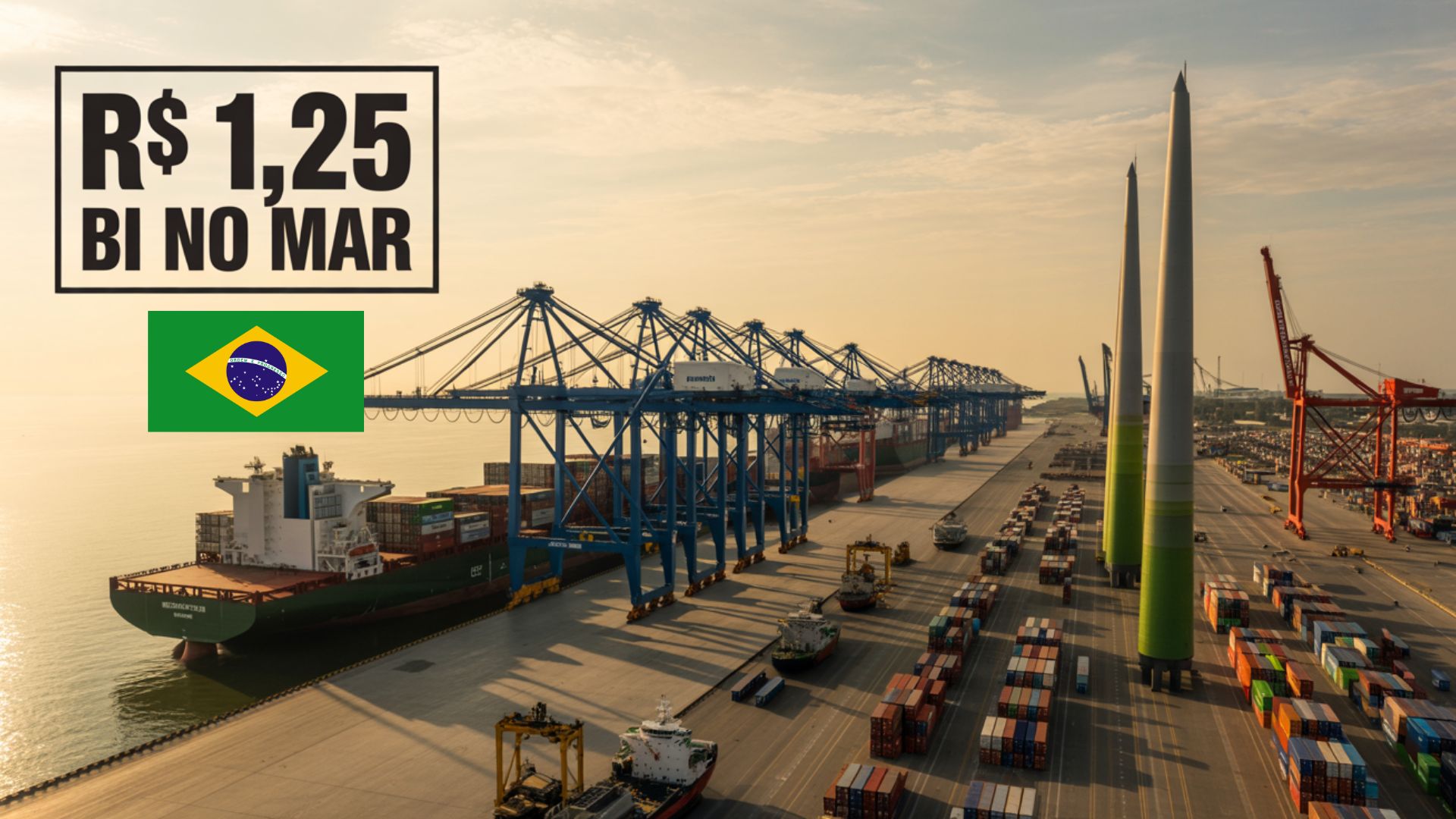
Pecém Complex Gathers Ongoing Works, Bids, and Strategic Projects Totaling Over R$ 1.25 Billion, Transforming the Terminal into an International Reference in Efficiency, Automation, Clean Energy, and Capacity for Large-Scale Operations.
The Pecém Complex, in São Gonçalo do Amarante, Metropolitan Region of Fortaleza, is executing the largest package of port interventions in the country.
By 2026, the terminal expects R$ 1.25 billion in works and maintenance services, totaling 19 fronts among ongoing initiatives, bids, and projects in preparation.
The plan strengthens daily operations, expands berthing capacity, and prepares access to handle wind turbine blades of up to 116 meters, with direct gains in efficiency and competitiveness.
-
“No one will make us change the Pix,” says Lula after the US report.

-
Lula responds directly to Trump and says that Pix is from Brazil and will not change under pressure from anyone, after a report from the United States pointed out the Brazilian payment system as an American trade barrier.

-
Amazon has just announced a new fee on all deliveries, and your online purchases will become more expensive starting April 17, including for those buying from the United States here in Brazil.

-
He sold his share for R$ 4 thousand, saw the company become a giant worth R$ 19 trillion, and missed the opportunity of a lifetime.


Ongoing Works Prioritize Automation and Operational Fluidity
Currently, Pecém reports 11 ongoing works and another five in bidding, which together represent R$ 719 million. Additionally, there are three projects in preparation totaling R$ 537 million.
Among the ongoing projects, the highlight is the modernization and expansion of the Supervisory Control and Data Acquisition (SCADA) system, aimed at the automation of utilities at the terminal.
Launched at the end of 2024, the initiative has an investment of R$ 8.5 million and is expected to be completed in December of this year, with a direct impact on controlling critical processes and reducing downtime.
The internal circulation network is also undergoing adjustments. The revitalization of horizontal and vertical signage throughout the terminal mobilizes R$ 5.85 million, a measure that reorganizes flows, improves safety, and reduces waiting times.
For cargo with specific requirements, the construction of a new platform for hazardous products, estimated at R$ 1.14 million, creates a dedicated reception and handling point, according to technical standards for containment and response.
Another pillar is environmental management. The Environmental Emergency Center receives R$ 3.69 million to house monitoring, training, and environmental governance of the Complex.
The measure formalizes protocols and expands the capacity to respond to incidents, integrating into the operational routines.
Still focused on circulation and support for workers and service providers, Pecém is executing new waiting areas at the TMUT and Pier 1, an investment of R$ 1.052 million, creating support spaces sized to the flow of operations.
In parallel, the implementation of new scales, with R$ 1.3 million, modernizes weighing and increases capacity, freeing bottlenecks at the gate and reducing re-checks.
The access points are also reinforced with the requalification and expansion of Gate 01 buildings, estimated at R$ 2.7 million, which improves screening, security, and service to carriers.
In the background, the second phase of the renovation of the Utility and Service Block (BUS) advances with R$ 3 million, updating facilities that support essential utilities and maintenance.
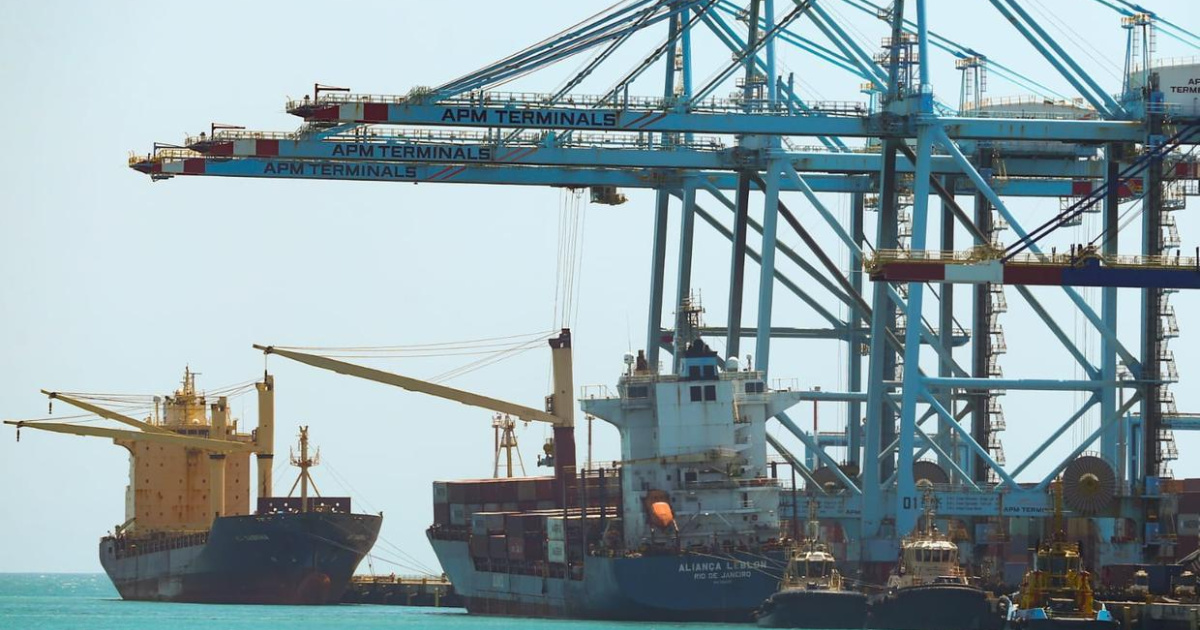
Offshore Maintenance and Shore Power Accelerate the Electric Transition
Two new interventions are expected to begin by September 1, focusing on continuous maintenance and the energy transition of operations.
The first is the annual offshore maintenance contract for the terminal — covering access bridges, Piers 1 and 2, and the Multi-Utility Terminal (TMUT) — lasting five years with an estimated annual value of R$ 27.3 million.
The agenda includes structural routines and inspections in a maritime environment, preventing failures and extending the lifespan of assets.
In line with modernization, the Complex will execute shore power electrical connection infrastructure for ships and install electric MHC cranes at the TMUT, with an investment of R$ 13.2 million.
This phase is expected to be completed by August 31, 2026.
Shore power reduces the use of onboard generators during berthing, cuts emissions and noise, and improves air quality at the piers, with operational reflections in neighboring areas.
To support the auxiliary fleet, the construction of the Tugboat Pier is advancing to the final phase of permitting and contracting, with a value of about R$ 10.3 million.
This dedicated structure speeds up maneuvers, frees up main berths, and improves readiness to service larger vessels.
Bids Total R$ 640.8 Million and Unlock Capacity at TMUT
In the bidding portfolio, five projects total R$ 640.8 million.
The main project is the expansion of TMUT, with an estimated budget of R$ 578.6 million.
The scope includes a new 350-meter berth, 42,000 m² retro area, expansion of the breakwater, and infrastructure designed to accommodate large vessels.
This expansion redistributes queues, increases berthing windows, and reduces conflicts between loads of different profiles.
Ground logistics also enter the package.
To allow for the transport and maneuvering of wind turbine blades of up to 116 meters, a new access road to Gate 2 is planned, accompanied by the requalification of the Placas Road Roundabout, with an investment of R$ 13.3 million.
The work adjusts curvature radii, superelevation profiles, and safety lanes suitable for the sizing of next-generation wind components.
At Pier 1, the installation of a new fire system, costing R$ 1.55 million, updates hydrants, lines, and pumps, raising the emergency response standard.
Completing the group are two continuous contracts:
Services for maintenance of cathodic protection systems, including material acquisition, valued at R$ 2,475,469.27.
Continuous service of pavement requalification and civil infrastructure maintenance of the terminal, budgeted at R$ 44,856,521.20.
These fronts preserve the integrity of submerged structures and pavement, reducing risks and costs of corrective intervention.
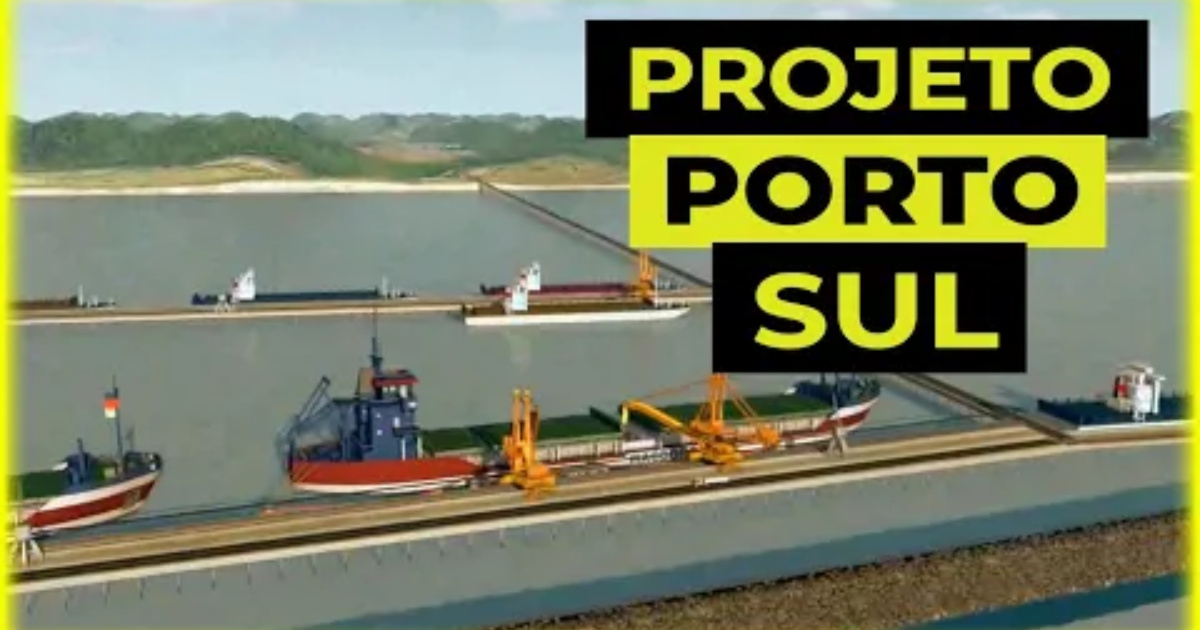
Projects in Preparation: New Piers and Utility Corridor
Three initiatives are in the project preparation phase, with a combined amount of R$ 538.3 million.
The expansion of Pier 2 increases berths and rearranges mooring areas to accommodate more simultaneous operations.
The Utility Corridor integrates energy, water, compressed air, and communication networks, reducing interferences and facilitating maintenance access.
Meanwhile, Pier 0 opens a new berthing front and enhances the complex’s flexibility for special calls, with the possibility of flow segregation according to cargo profile.
Competitiveness and Positioning as a World-Class Hub
According to the president of the Pecém Complex, Max Quintino, the investments exceed physical dimensions and directly impact productivity.
In his words, “we are experiencing a historic moment at the Pecém Complex,” and each application “is a firm step to consolidate Pecém as a world-class port hub capable of attracting business, generating jobs, and boosting the state’s economy.”
The management asserts that the integrated package — from SCADA to shore power, through access, signage, and offshore maintenance — creates an operational standard comparable to that of leading terminals abroad, with gains measured in cycle time, window regularity, and service predictability.
As the physical works progress, the institutional maintenance framework and the reinforcement of utilities support growth.
By reducing unplanned downtimes, modernizing systems, and qualifying emergency response, Pecém is building a foundation to increase loads, diversify clients, and integrate industrial chains, particularly in the wind energy sector.
The preparation for blades of 116 meters encapsulates this ambition: adapting access and maneuvering radii for oversized components not only meets the current market but also anticipates technical requirements for future projects.
With this set of measures, the Complex seeks to accelerate the learning curve and capture scale without losing efficiency while standardizing processes, enhancing safety, and adopting electrical solutions in line with environmental goals.







-

-

-

-

35 pessoas reagiram a isso.