





 Português
  Inglês
  Espanhol
  3 min de leitura


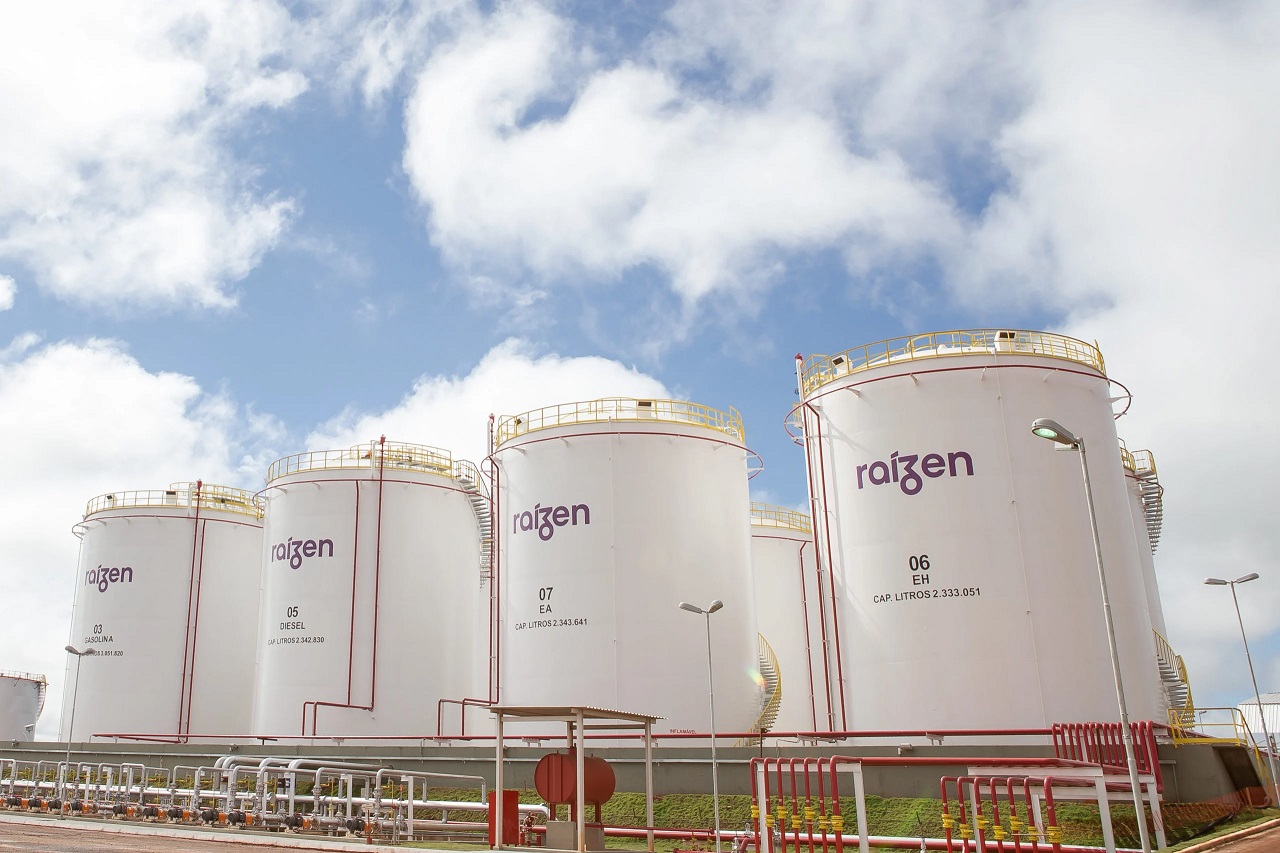
Raízen and Shell Close Agreement to Develop 5 New Cellulosic Ethanol Plants by 2027. The Companies Will Invest R$ 6 Billion in the Biofuel That Is 93% More Sustainable Than Gasoline.
On Monday (7), Raízen, a bioenergy company, and oil company Shell announced a ten-year agreement for the production of 3.3 billion liters of cellulosic ethanol. Shell controls the company alongside the Cosan group. The company’s intent is to become the largest producer and seller of ethanol generated from waste. Thus, the companies aim to install new fuel production plants.
Raízen and Shell Will Build New Cellulosic Ethanol Plants
The companies’ operations are part of the strategy to position Raízen as a leader in the energy transition. This was one of the commitments made to investors during the company’s IPO process.
In August 2021, the company’s initial public offering (IPO) raised over R$ 6 billion. According to the agreement with Shell, Raízen is expected to build 5 new cellulosic ethanol plants between 2023 and 2027, at a total cost of R$ 6 billion. Each one is expected to take an average of 22 months to complete. The production of cellulosic ethanol in the new plants is expected to begin in 2025.
-
A megaproject worth R$ 89 billion is advancing in Iraq and promises to change the game in global trade by creating a new corridor between Asia and Europe, reducing traditional routes and repositioning the country as a logistics powerhouse.

-
Goodbye bedside table: floating shelves become a trend in 2026 by freeing up space in the bedroom, improving circulation, bringing visual lightness, and integrating technology without taking up floor space.

-
Brazilian city gains industrial hub for 85 companies that is equivalent to 55 football fields.

-
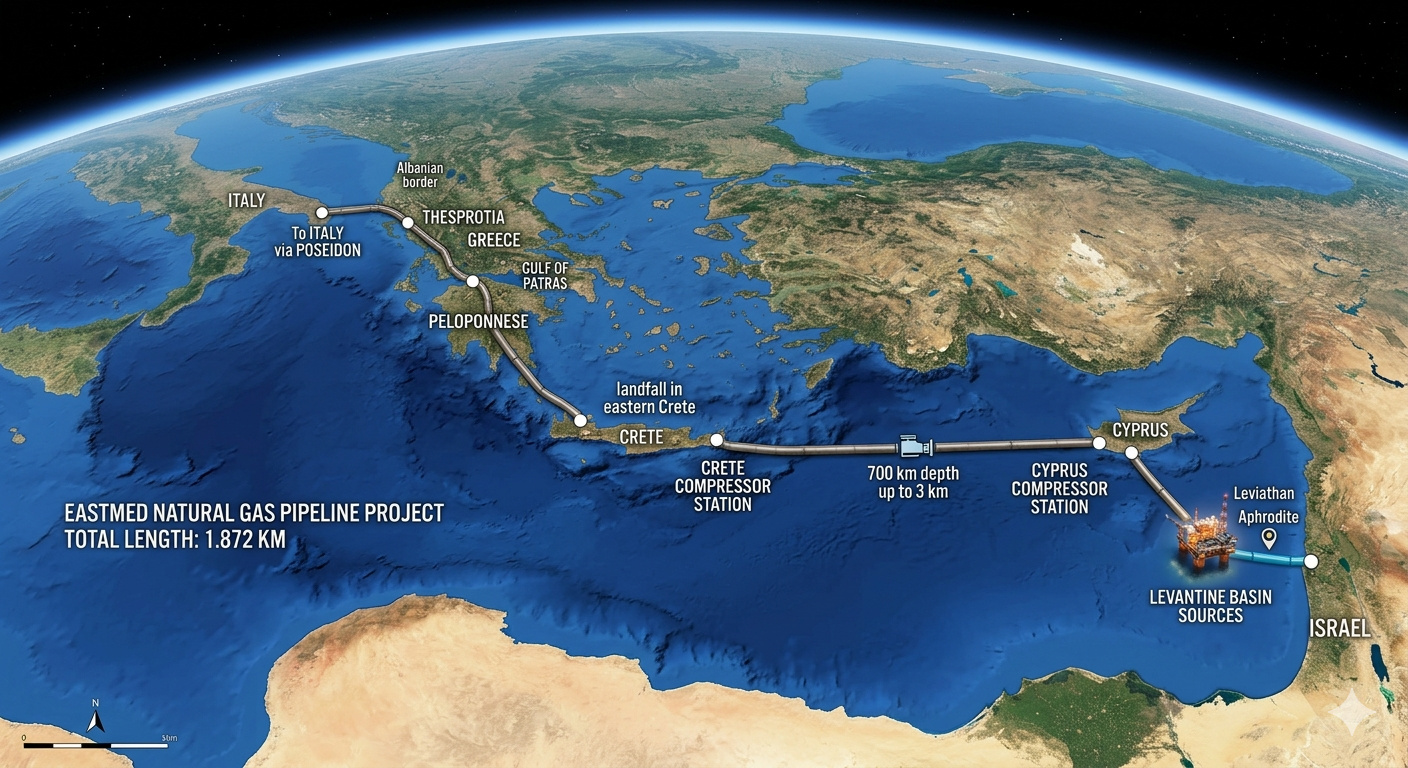
Israel, Greece, and Cyprus signed an agreement in 2020 to transport gas from the Mediterranean to Europe via a 1,872 km pipeline, but Turkey claimed sovereignty over part of the maritime route, and the project never materialized.

Thus, Shell will purchase 80% of the ethanol production, while the remainder will be sold to other companies. During the term of the contract, Raízen is expected to receive around 3.3 billion euros. Cellulosic ethanol has the same chemical composition as regular ethanol.
The difference is that it uses the leftover bagasse from sugar and regular ethanol production to create more fuel. Compared to conventional ethanol, second-generation ethanol emits about 80% less greenhouse gases. When compared to gasoline, this number rises to 93%.
Shell and Raízen Form Partnership with USP to Develop Green Hydrogen
In September, the University of São Paulo (USP) announced a partnership with companies in the fuel sector to develop a technology that can transform ethanol into green hydrogen. The cooperation agreement was made with companies Shell Brasil, Raízen, Hytron, and CETIQT.
The agreement estimates the construction of two new factories on the USP campus for the generation of green hydrogen, which will be used and tested in buses at the University City. According to Shell Brasil’s low-carbon technology manager, Alexandre Breda, the initiative aims to position ethanol as a source of green hydrogen.
The project aims to develop a device called a reformer, which breaks down the molecule of the biofuel to turn it into hydrogen. The ethanol used by the new USP factories in the process will be supplied by Raízen, the largest producer of sugarcane ethanol in the world.
Raízen Invests R$ 1 Billion in Its Third Cellulosic Ethanol Plant
Raízen inaugurated in October, the key piece of its third second-generation ethanol unit, which is part of the company’s ongoing effort to strengthen its development strategy centered on energy solutions and sustainable goods.
The unit will be linked to the Bioenergy Park Univalem, in Valparaíso (SP), with a production capacity of 82 thousand m³ per year of ethanol and is expected to operate in 2024. The new factory will involve an investment of R$ 1 billion. Throughout the construction of the new unit, around 168 direct jobs and 1,000 indirect jobs will be created.
Carbon dioxide is one of the main pollutants causing the greenhouse effect, responsible for global warming, and E2G is an important product for the transition to a sustainable energy system.










Seja o primeiro a reagir!