





 Portuguese
  English
  Spanish
  3 min of reading
  0 comments


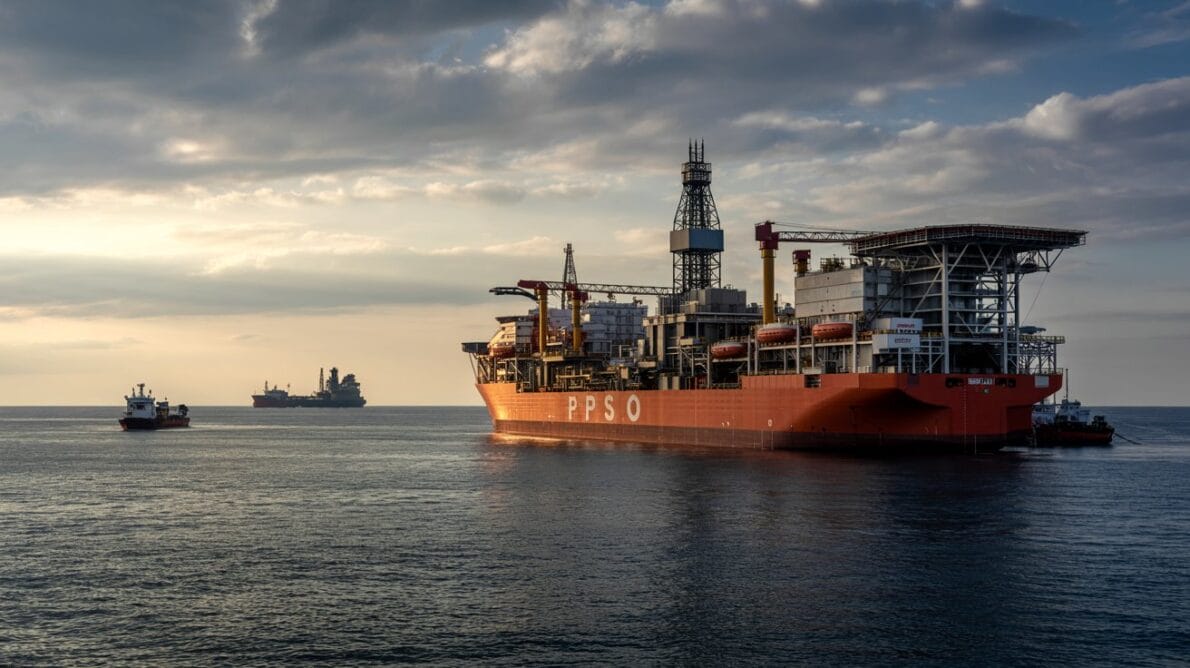
Petrobras and Modec Stand Out with High Efficiency Units in the Use of Associated Gas, Driving Environmental Goals of the Brazilian Offshore Industry
The Brazilian oil and gas sector takes a decisive step toward cleaner production with the release of the ranking of the country’s most sustainable platforms. The lead was taken by the FPSO Cidade de Itaguaí MV-26, operated by MODEC in the Tupi (Lula) field, which achieved the highest environmental performance among the 20 highest production units in Brazil in 2024.
With an Associated Gas Utilization Index (AGUI) of 99.56% and an average daily flaring of just 29,600 cubic meters, the unit established a new operational efficiency benchmark. The platform operates in a consortium led by Petrobras (65%), alongside Shell (25%) and Petrogal Brasil (10%).
Since 2021, Petrobras has adopted the GHG Emission Intensity (GHGEI) as a strategic metric, one of the main indicators linked to the variable compensation of its employees, reinforcing its commitment to reducing emissions in operations.
-
The rise in oil prices could ensure an extra revenue of R$ 100 billion for the Federal Government, indicates a recent economic study.

-
Naturgy begins an investment of R$ 1.6 million to expand the gas network in Niterói and benefit thousands of new residences and businesses.
-
A major turn in the Justice system suspends tax increases and directly impacts oil and gas companies in Brazil by affecting costs, contracts, and financial planning, leaving uncertain what could happen to the sector if these costs had increased.

-
Brava Energia begins drilling in Papa-Terra and Atlanta and could change the game by reducing costs in oil while increasing production and strengthening competitiveness in the offshore market.


Pre-Salt Platforms Meet Environmental Demands with Cutting-Edge Solutions
The pursuit of environmental excellence has led to technological advancements in production units. New platforms are designed with a focus on decarbonization, utilizing solutions such as:
- FGRU (Flare Gas Recovery Unit), eliminating routine flaring;
- HC Blanketing, which prevents emissions from cargo tanks;
- CCUS, with CO₂ capture and reinjection;
- And combined cycle steam turbines for consistent energy gains.
This movement reflects the maturity of the Brazilian offshore sector, balancing production goals with climate responsibility.
Petrobras Consolidates Leadership with Dual Podium Presence
In second place in the ranking was the FPSO P-70, with an AGUI of 99.12% and an average flaring of 47,900 m³/day, operating in the Atapu field, led by Petrobras with a 89.25% stake, in consortium with Shell, TotalEnergies, Petrogal, and the state-owned PPSA.
The third position was held by the FPSO P-71, located in the Itapu field, operated exclusively by Petrobras. The unit recorded an AGUI of 99.01%, with an average flaring of 19,500 m³/day, reinforcing the company’s leadership in sustainable practices in the pre-salt.
Technical Criteria Prioritized Efficiency Relative to Gas Processed
The AGUI index was adopted as the main parameter for the ranking as it more fairly represents operational performance. Platforms operating at full gas plant capacity face greater challenges in avoiding flaring. For example, two units that flare 30,000 m³/day can have different performances if one is operating at a capacity of 3 million m³/day and the other at 6 million — the second will show greater relative efficiency.
Thus, the analysis respects the complexity of operations and values units that operate at technical limits with high environmental performance.
Commitment to Carbon Neutrality Goals Requires Continuous Effort
The achievement of the top rankings in sustainability reinforces Petrobras and its partners’ alignment with global carbon reduction goals. The technological evolution of units, combined with stringent internal policies, positions Brazil as a benchmark in low-emission offshore exploration.
However, maintaining this standard requires continuous investment in innovation, operational control, and environmental management. The expectation is that upcoming FPSOs will come into operation already adapted to even more restrictive requirements, consolidating a new model of sustainable production.
Sources:
- (1) Petrobras Technical Report – GHGEI Metric
- (2) 2024 Ranking of the 20 Largest Oil-Producing Platforms – ANP
- (3) Endorsed by Vitor de Paula – O&G Communicator
Do you believe that the decarbonization goals adopted by Petrobras can influence the entire supply chain of the Brazilian offshore industry?









Seja o primeiro a reagir!