





 Portuguese
  English
  Spanish
  4 min of reading
  0 comments


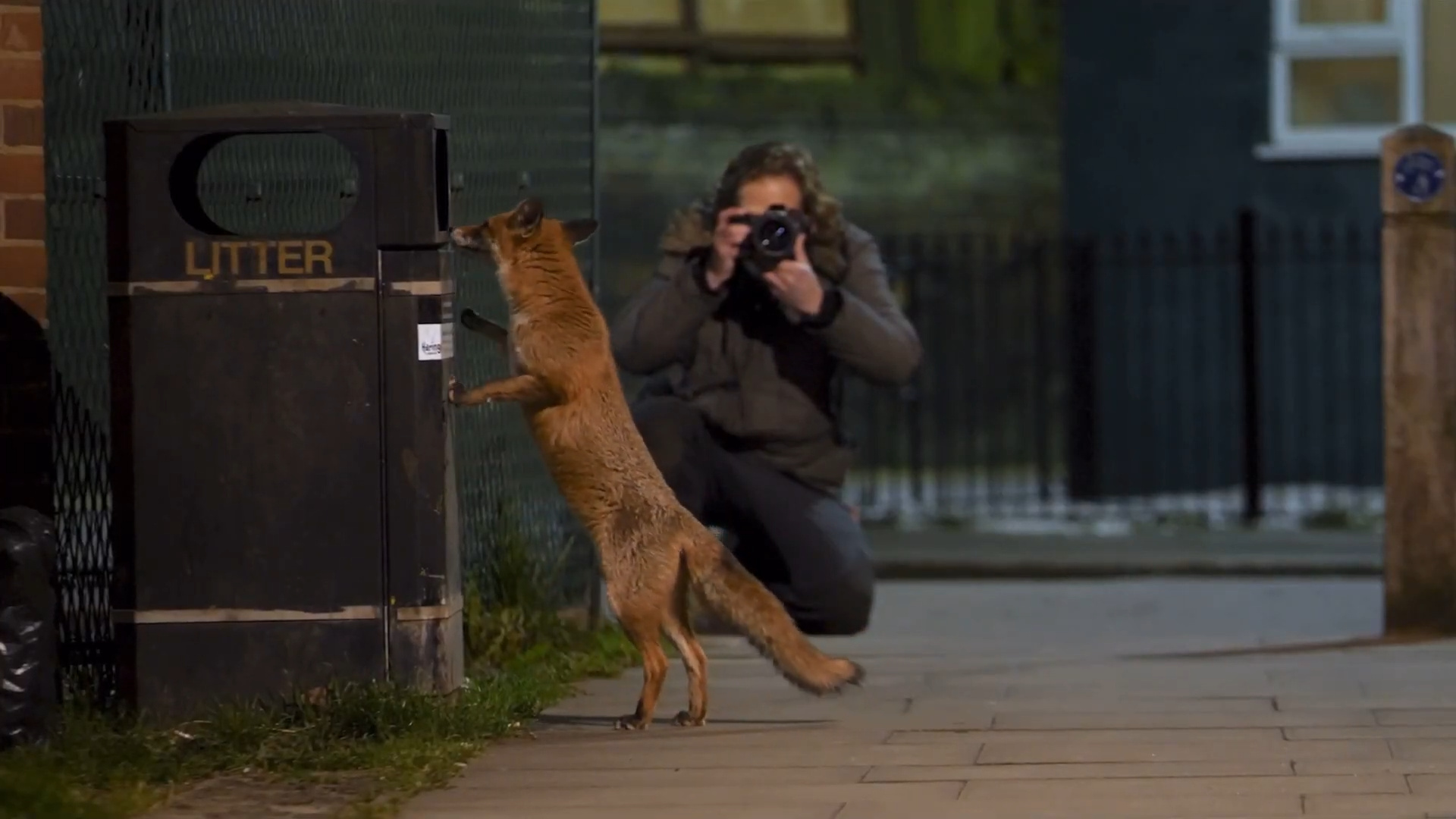
Foxes Are “Occupying” European Cities, Exploring Human Trash, Changing Nocturnal Habits and Helping Scientists Understand How Urbanization Creates Opportunistic Superpredators.
For much of the 20th century, the red fox (Vulpes vulpes) was seen as a typically rural animal, associated with open fields, forests, and agricultural areas. In recent decades, however, a silent phenomenon has changed this perception: foxes have increasingly occupied European cities, transforming streets, gardens, abandoned railways, and urban parks into a new type of habitat.
What could be interpreted merely as invasion has become, for scientists, something much more relevant. Urban foxes have become living models to understand how urbanization creates highly adaptable predators, capable of exploiting human resources, altering ancestral behaviors, and occupying unprecedented ecological niches.
From The Periphery To The Heart Of Cities
The first systematic records of urban foxes appeared in the United Kingdom, especially in London, still in the second half of the last century.
-
How an innovative city combines high technology, well-being, and sustainability to become the largest reference in clean energy on the planet.

-
Couple buys 1846 church in ruins for R$ 660,000, invests R$ 3.2 million in renovations, transforms it into a millionaire mansion, and even preserved a historic cemetery with over 300 graves.

-
He started running at 66 years old, broke records at 82, and is now a subject of study for having a metabolic age comparable to that of a 20-year-old, in a case that is intriguing scientists and inspiring the world.

-
Oldest tree on the planet reappears after 130 years of searches: Wattieza, 385 million years old, was 10 meters tall and had no leaves or seeds; Gilboa fossils in New York solved the mystery in 2007.


Over time, the pattern has repeated in Germany, the Netherlands, France, and Nordic countries. Today, it is common to find foxes living in residential neighborhoods, crossing avenues during the early morning hours, and using gardens as daytime resting areas.

The city offers something that the countryside no longer provides with the same stability: predictable food. Organic waste in the trash, pet food left out for domestic animals, small rodents attracted by waste, and even fruits from urban backyards form a constant food base. For an opportunistic predator like the fox, this represents a clear evolutionary advantage.
Trash As A New Ecological Resource
Diet studies conducted in European cities show that urban foxes consume fewer classic wild prey and more food directly or indirectly related to human activity. This change is not random.
It reflects an environment where the risk of scarcity is lower and the energy expenditure to find food is drastically reduced.
For scientists, this behavior reveals how urbanization creates ecological shortcuts. Predators that can exploit human waste tend to have higher survival rates, greater reproductive success, and, in some cases, higher population densities than in the natural environment.
Habit Changes: Night Became The Rule
Another aspect that caught researchers’ attention was the radical change in activity patterns. Urban foxes have become much more nocturnal than their rural counterparts.
This adjustment reduces direct contact with humans, minimizes risks, and maximizes access to trash and active prey during the night.

Rags Martel YT
GPS tracking and automatic cameras indicate that foxes in urban areas travel highly predictable routes, using sidewalks, decommissioned railway lines, and green corridors as true “ecological highways.”
This predictability facilitates detailed studies on movement, territory, and decision-making in human-dominated environments.
Opportunistic Superpredators Of The Urban Era
The term “opportunistic superpredator” does not refer to the size or strength of the fox, but to its extreme adaptability.
It learns quickly, modifies hunting strategies, adjusts schedules, and exploits any available resource. In urban environments, this creates a highly efficient predator, even in fragmented landscapes.

For urban ecology, this raises important questions. Foxes can help control rodent populations, but they can also pressure native birds, small mammals, and even compete with other urban predators.
The impact is not uniform and varies from city to city, making the phenomenon even more valuable for scientific research.
Living Laboratories Of Urbanization
Cities like London, Berlin, and Amsterdam have become true open-air laboratories to study accelerated evolution, animal behavior, and coexistence between wildlife and humans. By analyzing the foxes, scientists can observe, in real time, how urban pressures shape genetics, behavior, and ecology.
- These studies help answer bigger questions:
- How does wildlife respond to urban expansion?
- Which species manage to adapt?
- And what characteristics define winners and losers in this new ecosystem?
What Foxes Reveal About Us
In the end, urban foxes say as much about the cities as they do about themselves. Their presence exposes waste excesses, failures in urban management, and the involuntary creation of artificial habitats.
At the same time, they show that nature does not disappear with concrete—it transforms.
By exploring what we discard, adjusting their biological clocks, and occupying forgotten spaces, European foxes have become symbols of a new ecological era: the era in which predators learn to live within cities, and in doing so, help science understand how the urban world is reshaping wildlife.







-

-

-

-

-

15 pessoas reagiram a isso.