





 Portuguese
  English
  Spanish
  5 min of reading
  0 comments



Federal Revenue Launches System That Standardizes Real Estate Records With Unique Code and Expands Data Cross-Referencing on Rentals, Allowing Retroactivity of Five Years and Applying Fines That Can Reach 150%.
The Federal Revenue has regulated the Brazilian Real Estate Registry (CIB) and imposed the integration of notaries and municipalities almost in real time with Sinter, the national platform that centralizes real estate data.
The measure, published in the Official Gazette on August 18, 2025 (IN RFB No. 2.275/2025), comes into effect by November 25, 2025 and inaugurates a broader cycle of cross-referencing between real estate records and IRPF and IRPJ declarations, with the potential for audits on undeclared rental income.
What Changes with IN 2.275/2025 and the Property CPF
The normative instruction makes the CIB the unique identifier to be adopted by notarial and registration services in acts and systems.
-
China creates hypersonic engine that can make planes and missiles fly more than 6 times the speed of sound with less weight, more range, and without system change.

-
Mysterious object on Mars divides NASA and Harvard after Curiosity image reignites suspicions about what was really found on the planet.

-
Giant structures 14 meters beneath Egypt are revealed by satellites and expose a millennia-old secret buried in Buto.

-
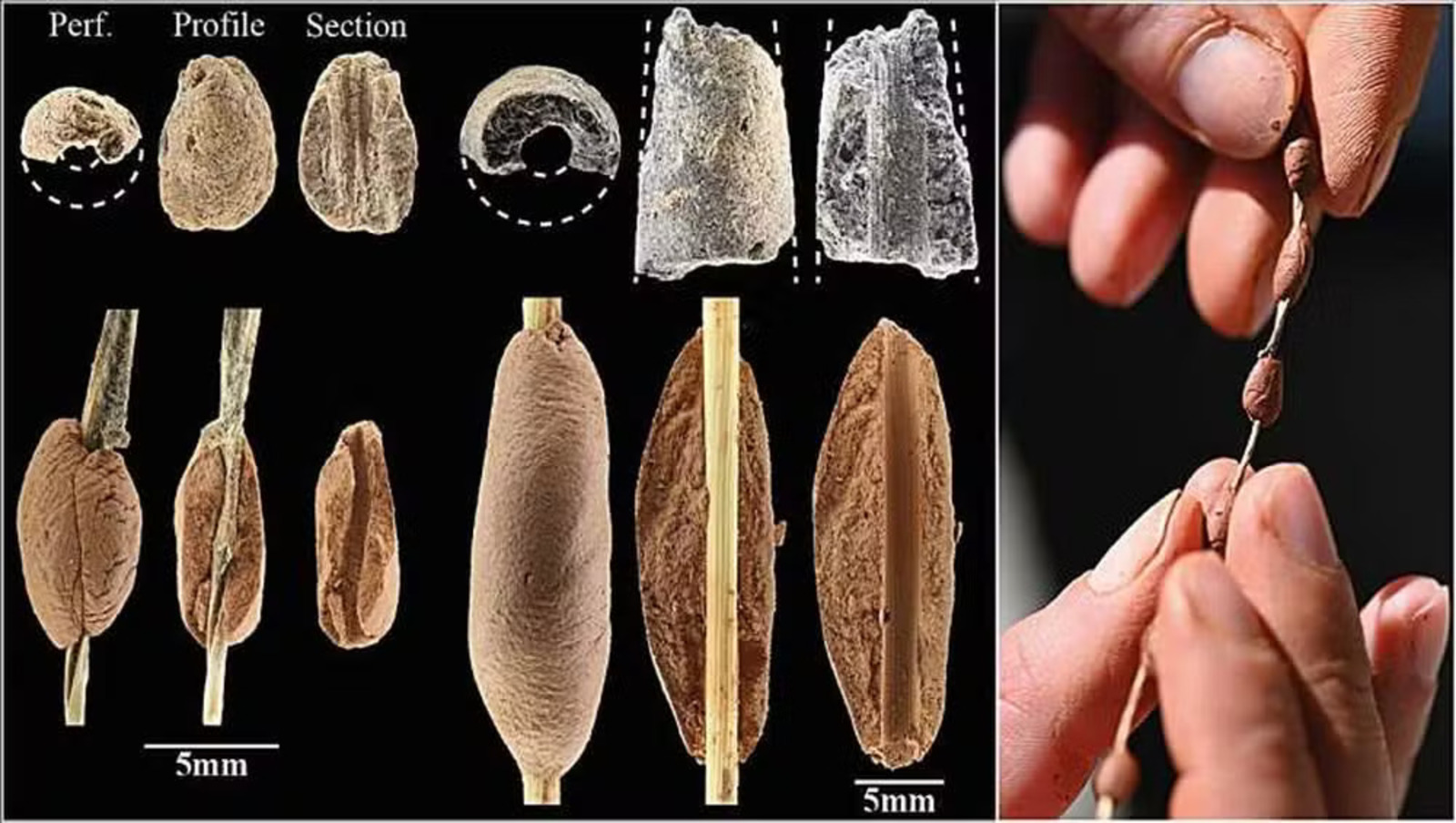
Children have been making clay pieces for 15,000 years in Southwest Asia, and fingerprints preserved on 142 ornaments helped archaeologists prove this.

It will be up to notaries to integrate with Sinter to send, in a standardized manner, information and documents related to transactions involving real estate.
The annex of the act establishes the technical stages — diagnosis, prototype, testing, approval, and go-live — to be completed by November 25.
In practice, the CIB functions as a “Property CPF”, a code that standardizes registrations across the country and facilitates the electronic sharing of deeds, records, and other acts.
According to the Federal Revenue, the purpose is to reinforce legal security and data integration, in line with the regulation of the tax reform.
Legal Basis and Relationship with Tax Reform
Sinter and CIB are governed by Decree No. 11.208/2022, which addresses the sharing of data related to real estate.
The Complementary Law No. 214/2025, which regulates the IBS and CBS, included the regime of “real estate” in the new system, providing for the integration of databases and the use of unique registries to authorize interoperability between tax administrations.
IN 2.275/2025 solidifies this framework: it transforms legal guidelines into operational obligations for notaries and other public registry operators.
Retroactivity: How Far Can the Tax Authority Look
The deadline for the Treasury to constitute credit through formal assessment is, as a rule, five years, counted from the first day of the fiscal year following the triggering event, according to Article 173, I, of the CTN.
With the databases populated from the end of 2025, the Federal Revenue will be able to reach cases as far back as 2021 within the decadal period.
The STJ has consolidated the logic of counting from the following fiscal year, regardless of the date of administrative knowledge, reinforcing the possibility of retroactive collection when there is an omission of income.
How Data Cross-Referencing Will Occur
Once present in the registration documents, the CIB will enable contracts, modifications, and terminations registered to continuously feed Sinter.
Municipalities will contribute with registries such as IPTU and official addresses, which facilitates the link between property, ownership, and CIB.
The Federal Revenue will correlate this information with the declarations submitted by individuals and legal entities, highlighting inconsistencies or omissions of rental income.
There is also a financial layer.
Starting in 2025, the Federal Revenue expanded the obligation to send data from the e-Financial, including payment institutions.
The reports are made by account, with consolidated credits and debits, without identifying the transfer modality — PIX included — and feed into risk management.
This expansion reduces the space for “under-the-table” payments, such as rents deposited in third-party accounts, and strengthens the cross-referencing with the CIB.
Fines and Penalties of 75% to 150%
When the omission of income is established and the assessment occurs ex officio, a 75% fine is applied on the tax owed, in addition to interest at the Selic rate.
If there is evidence of dolo — fraud, evasion, or collusion specified in the legislation — the fine may be upgraded to 150%.
Administrative jurisprudence usually requires demonstration of intent to maintain the qualification.
Those who act proactively receive different treatment.
In voluntary payment prior to any formal procedure, no ex officio fine is imposed; only interest and, as applicable, default fine are levied.
After the infraction notice or notification, the legislation allows for a 50% reduction of the ex officio fine if the taxpayer pays the debt within the legal timeframe (or arranges payment according to the provisions).
In summary: before the fiscal action, the taxpayer avoids the ex officio fine; after it, they can reduce it by half.
It should be noted that, for taxes subject to assessment by homologation already declared and paid late, the application of the spontaneous disclosure benefit has known limitations in case law.
Who Is More Exposed With the Property CPF
Individuals who rent and do not formalize contracts tend to be reached as subsequent acts — such as addendums, terminations, or recognitions — are registered and linked to a CIB.
Legal entities that invest with improper classification of rental income are also on the radar: the CIB-deed-accounting books link will allow confrontations that may impact IRPJ and CSLL.
Situations where the actual beneficiary of the rent does not match the declarant are likely to trigger alerts, especially when deposits are made in third-party accounts and appear in the e-Financial as consolidated transactions.
How to Regularize Without Increasing the Liability
The safest route is to rectify the declarations (IRPF or IRPJ) for the last five years whenever there is a discrepancy, including the correct amounts and allowable deductions.
Then, pay the tax owed with legal additions.
As long as there is no commencement of formal proceedings, this approach is considered spontaneous disclosure, in which case the ex officio fine does not apply.
If there is already a notice of infraction or notification, payment within the legal timeframe may reduce by 50% the applied fine.
It is advisable to formalize the contract at a notary, ensuring the correct issuance of the CIB, and organize supporting documentation: receipts, transfer proofs, taxes paid (DARFs), and other required records.
Informal notes are insufficient in case of questioning.
Dates That Require Attention
The regulatory schedule indicates the CIB’s production by November 25, 2025, followed by validation and consolidation by December.
On December 31, 2025, the calendar year closes; the submission of IRPF 2026 will require that the rental income for 2025 be correctly reported.
Throughout 2026, the trend will be for intensified use of CIB/Sinter in fiscal crossings, according to the schedule agreed upon between Federal Revenue, CNJ, and registrars.
What Authorities and Experts Say
Real estate registration entities claim that the integration increases legal security and reduces fraud in transactions.
The Federal Revenue emphasizes the standardization of registrations and data integration as central objectives, articulated with the tax reform and the unique identifier.
Tax specialists remind that the decadal deadline of five years limits the temporal scope of collections, but warn that the combination of fines and interest may increase the amount owed when there are repeated omissions across multiple fiscal years.
Those who received rents between 2021 and 2025 and have not regularized have a short window to correct the past before the new infrastructure makes omissions easily detectable.
Have you checked if all rents received since 2021 are correctly reported in your declarations or if any contract needs to be formalized to generate the CIB?







-

-

-

-

-

31 pessoas reagiram a isso.