





 Portuguese
  English
  Spanish
  5 min of reading
  5 comments


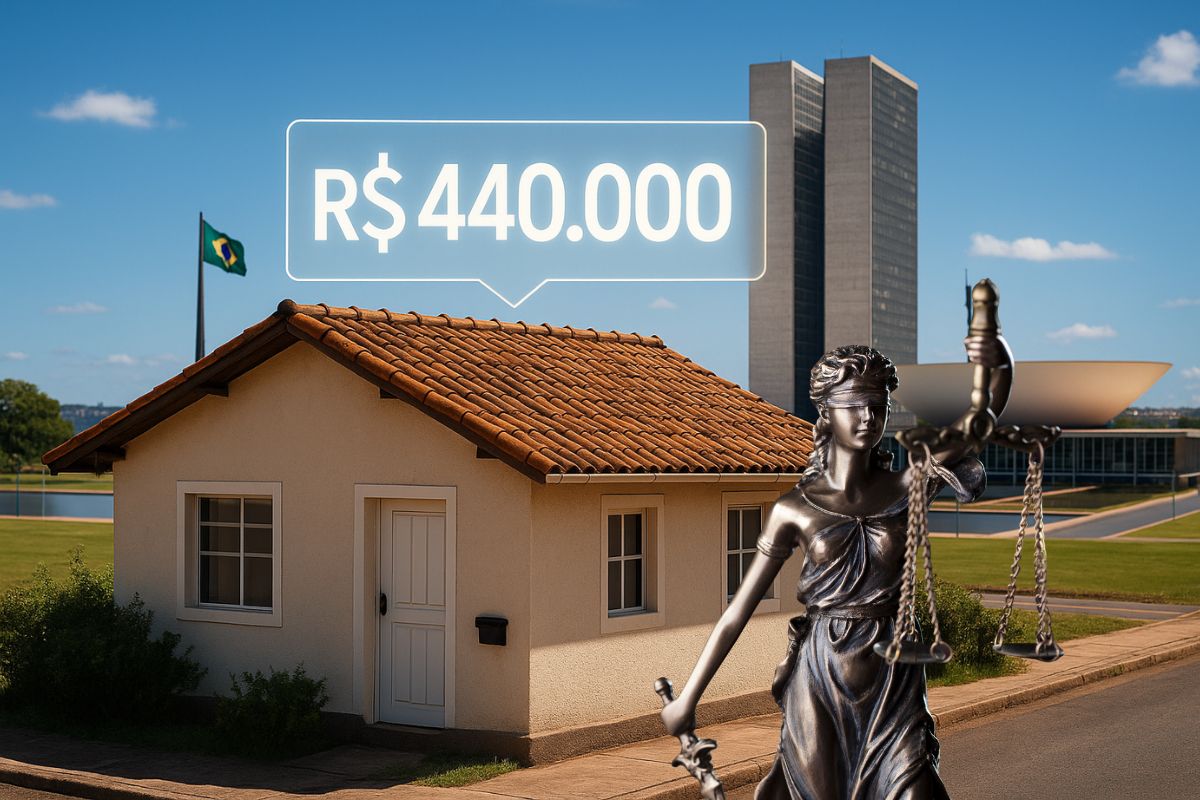


Even With New Incidences of IBS and CBS, the Tax Reform Preserves Exemptions Like the Only Property Up to R$ 440 Thousand, Reinvestment Within 180 Days, Small Value and Acquisitions Until 1969, According to Guidance from Lavínia Ramos Accounting.
The Tax Reform brought relevant changes for those who buy and sell properties, including the possibility of the incidence of IBS and CBS on certain transactions. At the same time, it preserved well-known exemptions, such as the sale of the only property up to R$ 440 thousand, the rule of reinvestment within 180 days, the small value exemption, and the special treatment for assets acquired until 1969.
According to Lavínia Ramos Accounting, individuals continue to be subject to Income Tax on capital gains in general cases, but may benefit from these exemptions when meeting the legal requirements.
Planning and documentation remain decisive to avoid unnecessary taxes and missing deadlines.
-
The Senate approves a bill that criminalizes misogyny, hatred, or aversion towards women, and includes the crime in the Racism Law with a penalty of up to 5 years.

-
Chamber Approves Bill That Allows Pepper Spray for Women Over 16 and Imposes Strict Rules for Purchase, Possession, and Use as Self-Defense

-
Chamber Approves Law to Combat Leucaena, Fast-Growing Plant That Dominates Land and Threatens Native Species in Various Regions of the Country

-
Asset Division: Know What Cannot Be Divided in Case of Divorce

What Changed and What Remains with the Tax Reform
The Tax Reform maintained the logic of capital gains in the Income Tax for individuals and preserved classical exemptions.
According to Lavínia Ramos Accounting, the significant change is the possibility for individuals to be classified as taxpayers of IBS and CBS when the pattern of operations indicates habituality, such as transfers exceeding certain parameters throughout the previous calendar year.
In practice, frequently selling properties or engaging in construction and sales may lead to taxation via IBS and CBS, in addition to Income Tax.
Those who carry out occasional transactions continue to assess the rules of capital gains and the respective exemptions. It is essential to monitor deadlines and sales volumes to avoid inadvertently falling under the IBS and CBS regime.
Exemption for the Only Property Up to R$ 440 Thousand
The Tax Reform preserves the exemption for the only property up to R$ 440 thousand. If the seller has not made another exempt sale in the last 5 years, there will be no Income Tax on the gain.
Lavínia Ramos Accounting emphasizes the need to prove that the property is indeed the only one owned by the seller on the date of the transfer.
This rule caters to individuals selling to reorganize their financial lives or to change residences. Documenting the condition of being the only property and the absence of previous sales within the five-year period avoids questioning and ensures legal security.
Reinvestment Within 180 Days: How It Works
Another exemption preserved by the Tax Reform is that of reinvestment. By selling a residential property and investing the proceeds in purchasing another residential property within 180 days, the taxpayer may have total or proportional exemption on capital gains, depending on the amount reinvested.
Lavínia Ramos Accounting advises keeping contracts, payment receipts, and records to demonstrate the allocation of the amount within the deadline.
Missing the 180-day deadline means losing the exemption, even if there was an intention to reinvest. Planning the dates is crucial to avoid turning an opportunity into a liability.
Small Value and Assets Acquired Until 1969
The Tax Reform maintains the exemption for small value transfers, such as the isolated sale of a garage up to R$ 35 thousand.
It is a safety valve for occasional smaller transactions, provided that legal limits are respected and the transaction is individualized.
The rule for properties acquired until 1969 has also been preserved. In these cases, capital gains can be entirely exempt, provided there is documentary proof of the acquisition date.
Lavínia Ramos Accounting recommends locating old deeds, records, and registrations to avoid disputes and ensure the recognition of total exemption.
IBS and CBS: When Individuals Become Taxpayers


The Tax Reform provides cases in which individuals may be considered taxpayers of IBS and CBS, especially when they sell more than three distinct properties in the previous calendar year or transfer more than one property built by themselves in the past five years.
Lavínia Ramos Accounting notes that there are points that require careful reading of the brackets and limits, as exceeding certain thresholds may accelerate the taxation for the year of the transaction.
Documenting the timeline of acquisitions, constructions, and sales helps to determine whether the classification will apply in the following year or immediately.
Non-Residents: Exemptions Do Not Apply and Due Date is Immediate
For non-residents for tax purposes in Brazil, the exemptions discussed do not apply. Lavínia Ramos Accounting emphasizes that, in these cases, the tax is due on the very date of the transfer, and delays generate fines that can reach 20%, in addition to SELIC adjustments.
Therefore, those who live abroad and intend to sell property in Brazil need to have prior calculations and guidance ready. Ignoring the timetable can quickly turn a regular sale into a costly liability that is difficult to reverse.
Capital Gains in Income Tax: Rates and Calculation Remain
The Tax Reform did not change the progressive capital gains rates for individuals, which range from 15% to 22.5% depending on the bracket.
The basis is the difference between the sale price and the acquisition cost, adjusted according to specific rules of the GCAP program.
Lavínia Ramos Accounting suggests gathering contracts, deeds, receipts, and proof of expenses to maximize the calculation accuracy.
Poor calculation may lead to overpayment or future audits. Document transparency is the best defense.
The Tax Reform preserved important exemption pillars for the real estate market: only the property up to R$ 440 thousand, reinvestment within 180 days, small value, and acquisitions until 1969 while tightening the focus on habitual operations via IBS and CBS. Those who plan pay less and sleep better.
With the correct step-by-step process and document organization, it is possible to sell safely, as guided by Lavínia Ramos Accounting.
Have you used any of these exemptions from the Tax Reform in a property sale? Are you planning to reinvest within 180 days or do you qualify as habitual due to sales volume?
Share your case in the comments to help other readers decide more securely.










Pagar imposto alto não seria o problema, a grande questão é pra onde vai cada centavo obtido com essa trilionária arrecadação.
Bom! No Brasil não compensa se matar pra gerar riqueza e renda, no final o governo fica com 70% e o trabalhador 30%.
Estamos todos lascados