





 Portuguese
  English
  Spanish
  4 min of reading
  0 comments



The Fiscal Changes Coming Into Effect in 2026 Promise to Transform the Brazilian Mining Landscape, Rekindling the Debate on Legal Security and Competitiveness.
The Brazilian mining sector is experiencing, in 2025, a moment of transformation. While the Tax Reform promises simplification, the country is facing a decisive phase. This new stage may redefine the balance between legal security and economic competitiveness.
On one hand, the Federal Revenue maintains a restrictive interpretation of the use of PIS/Cofins credits in mineral exploration without direct economic return. On the other, the Tax Reform, approved in 2023 and set to begin in 2026, ushers in a new fiscal cycle. This change creates a selective tax on mineral extraction, a tax that is already raising concerns in the sector.
Understand the Deadlock Over Credits and Economic Coherence
The discussion regarding PIS/Cofins tax credits goes beyond the technical field. It exposes the level of coherence and predictability of the Brazilian tax system. After all, denying credits for research deemed “unfruitful” ignores an essential point: research is a mandatory part of mining.
-
USA and China compete for Brazil over resources that could be worth trillions — rare earths put the country at the center of a global dispute

-
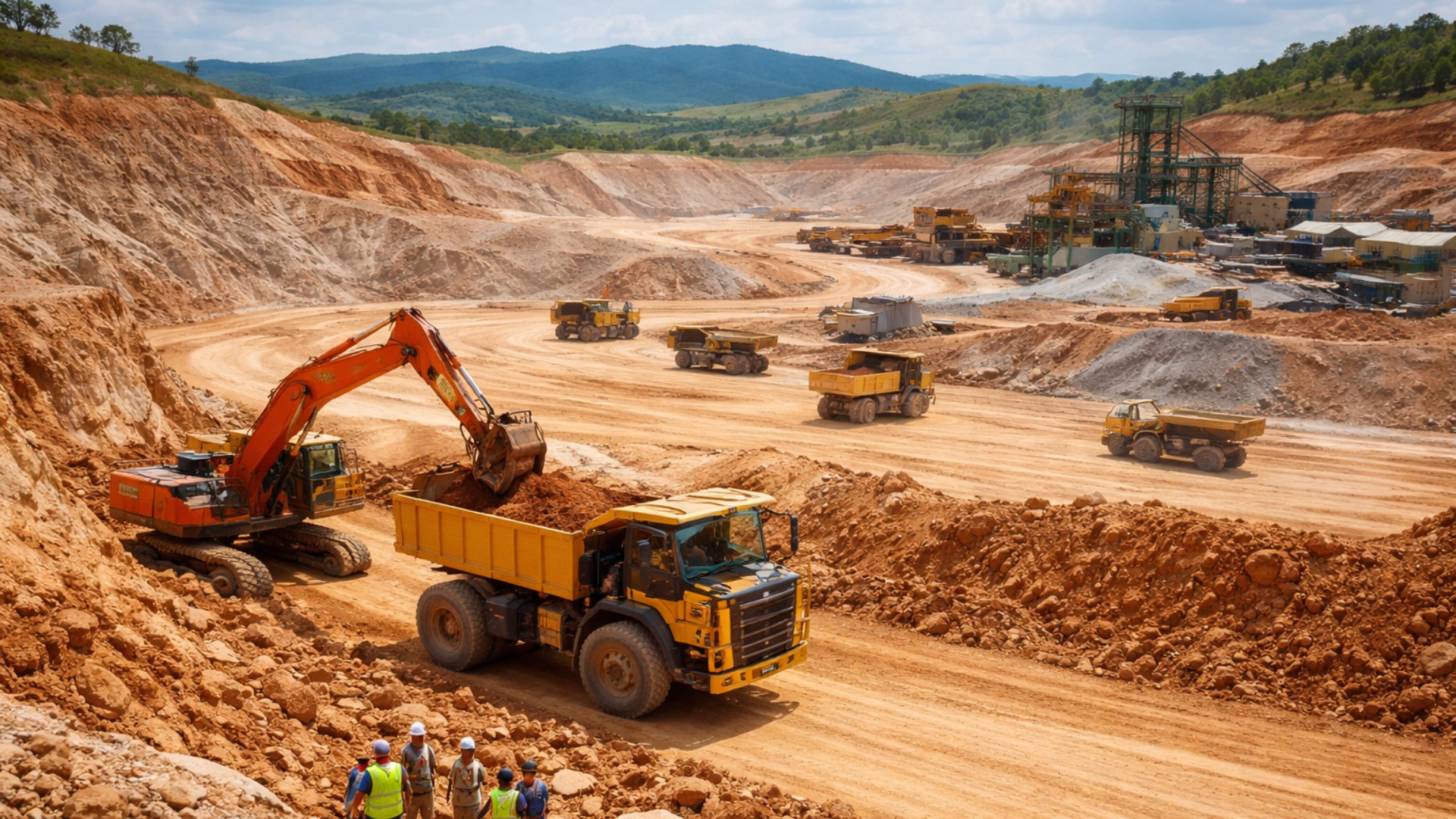
After China, it’s now the turn of the USA to ‘secure’ a share of Brazil’s natural resources: the country buys critical rare earths for R$ 3 billion and enters the center of the global technology dispute.
-
Rare earths are in everything, from cell phones to bullet trains, and what almost no one realizes is why they have become the target of such a delicate global war.

-
Brazil extracts 26.3 million tons of ore from what was previously treated as waste, transforming residues into wealth, producing over 3 million tons of sand, and demonstrating how national mining is relearning to generate value.


To obtain the Mining Permit, a title necessary for exploration, mining companies need to invest in drilling and preliminary studies. Even if the results do not yield immediate profit, these expenses are integral stages of the productive activity. In 2018, the Superior Court of Justice (STJ), in Theme 779, recognized that the concept of input must consider essentiality and relevance.
Denying this right means punishing research and discouraging investment. Therefore, in 2024, the Federal Regional Court of the 2nd Region (TRF-2) acknowledged the right of mining companies to credits. This decision strengthened the legal and economic coherence of the sector.
Tax Reform and the New Fiscal Cycle of Mining
With the Consumption Tax Reform scheduled for 2026, the mineral sector faces new challenges. In addition to the transition from ICMS/ISS to IBS/CBS, a selective tax on mining is introduced, with a rate of 0.25%. This new tax adds costs to operations.
The tax is cumulative and does not generate offsetable credits, which breaks the principle of economic neutrality. Consequently, the entire production chain — from extraction to metallurgy — will be impacted. By 2033, there is also a plan for the gradual elimination of state tax incentives. This will require large investments in compliance, automation, and tax governance.
According to analysts from the National Confederation of Industry (CNI), these changes may increase costs, reduce competitiveness, and decrease Brazil’s attractiveness compared to other mining countries.
Simplification or Imbalance? The Risk of Linear Taxation
Although the Tax Reform promises simplification, there is a risk of sectoral imbalance. Mining is a capital-intensive activity that relies on long return cycles. Additionally, it is influenced by exchange rate volatility and fluctuations in international commodity prices.
Applying a uniform fiscal model, without considering the sector’s particularities, may generate a mismatch between revenue and competitiveness. It can also increase regional inequalities and undermine the sustainability of the mining sector.
According to the Brazilian Mining Institute (Ibram), the sector generated R$ 339 billion in 2024, representing 2.4% of the national GDP and over 200,000 direct jobs. Thus, the lack of fiscal predictability threatens sustainable growth and reduces the interest of foreign investors.
Legal Security and Predictability: Pillars of Sustainability
More than a dispute between credits and rates, the central theme is the fiscal governance model of the country. A coherent and stable system is essential to ensure business confidence and long-term sustainability.
According to the National Mining Agency (ANM), Brazil is among the ten largest mineral producers in the world. The country is a global benchmark in iron, gold, niobium, and bauxite. To maintain this position, the state needs to recognize mineral research as an essential investment, not as an occasional expense.
Thus, a modern tax system must encourage innovation, stimulate efficiency, and reinforce international competitiveness. This ensures that mining continues to be a pillar of economic sovereignty and national development.
In light of this uncertain scenario, the big question remains: Will Brazil be able to balance revenue, legal security, and competitiveness before the new system arrives in 2026?
By: Marco Antônio Ruzene, PhD and specialist in tax law and partner at Ruzene Sociedade de Advogados









Seja o primeiro a reagir!