





 Portuguese
  English
  Spanish
  4 min of reading
  0 comments


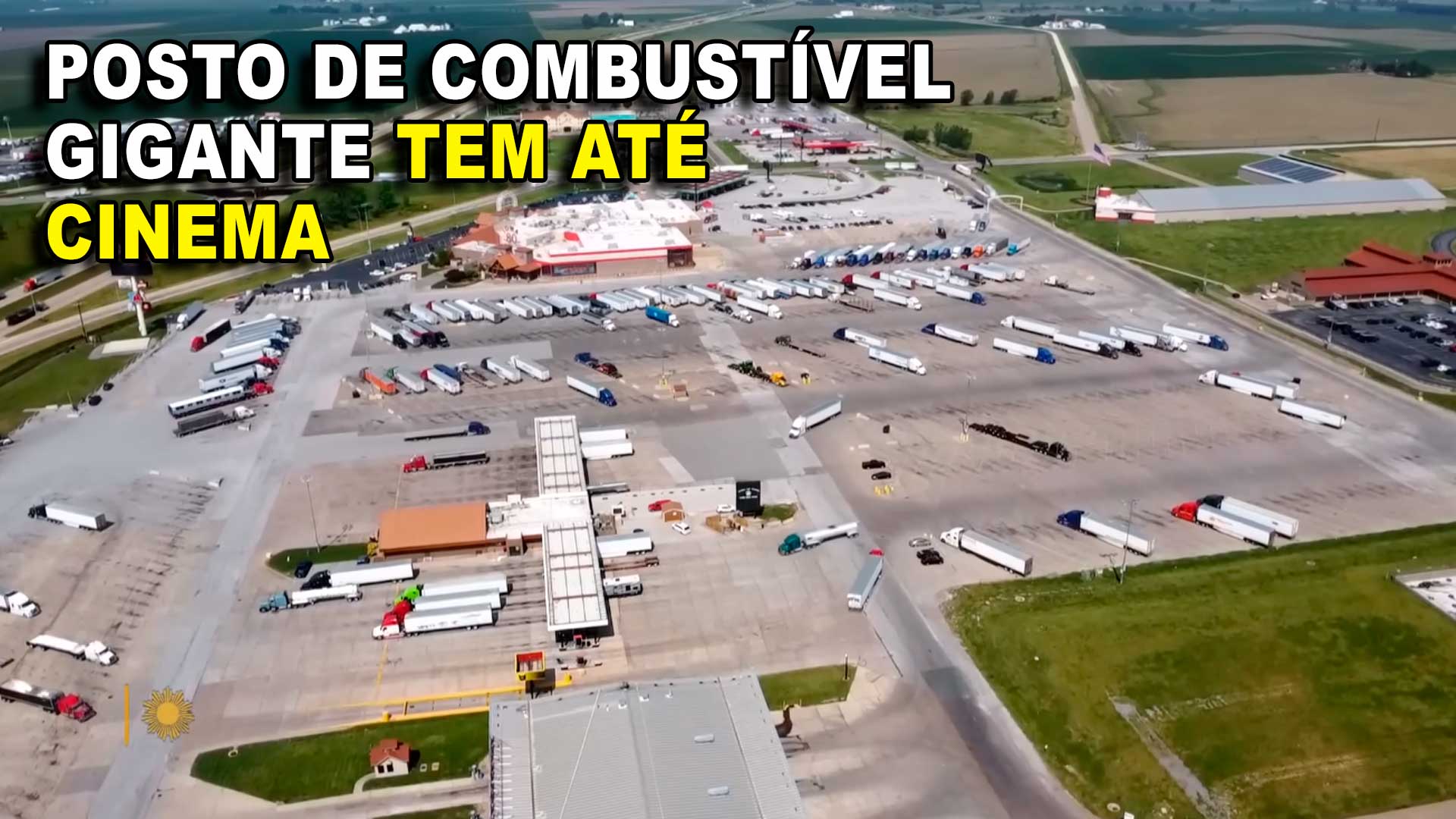
The “World’s Largest Truckstop” Remains Family-Owned in Iowa and Showcases How Full-Service Stops Have Become Part of Logistics Infrastructure in the USA.
In the interior of Iowa, USA, a gas station has become a reference for offering much more than fuel. Iowa 80, in Walcott, features 900 exclusive truck parking spaces, a 24-hour restaurant, and a range of services reminiscent of a small neighborhood.
The story gained attention when a report showcased the operational rhythm of the complex and the size of the kitchen. The estimated annual production reaches about 350,000 meals, with continuous preparation in shifts.
This model contrasts with historical stops trying to survive outside the standards of large chains. One example is Reed Niland Corner in Colo, which preserves the memory of old routes with a café, motel, and a museum at the former station.
-
The institute that trained the greatest aerospace engineers in Brazil has just opened its first campus outside São Paulo after 75 years: ITA Ceará will have R$ 445 million, new courses in energy and systems, and classes are expected to start in 2027.

-
Luciano Hang, owner of Havan, goes to Juiz de Fora after the tragedy in February, brings R$ 1 million, hands out R$ 2,000 cards, and donates up to R$ 15,000 to victims in the region.

-
The Brazilian passport allows legal residence in dozens of countries without the need for a prior visa, and most Brazilians are unaware that they can apply for residency directly upon arriving in nations in South America, Africa, and even Europe.

-
Petrobras sends a message to Brazilian truck drivers after fuel collapse and reveals plan to have 100% domestic diesel.


Behind the charm and grandeur, there is a straightforward issue. For drivers who spend days or weeks on the road, these places can mean rest, hygiene, and hospitality, along with time saved in a typically tight routine.
Iowa 80 in Walcott Becomes a Symbol of Complete Truck Stops in the United States
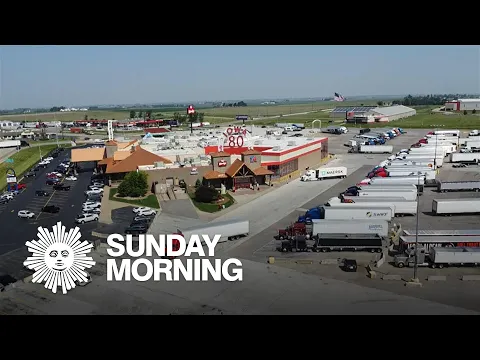

On the banks of Interstate 80, Iowa 80 presents itself as the largest truck stop in the world and has become a well-known stop among truckers and travelers. The complex has been operating since 1964, during a time when the interstate highway system was still being established.
The facility has expanded to accommodate the flow of freight and drivers on the corridor connecting the Midwest to the American coasts. Today, in addition to fueling, the location offers private showers, laundry, a cinema, a chapel, and shops catering to daily needs on the road, all operating 24 hours.
Even in an industry increasingly dominated by corporate travel centers, Iowa 80 maintains an image of a “classic stop.” The difference lies in treating the trucker as the central customer, rather than a secondary audience at a gas station designed for cars.
24-Hour Kitchen and Health Services Become Survival Strategy on the Road
At the heart of the complex is the restaurant, which serves buffet and hot dishes throughout the day. According to a report published in December 2025, the Iowa 80 restaurant prepares around 350,000 meals per year and has already served over 23 million eggs since its opening.
The logic of “solving everything in one place” also appears outside of the plate. By offering dental services, a barbershop, and other amenities, the stop seeks to reduce travel and waiting times, something valuable for those who need to fit personal care into short rest windows.
Museum with Over 130 Vintage Trucks Helps Preserve Tradition and Attract Visitors
Iowa 80 also invests in memory and tourism. The Iowa 80 Trucking Museum, affiliated with the complex, features more than 130 vintage trucks and period items, ranging from vintage signs to collectibles, with free admission.
Local reports indicate that the museum receives tens of thousands of visitors each year and has become a stop for tours and school groups. In December 2025, the institution announced plans to expand the space in 2026 to accommodate a collection that continues to grow.
Events help keep the place visible and strengthen the community spirit. The Walcott Truckers Jamboree, held at the complex, combines shows, exhibitions, and truck competitions, serving as a showcase for a culture that many roads have lost.
Even with common partnerships in the market, Iowa 80’s operation continues to emphasize family control as part of its differentiation. For many truckers, this becomes a symbol of resilience amid standardized networks.
Reed Niland Corner in Colo Preserves a Chapter of Road History
Just a few kilometers away, Reed Niland Corner represents another era of road transport. The complex emerged in 1923 at the intersection of Lincoln Highway and Jefferson Highway, and grew as a “one stop” with fuel, food, and lodging.
Local records indicate that the station closed after the death of its founder, Charlie Reed, in 1967, and did not return to regular operation as a stop. Nevertheless, the café and lodging have crossed decades as support points for those traveling through the region.
In 1995, the city of Colo took ownership and began a restoration to preserve the site. The old station was renovated and now functions as a museum, while the café and motel continue to welcome visitors seeking a simpler, nostalgic experience.
Why Truck Stops Have Become a Theme of Infrastructure and Work
The relevance of these stops aligns with the weight of road transport in the economy. Industry data indicates that trucks moved about 72.7% of freight by weight in the United States in 2024, making rest and refueling part of the country’s “functioning.”
There is also a human and regulatory limit. Under federal hours of service regulations, a driver can drive a maximum of 11 hours after 10 consecutive hours of rest, making safe stopping points an operational necessity.
If there is a controversy, it lies in the imbalance between the importance of the truck and the conditions of those who drive. In your view, are large chains improving stops by standardizing services, or are they erasing the culture and dignity of the old family stops? Leave your comment.










-

-

-

-

-

11 pessoas reagiram a isso.