





 Portuguese
  English
  Spanish
  4 min of reading
  0 comments


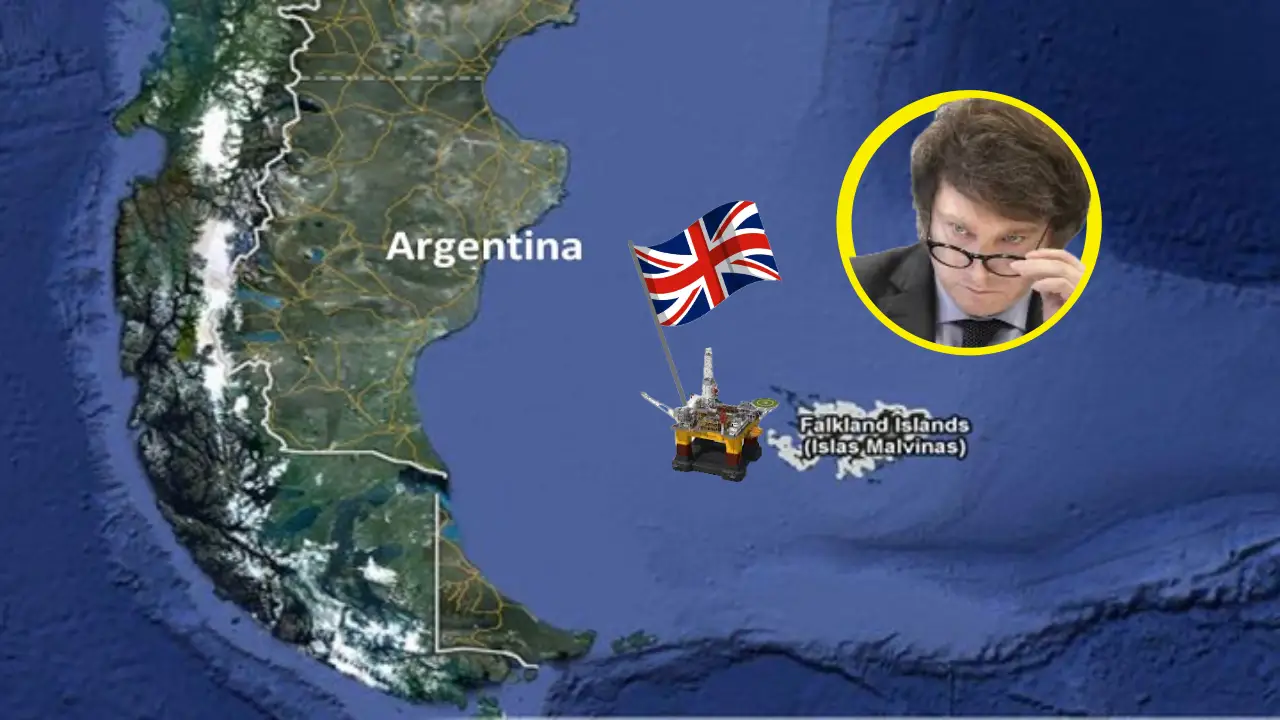
Tension in the South Atlantic: Oil Exploration in the Falkland Islands Reignites Historical Territorial Dispute Between United Kingdom and Argentina
The geopolitical tension in the South Atlantic is about to explode! The United Kingdom plans to extract over 500 million barrels of oil from the disputed Falkland Islands, territory claimed by Argentina since 1833. The exploration, led by the Israeli company Navitas Petroleum, promises to transform the local economy, but also rekindles a historical conflict.
Discover how this new oil venture could change the fate of a region and inflame an old sovereignty dispute!
How Did the United Kingdom Take the Falkland Islands from Argentina?


Oil Revives Rivalry Between British and Argentinians Over the Falklands
A diplomatic crisis is looming in the South Atlantic. The United Kingdom is looking to extract more than 500 million barrels of oil from the Falkland Islands, a territory that Argentina considers occupied by the British since 1833.
-
Petrobras implements a severe adjustment and confirms a 55% increase in the price of aviation kerosene with a proposal for installment payments for the companies.
-
The rise in oil prices could ensure an extra revenue of R$ 100 billion for the Federal Government, indicates a recent economic study.

-
Naturgy begins an investment of R$ 1.6 million to expand the gas network in Niterói and benefit thousands of new residences and businesses.
-
Spain challenges the USA and closes its airspace for operations against Iran, raising global tension and provoking the threat of a trade rupture.


The site of the drilling is known as Sea Lion Field and is located 220 kilometers north of the Falkland Islands. The Israeli company Navitas Petroleum is responsible for its exploration and plans to extract 306.9 million barrels over 30 years, although the reserve is at least 514 million.
Operating Profits Will Fundamentally Go to Shareholders of the Oil Company in Israel and the United States
Operating profits will fundamentally go to shareholders of the oil company in Israel and the United States, but have the potential to also transform the local economy, based on fishing and sheep farming, through royalties and taxes.
An environmental impact assessment published by Navitas reveals the intention to initially drill 23 wells at 2.5 kilometers deep. The island government has called for a legal consultation period to determine whether the residents of the Falkland Islands support the new oil exploration plan. The results will be announced on August 5.
While the Labour Party won the British elections by a large majority and intends to ban new oil drilling, decisions regarding drilling rights in the surrounding waters fall under the authority of the local island administration.
Javier Milei Renews Argentina’s Claim Over Sovereignty of the Falkland Islands Before the UN
Claim of sovereignty. The government of Javier Milei has renewed Argentina’s claim over the sovereignty of the Falkland Islands before the UN. This conflict is compounded by another diplomatic crisis: in 2023, former Argentine president Alberto Fernández sanctioned Navitas Petroleum, prohibiting it from operating in Argentine territory for the next 20 years.
Affirming the “legitimate and inalienable sovereign rights of Argentina over this region, which, with its position, the British government contradicts UN resolution 31/49. Argentina has not yet taken an official position on the new oil exploration, but is already considering possible diplomatic actions.
Recall the Offshore Project in the Falkland Islands
Last year, the Israeli company acquired 65% of the total share package that Rockhopper Exploration PLC owned in the northern basin of the Falkland Islands, which it had obtained in 2010 through a purchase from the British government. Navitas’ publication includes the terms and conditions of the island’s legislation and the company itself, which include environmental and supply matters.
Additionally, it invited potential bidders to present themselves as local suppliers of goods and services, provided they meet competitive quality, price, and delivery time requirements.
The policy launched by Navitas requests that local companies express their interest and support for a range of infrastructure projects that “are needed to develop the extraction project.”
An example of this would be the renovation and consolidation of the access road to the temporary dock in Puerto Argentino, which would allow efficient and safe transit for activities in the coming years; and the redesign of such access to support two lanes of intense truck traffic with heavy trailers.
In addition to the remodeling – which includes elevating lighting and safety levels – they seek to ensure access to the floating dock at the port, remove floating material adjacent to the sector, and create a dredging and canal to allow better maritime operations.
Operations Would Reach a Production of 80 Thousand Barrels Per Day
The publication of the oil company in Penguin News called for all interested companies, which must submit their proposals detailing the structure and ownership of the company, as well as a summary of relevant trades and experience related to marine construction and ancillary operations.
The provisional plan has already taken public status and aims to reach 18 drillings in just 18 months, through a floating production and storage unit (FPSO), which would start operations in 2025 and within 30 to 42 months thereafter reach a production of 80,000 barrels per day.









-

-

-

-

4 pessoas reagiram a isso.