





 Portuguese
  English
  Spanish
 3 min of reading


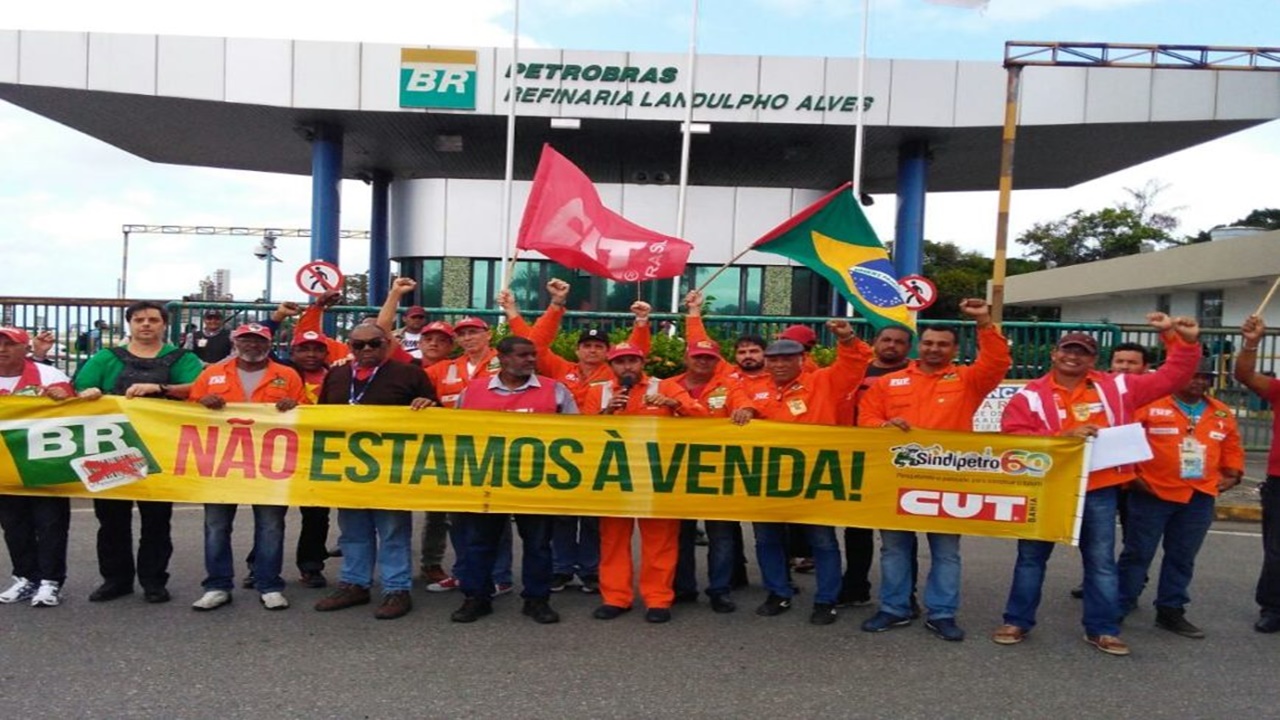
Petroleum Workers’ Strike in Bahia Will Be Indefinite, Defending Jobs and Rights Beyond Insecurity at Petrobras Units
The petroleum workers in Bahia decided to go on strike indefinitely starting at midnight and 1 minute this Thursday (02/18). The act defends jobs and workers’ rights, and is also a protest against moral harassment and insecurity at Petrobras units. Looking for a job? 600 job openings in Macaé for offshore activities at Rip Kaefer, today February 16
Read Also
- One of the Largest Cargo Railroads in the World, MRS Opens Selection Process with 160 Vacancies in RJ, SP, and MG
- Recruitment and Selection for Offshore and Onshore Positions in Macaé, Rio das Ostras, Itaboraí, and ES, today February 16
- Company Specialized in Industrial Assembly and Maintenance in São Paulo Hires Plumber, Mechanic, Instrument Technician, and More
- Senai Opens 120 Spots for Free Courses in Construction
The strike qualification seminar was held last Saturday (02/13). The event brought together the petroleum category, leaders from Sindipetro Bahia, Sindipetro Minas Gerais, and other unions, as well as the Unified Federation of Petroleum Workers.
In the meeting, accompanied by Sindipetro’s legal counsel, the strike strategy was decided, which will be implemented starting at midnight this Wednesday.
-
The next exploration auction in the pre-salt will offer 23 blocks in the Campos and Santos basins and could change the interest of oil companies in Brazil.

-
Red Sea, from biblical site to oil hope: South Korea reveals ambitious plan to create new oil routes through the Red Sea with the dispatch of 5 ships, agreements with 3 countries, and a focus on the strategic port of Yanbu.

-
SISTAC expands contract with Petrobras for maintenance of platforms in the Santos, Campos, and Espírito Santo basins using ROV and specialized underwater operations.

-
Brazil has oil, but not gasoline: the country produces more than 4 million barrels per day, consumes less than half, but remains dependent on imports, says former CEO of Petrobras.

According to union leaders, the entity will strictly comply with what is provided in the strike law and has already sent Petrobras the notification document of the strike movement. This notification is also being sent to the Labor Public Prosecutor’s Office and the Regional Labor Court in Bahia.
A notice to the Baian society regarding the legitimacy, legality, and importance of the strike was also published in the newspaper Correio da Bahia and on the website Bahia Notícias.
Petroleum Workers’ Strike Alleging Pressure and Moral Harassment by Petrobras
Petrobras’s exit from Bahia is causing serious consequences for the state and the oil-producing municipalities, which rely on taxes paid by the state-owned company as one of their main sources of revenue. Another major loss is due to Petrobras’s choice to reduce refining in its facilities and import products instead of using those we have in our national territory, all anchored by a high dollar and rising prices of fuels and other petroleum derivatives.
The petroleum workers are also being affected by this decision to sell state units. In Bahia, the scenario is one of terror, with moral harassment becoming a management tool, leading to illnesses and even death. This is compounded by the accelerated reduction of the workforce to less than a third of what it was a few years ago and the continuation of these reductions through dismissal programs and forced transfers.
Several onshore oil and gas fields have already been decommissioned and sold. There was also the abandonment of Torre Pituba, hibernation and subsequent leasing of FAFEN, and now, the sale of the Landulpho Alves Refinery.
In addition to fighting for the maintenance of jobs, whether their own or those of outsourced workers—most of whom are expected to be laid off with the sale of Rlam—against the harassment of workers and for a healthy work environment, petroleum workers warn that the transfer of the Landulpho Alves Refinery to Mubadala will create a regional private monopoly where the Arab fund will increasingly impose rises in the prices of petroleum derivatives, gasoline, diesel, and cooking gas.
The sale of Landulpho Alves (RLAM) to the Mubadala Fund for US$ 1.65 billion is also being contested by economists and experts on the matter. The Institute for Strategic Studies of Oil, Natural Gas, and Biofuels (Ineep), using the discounted cash flow method, indicated that the refinery would be worth between US$ 3 billion and US$ 4 billion.








Seja o primeiro a reagir!