





 Portuguese
  English
  Spanish
  7 min of reading
  0 comments


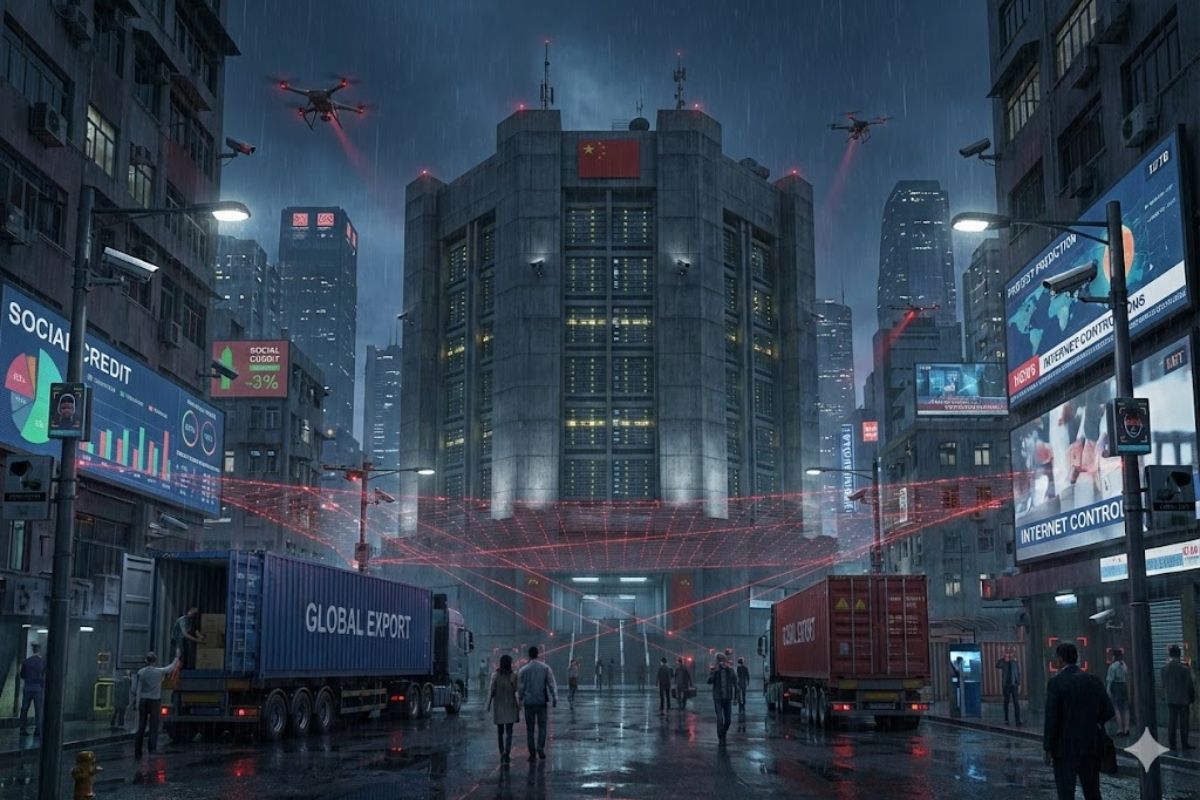
Australian ASPI Institute Document Shows How China Integrates Cameras, Drones, Courts, Prisons, and Tech Giants into an AI Ecosystem That Automates Censorship, Predicts Protests, Monitors Minorities, and Exports Cheap Models of Mass Surveillance Used by Other Authoritarian Countries Like Iran and Saudi Arabia Worldwide.
In a report cited in a news article by CNN Brazil, published on December 6, 2025, the Australian Strategic Policy Institute describes how China has been using artificial intelligence to transform its surveillance apparatus into a system capable of predicting protests, monitoring prisoners, and controlling what 1.4 billion people can see online. The document points out that the technology has already infiltrated daily life, connecting the Great Firewall, cameras spread across cities, and digital monitoring tools into a single political project.
The text compiles data and policies implemented over the last decade, with references to records from 2012, 2018, 2019, and a global survey from 2024, showing how AI tools have been coupled with cameras, courts, prisons, and tech companies to automate censorship, expand surveillance and preemptively suppress dissent both inside and outside of China.
AI as the Backbone of More Predictive Control
According to the report, China is not just adding algorithms to what already existed. Artificial intelligence has become the backbone of a broader and more predictive form of authoritarian control, allowing the Communist Party to monitor more people, with more details and less human effort.
-
The most famous volcano in the world could paralyze one of the largest metropolises on the planet: Japan accelerates emergency plans for the eruption of Mount Fuji, which could bury Tokyo in ash for over two consecutive weeks.

-
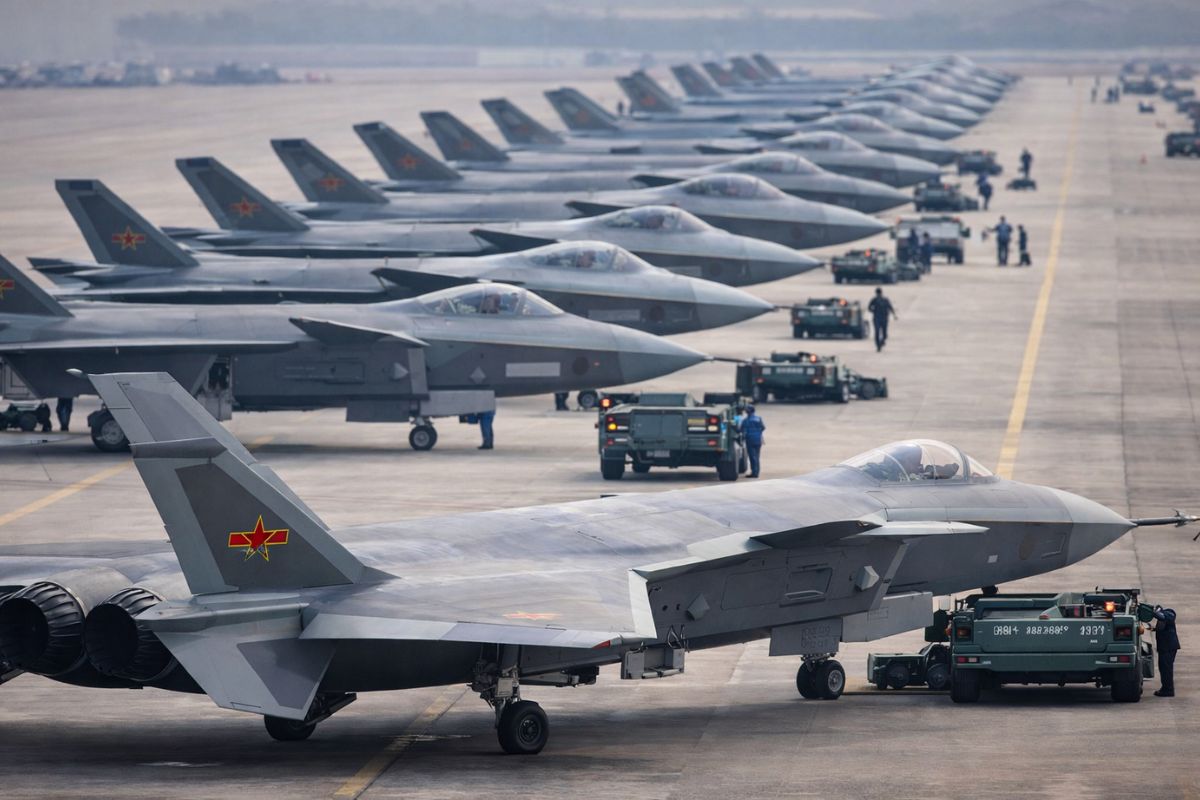
The United States has a serious problem with its F-35s: China is already producing fighters at a pace that exceeds American capacity and could manufacture up to 300 aircraft per year before the end of the decade, shifting the global military balance.
-
Remains with battle wounds of over 100 soldiers from the Roman Empire are found beneath a football field in Vienna, leaving everyone surprised.

-
Elon Musk notes Brazil and lowers the price of his internet, Starlink, promising to connect all corners of the country with affordable plans, 10,000 satellites, and 1 million active users in the national territory!


The authors assert that these tools are used to automate censorship, refine policing, and anticipate possible centers of political contestation, from organizing protests to the movements of groups considered sensitive by the regime.
The result is a system capable of cross-referencing data from streets, apps, social networks, and judicial processes in nearly real time.
The ASPI, which is partially funded by the Australian government and other foreign governments, has already been attacked by Chinese authorities, who accuse it of lacking credibility. Still, the report highlights that Beijing has invested hundreds of billions of dollars in AI-related businesses, advancing research and development even under restrictions imposed by the United States on the supply of high-performance chips to China.
The population has also shown receptiveness. A 2024 survey by Ipsos indicated that Chinese respondents were much more enthusiastic and optimistic about artificial intelligence than citizens from 32 other countries.
According to the institute, this climate helps legitimize the expansion of AI uses by the state and by companies aligned with the central government’s policies.
Even Chinese leader Xi Jinping has put technology at the center of the country’s digital strategy. In a meeting held in November with high-ranking Communist Party officials, he emphasized that AI creates challenges for governance in cyberspace, but at the same time offers new tools to sustain political stability.
In ASPI’s interpretation, this language is a euphemism for maintaining and strengthening the regime’s power.
Cameras, Drones, and Courts Connected to the Same System
The report points out that artificial intelligence is already present at different stages of the criminal justice system in China, from street policing to court and prison routines.
The starting point is the vast video surveillance network: there is no consolidated official data, but the estimates mentioned reach 600 million devices across the country, which would equate to approximately 3 cameras for every 7 inhabitants.
Like in other parts of the world, these cameras have started to incorporate facial recognition, location tracking, and other AI features.
However, in China’s case, the report states that these systems are directly oriented by objectives of political and social control, not just public safety.
Documents from a district in Shanghai mentioned by ASPI detail plans for AI-equipped cameras and drones capable of “discovering and enforcing the law in an intelligent and automated way”, even sending alerts to police in the event of crowds or situations deemed anomalous.
The logic is to monitor the flow of people and intervene before a protest or meeting considered sensitive gains scale.
At the top of the hierarchy, the Supreme Court of China has requested that all courts develop by 2025 a “competent” AI system to support different stages of legal processes, from administrative tasks to trials.
In Shanghai, one of the systems mentioned in the report is capable of recommending whether judges and prosecutors should keep a suspect in pretrial detention or grant a suspended sentence, helping to standardize decisions based on large databases.
Smart Prisons, Monitored Emotions, and Minorities in the Crosshairs
Another axis described by the document is that of the so-called “smart prisons”, where technology closely monitors the routine of inmates.
In one facility analyzed by researchers, facial recognition cameras monitored inmates’ faces and recorded their expressions.
Any sign of anger or tension was automatically flagged for intervention by human agents.
In a rehabilitation center for substance abusers, the report describes the use of AI-assisted therapies conducted through virtual reality goggles, creating digitally supervised simulated environments.
The official promise is to modernize the system, but the authors warn that the same apparatus can be used to reinforce political indoctrination and psychological control.
The text reveals a troubling chain of events: a defendant can be detained with the help of AI-based surveillance, tried in a court supported by intelligent systems, and ultimately sent to a “smart prison”, where cameras and algorithms verify every movement, expression, and interaction of the inmate. All of this occurs in a judiciary that answers to the Communist Party and whose conviction rate already exceeds 99%.
For researcher Xiao Qiang of the University of California, Berkeley, even though these technologies may help reduce crime and increase the feeling of safety in Chinese cities, the political structure of the country ensures that the same AI is actually used for political persecution.
The report also highlights particularly vulnerable groups within China. Religious and ethnic minorities, such as the Uyghurs, along with political dissidents, have lived for years under repression campaigns.
Now, Chinese companies funded by the central government are developing large language models for minority languages such as Uyghur, Tibetan, Mongolian, and Korean, with the aim of monitoring communications in those languages.
In practice, these models can be used both to surveil what these communities publish and share and to manipulate the type of information they have access to, reinforcing the state’s ability to control narratives in specific segments of the population.
Chinese Tech Giants as the State’s Digital Arm
The ASPI document dedicates a chapter to the role of China’s major tech companies, classified as “essential facilitators and executors” of the Chinese Communist Party’s online content censorship policy.
The assessment is that these companies have ceased to be merely regulated by the government and have begun to act as active partners in the construction and dissemination of surveillance tools.
ByteDance, the company behind TikTok, is cited as an example of a company that applies strict moderation rules on Douyin, the version of the app mainly used within China, blocking or downgrading content deemed politically sensitive.
Tencent, a giant in social media and gaming, is mentioned for using artificial intelligence to monitor user behavior and assign “risk scores”, taking into account activities on social media, chat groups, and other platforms. These metrics can result in penalties and usage restrictions.
Meanwhile, the Baidu search engine sells content moderation tools to third parties and has reportedly cooperated with government agencies in over 100 criminal cases, particularly in investigations of fraud and cybercrime.
According to Nathan Attrill, co-author of the report, online AI enables real-time censorship and modeling of public opinion, using automated moderation, sentiment analysis, and recommendation algorithms to reduce the visibility of criticisms and amplify narratives aligned with the government.
Export of Chinese Models and Global Domino Effect
The report warns that the ecosystem of AI-driven surveillance and censorship tools developed in China is not restricted to its territory. Small and medium enterprises are also creating their own systems, while the country solidifies its status as a global exporter of digital control technologies.
According to the document, other authoritarian countries, such as Iran and Saudi Arabia, already utilize artificial intelligence to surveil their populations, relying on technologies and models originating from China.
The risk, according to the authors, is that such tools become an easily replicable standard whenever a government wants to monitor citizens on a large scale.
Researcher Xiao Qiang notes that Chinese learning logic models have become some of the main open-source options in the world, accessible to companies and research centers in various countries precisely because they are inexpensive or free.
In his view, those who adopt these models do not only import code but also infrastructure, filters, and embedded censorship logics.
In other words, by using technologies developed in China, other governments may end up importing, along with the tools, mechanisms of surveillance, control, and influence aligned with how the Chinese Communist Party views the digital space.
In light of this scenario, the report suggests that China is converting artificial intelligence, cameras, and applications into a weapon of authoritarian control with global impact, while simultaneously fueling a technological race where security, civil rights, and the balance of power between the state and citizens come into direct conflict.
What do you think? Will the international community be able to impose limits on the surveillance model driven by China, or is the world already on the path to accepting this new standard of digital control?






-

-

-

-

6 pessoas reagiram a isso.