





 Portuguese
  English
  Spanish
  5 min of reading
  0 comments


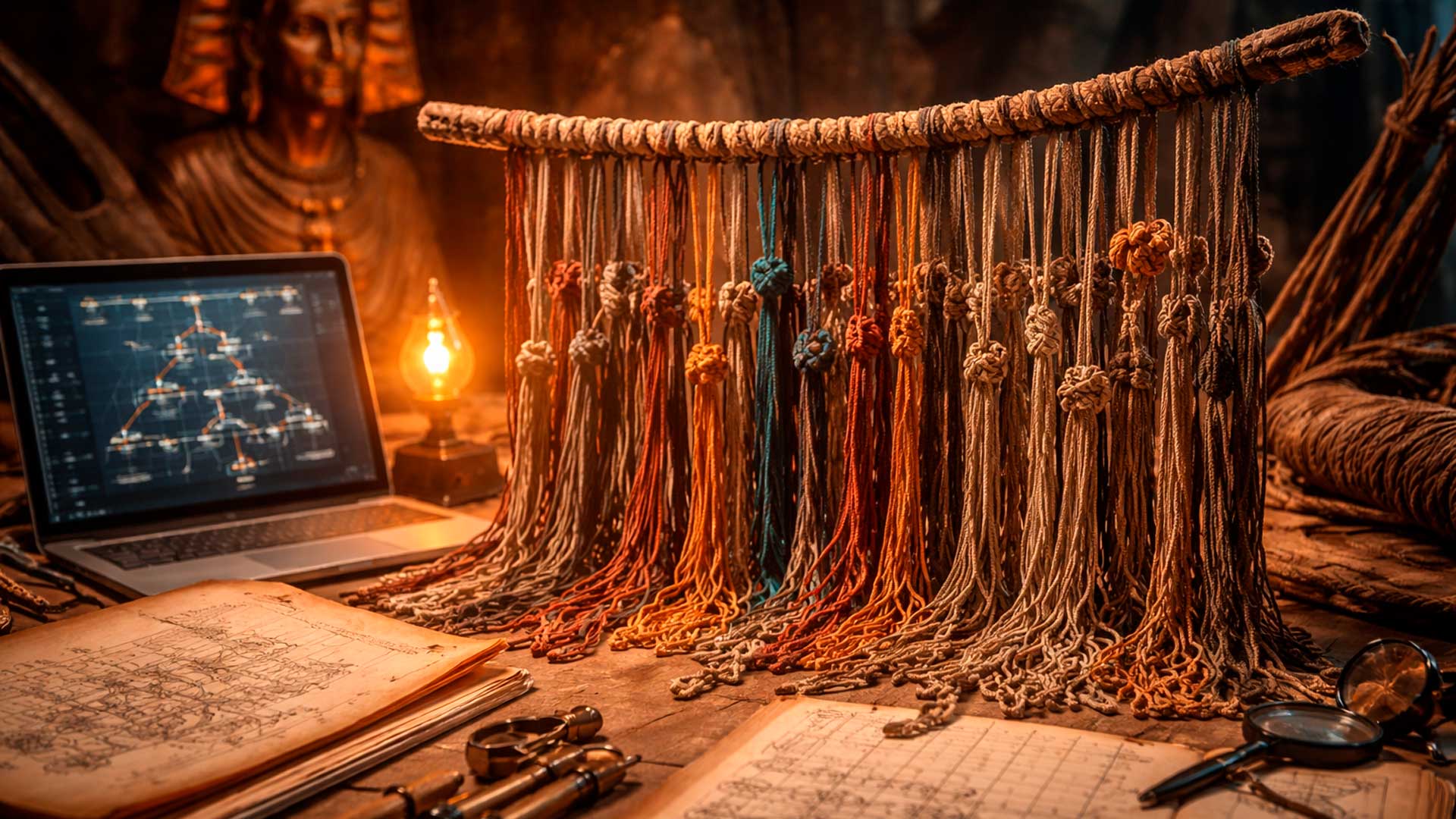
Recent study reignites the debate about the quipu and shows that the nodes used by the Incas were far beyond traditional accounting
For decades, the quipu was treated as an administrative tool of the Inca Empire, used to record tributes, agricultural stocks, harvests, and population censuses. Now, a new reading suggests that this system of strings, colors, and knots may have functioned as a sophisticated form of organization and information processing, comparable in some aspects to an analog computer.
The hypothesis gained traction after a study accepted in February 2026, when scientists began to analyze not only the numerical values of the knots but also the architecture of the quipu. The central point is how the strings are organized in hierarchical levels, something very close to the tree structures used today in databases, digital directories, and file systems.
This does not mean that the Incas created a modern computer, with electricity, processors, or binary code. What the study points out is something else, equally impressive: the existence of an advanced intellectual technology, capable of storing, classifying, and transmitting knowledge with great efficiency centuries before computing.
-
Giant and invisible structure that has been around for decades emerges near the Solar System and could change what astronomy knows about the birth of stars.

-
Scientists use artificial intelligence to create nearly indestructible steel that does not rust and could change the way industrial energy and oil parts are produced.

-
Instead of buying new electric trucks, India is removing the diesel engines from old vehicles and installing electric propulsion for 40% of the price, and this simple idea could be the solution that polluted megacities around the world have been waiting for.

-
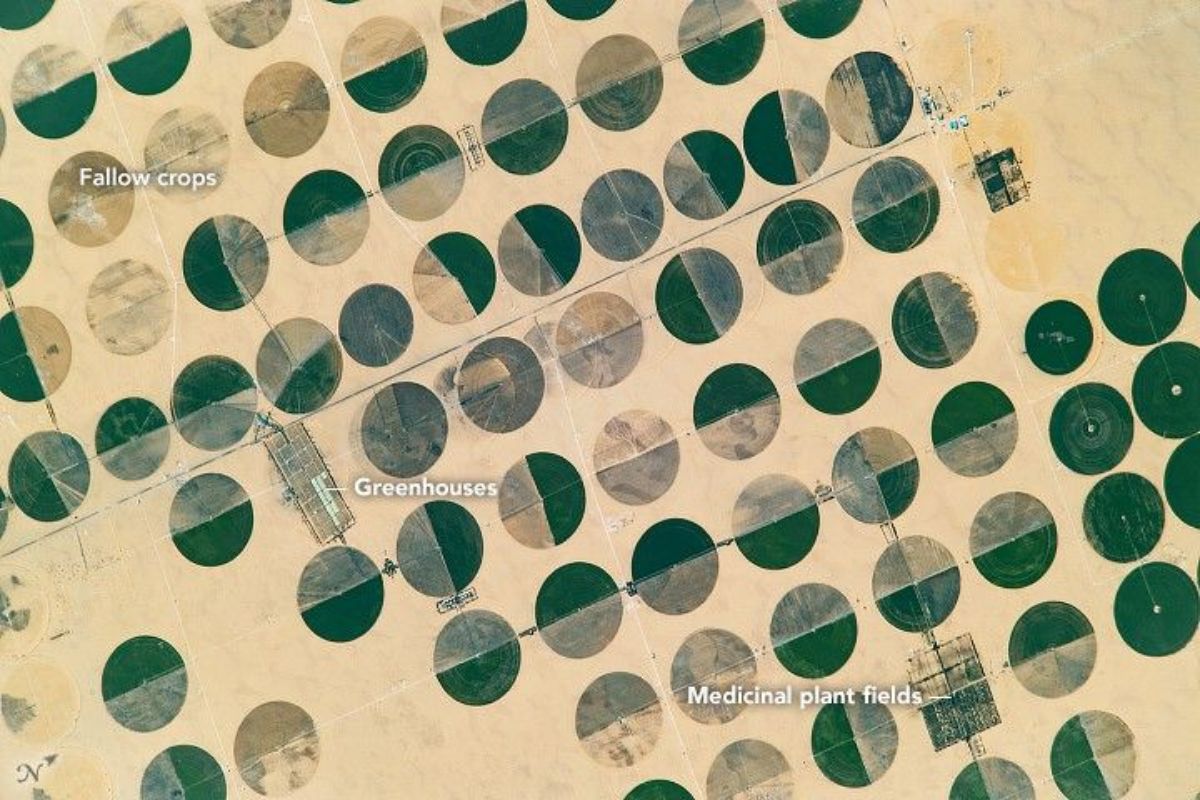
Circles in the Sahara plantations: ISS reveals Sharq El Owainat, in Egypt, irrigated by a center pivot with water from the Nubian Sandstone Aquifer, growing between 1998 and 2019, 290 km from the nearest city.
This reinterpretation also amplifies the historical weight of the quipu. More than an archaeological artifact, it is seen as an example of how pre-Columbian American civilizations developed their own solutions to deal with large-scale information.
The hierarchical structure of the strings helps explain why the quipu is similar to the logics used today in computer science

In the Inca Empire, which flourished in the Andes between the 15th and 16th centuries, the quipu played a central role in the administration of a vast territory. Without a consolidated alphabetic writing system, the civilization resorted to main strings, hanging threads, different colors, twists, and knots in specific positions to record data in a positional decimal system.
The most fascinating aspect lies in the physical hierarchy of the object. A main string could support hanging cords, which in turn housed secondary threads and new levels of subordination, forming a logic similar to folders and subfolders in an operating system.
It was this similarity that attracted the attention of computing researchers. Instead of looking only at counting, they began to treat the quipu as an information architecture, that is, a structure capable of organizing data in multiple layers in a scalable manner.
Researchers took the Inca model to languages like C++ and Python and created prototypes inspired by the logic of the nodes
One of the most discussed approaches came from computer scientist Richard Dosselmann, who studied the quipu alongside Edward Doolittle and Vatika Tayal. Instead of merely trying to decipher the artifact, the group proposed modeling its functioning with contemporary tools.
The team translated the logic of the cords into languages like C++ and Python, even creating a digital format directly inspired by this Andean structure. In practice, this opened up space for the development of applications that simulate spreadsheets, file systems, and encryption methods based on the organization of the nodes.
The prototypes show an important advantage of the model. Information can be added without requiring a complete reorganization of the system, making the structure linear, scalable, and useful for large masses of data, such as inventories and censuses.
Another point that caught attention was the possibility of concealing meanings through the simple reorganization of the cords at different levels. Even though the Incas probably did not think of this as encryption in the current sense, the quipu presents characteristics that allow to protect or hide information based on the very arrangement of the data.
Research by Marcia Ascher, Robert Ascher, and Sabine Hyland indicate that the quipu may have stored numbers, memory, and even elements of language
The studies on the quipu did not start now. Decades ago, researchers like Marcia Ascher and Robert Ascher had already demonstrated the high degree of mathematical sophistication of the system, showing that the Incas mastered an extremely precise form of record based on decimal places.
In recent years, the discussion has advanced beyond numbers. Researcher Sabine Hyland argues that certain combinations of color, position, and type of knot may carry semantic meanings, not just quantities.
There are studies suggesting the existence of up to 95 possible markers, capable of representing sounds, concepts, or categories. If this hypothesis is confirmed, the quipu will be even closer to a form of writing or a complex coding system.
This possibility changes the status of the object. The quipu would cease to be just an accounting tool to also be understood as a memory instrument, narrative record, and communication tool, something much more sophisticated than previously thought.
The comparison with the Antikythera mechanism helps to reposition the Incas at the center of the history of ancient technology
When the quipu is called an analog computer, the inevitable comparison arises with the Antikythera mechanism, often cited as the world’s first analog computer. The difference is that while the Greek artifact worked with gears and astronomical calculations, the Inca system relied on fibers, colors, twists, and knots.
Both cases show very different paths to the same human objective: to represent, organize, and manipulate complex information. This realization forces the history of technology to move away from the traditional axis, usually focused on Europe and the Middle East.
The quipu reinforces that pre-Columbian Americas also produced original and sophisticated solutions to the problem of data storage. Instead of screens, circuits, and metal, the Incas resorted to simple materials to build a system of enormous logical efficiency.
Therefore, calling the quipu merely a counting tool seems insufficient. The term computer may even generate controversy, but the expression millennial information system aptly describes the relevance of this legacy.
Why the quipu continues to arouse fascination and skepticism at the same time among archaeology, history, and computing
The fascination surrounding the quipu comes precisely from what it has yet to fully reveal. The more researchers test its logic with modern tools, the clearer it becomes that the Incas developed a system far beyond mere counting of goods and people.
At the same time, there is caution among specialists. Calling this artifact a computer may sound exaggerated to those who associate the word only with electronics, but ignoring the complexity of the quipu also impoverishes the historical discussion.
The most balanced approach is to recognize that we are facing an extraordinary information technology for its time. About 600 years ago, the Inca Empire was already dealing with data hierarchy, scalability, and coding in a way that still surprises archaeologists and computer scientists.
And you, does it make sense to call the quipu an analog computer, or does this term stretch the comparison with current technology too far? Leave your comment and join the debate, because this discovery directly impacts how the history of science is usually told.








Seja o primeiro a reagir!