





 English
  Francês
  Alemão
  Italiano
  Japonês
  Norueguês
  Portuguese
  Spanish
  5 min of reading
  0 comments


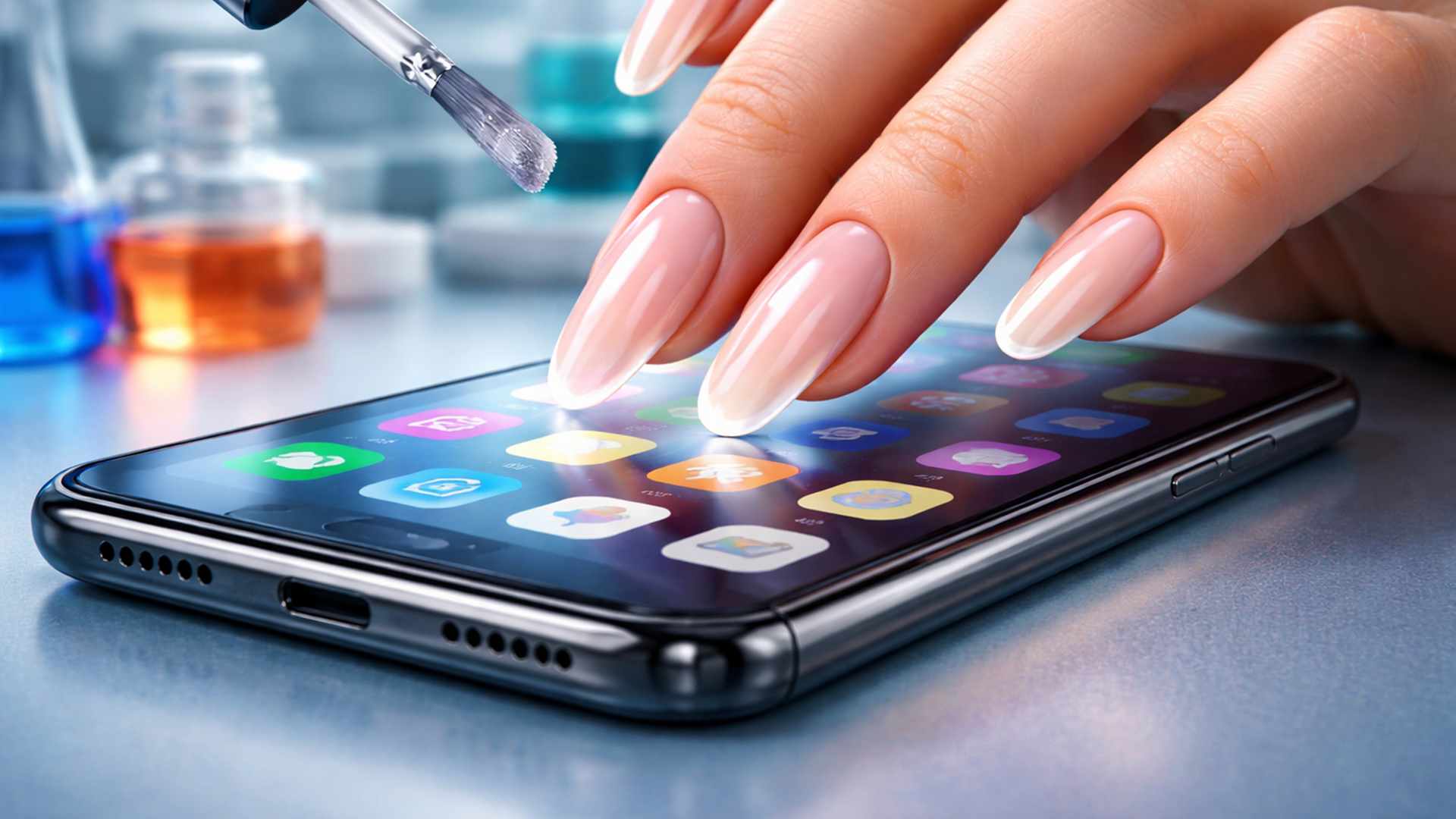
Researchers from Centenary College of Louisiana developed an experimental transparent nail polish that allows interaction with touch screens, addressing a common problem for those who have long nails and still face limitations in stability, duration, and practical application
Researchers from Centenary College of Louisiana developed a prototype of transparent nail polish capable of making long nails compatible with touch screens, in a project that will be presented at the spring meeting of the American Chemical Society, held from March 22 to 26, 2026.
The proposal arose from a common problem faced by those with long nails when handling cell phones and tablets. Instead of touching the screen naturally, these individuals often need to position their fingers uncomfortably for the device to recognize the command.
The research was conducted by undergraduate student Manasi Desai, interested in cosmetic chemistry, under the guidance of Joshua Lawrence, organometallic chemist. According to Lawrence, the work stemmed from the idea that chemists can solve practical problems and try to make the world better.
-
The climate in 2026 may surprise with extremes even more intense than in 2025, with heatwaves, out-of-season cold, and irregular rainfall in Brazil.

-
Astronomers identify 45 rocky planets that could harbor life, and one of them is just 4.2 light-years from Earth, making it the closest neighbor with the potential to have liquid water on its surface.

-
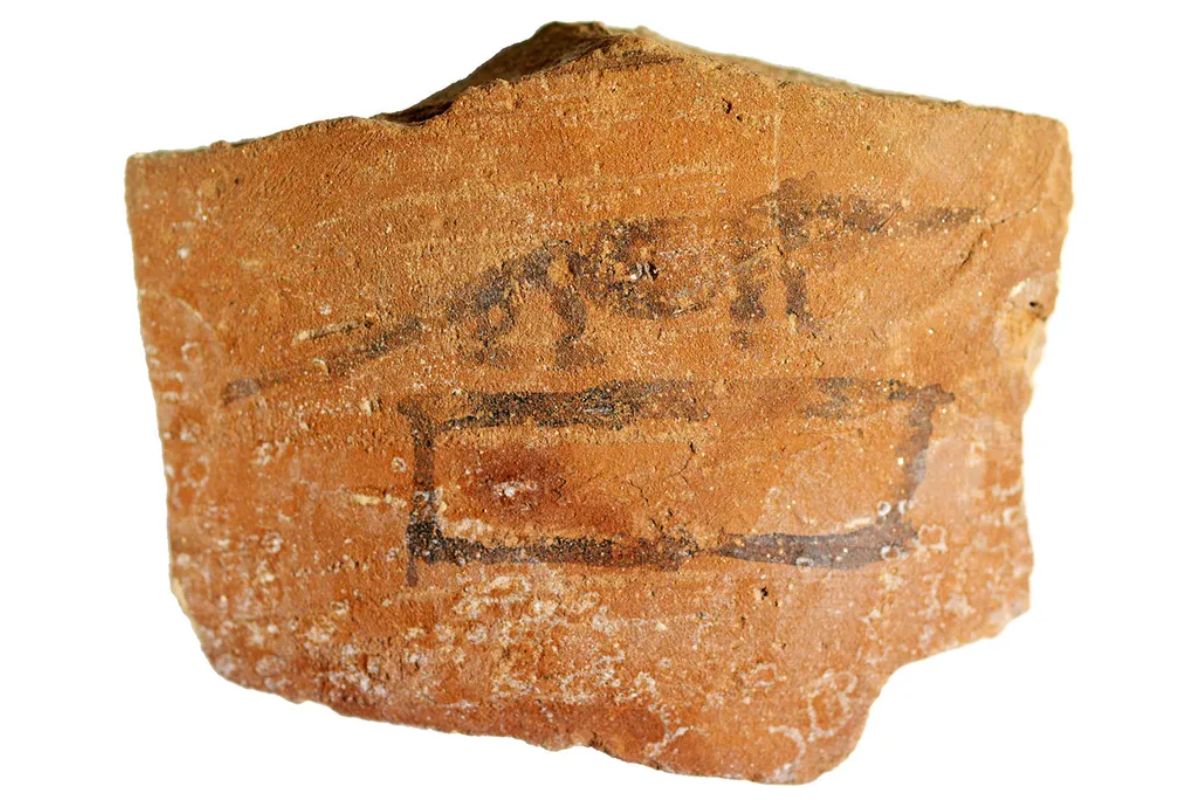
Archaeologists discover 43,000 ostraca in Egypt with tax lists, drawings, religious texts, and everyday notes that reveal what life was like in ancient Athribis before Cleopatra.
-
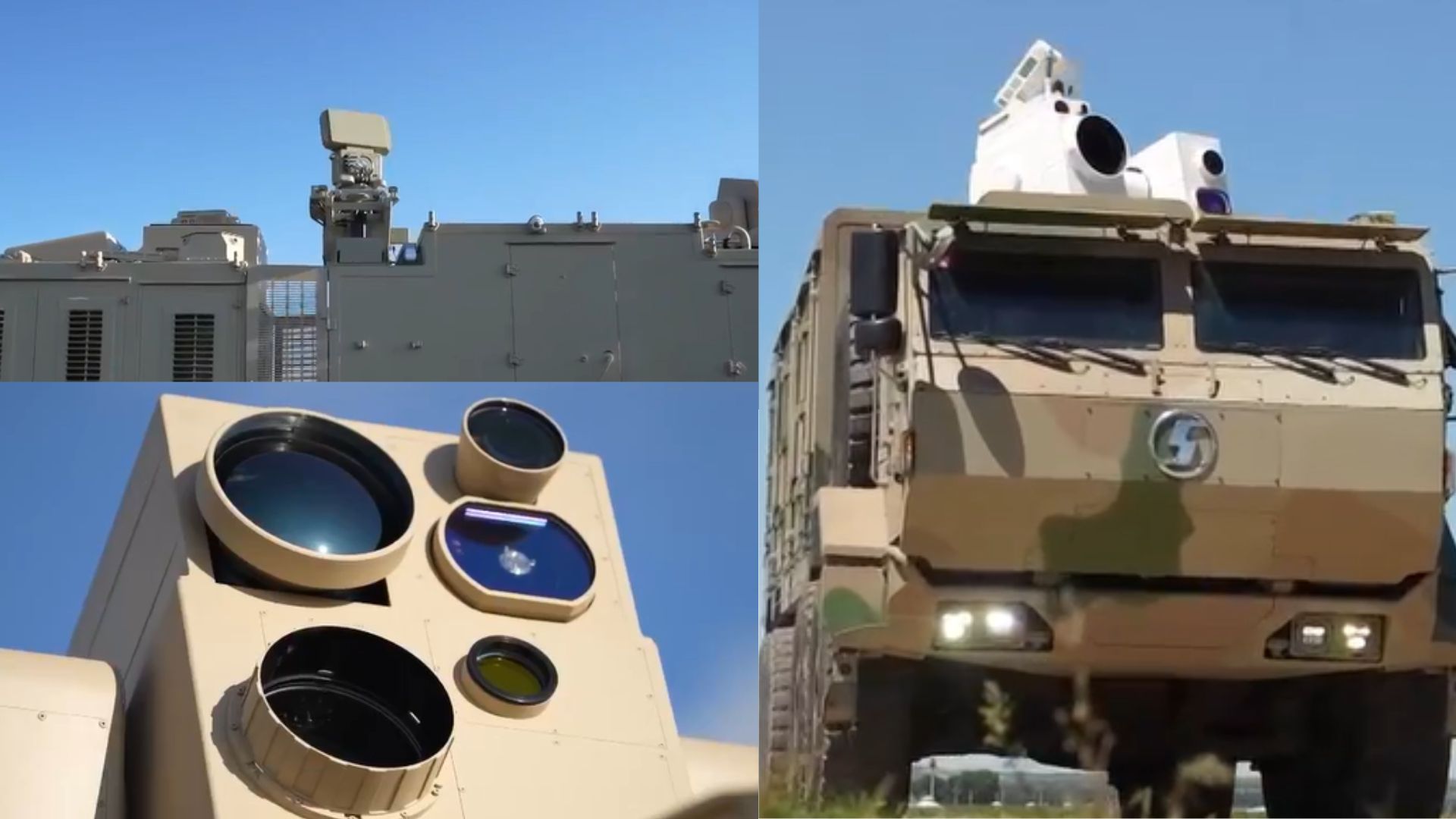
China showcases laser defense systems that target drones flying very low and attempts to address a flaw that has been concerning armies worldwide.

The starting point of the project was the search for a useful and concrete application. During this process, the researchers realized the difficulty that people with long nails face when using smartphones, including in the case of a phlebotomist encountered during a blood draw.
When asked if a solution like this would be useful, the answer was straightforward: “yes, please!”. From there, the team began to investigate how to transform nails into surfaces capable of interacting with touch screens.

How the nail polish aims to solve the limitation of nails on screens
Most current smartphones and tablets use capacitive screens, which operate with a small electric field on the surface. When a conductive material, such as the tip of a finger or even a drop of water, comes into contact with this field, the capacitance changes, and the device registers the touch.
Nails, on the other hand, do not conduct electricity sufficiently to cause this change. Therefore, like the rubber of a pencil, they typically do not generate a response on screens.
For a nail to work on this type of screen, it needs to conduct a small electric charge. It was this necessity that led the team to seek a formula that combined transparency, safety, and conductivity.
Previous attempts and the search for a transparent alternative
According to the researchers, other attempts to solve this problem had resorted to adding conductive materials to the polish, such as carbon nanotubes or metallic particles. Although they worked, these substances could be dangerous during manufacturing as they are harmful if inhaled.
In addition to the safety issue, these materials also produced dark or metallic finishes. This limited the aesthetic appeal of the solution and restricted its use by people who wanted to maintain the appearance of a conventional manicure.
In light of this, Desai and Lawrence decided to seek an alternative that was safer and remained transparent. The goal was to create a nail polish that could be used without visually altering the nails and without relying on dark or metallic components.
The tested ingredients and the results obtained
To achieve this combination, Desai worked with trial and error on a wide variety of mixtures. She tested 13 commercially available transparent polishes and over 50 different additives until identifying two ingredients considered promising.
The highlighted compounds were forms of taurine, often used in dietary supplements, and ethanolamine, a simple organic molecule. According to the study report, ethanolamine helped provide the necessary electrical properties and showed good compatibility with the polish.
The modified taurine, in turn, is non-toxic, although it produces a slightly cloudy appearance. When the two ingredients were combined, the team obtained a formula capable of allowing a smartphone to detect the touch of a nail.
Desai stated that the final transparent polish can be applied over any manicure or even over unpolished nails. According to her, the product can also help people with calluses on their fingertips, offering aesthetic and lifestyle benefits.
The chemical explanation proposed by the researchers
Unlike previous approaches based on inherently conductive materials, the team believes that their formula works through acid-base chemistry. This interpretation was built from the performance observed in the mixtures with ethanolamine.
The researchers’ reasoning is that these mixtures can release protons, favoring the movement of electric charge. When the polish comes into contact with the electric field of the touch screen, these protons would move between the molecules present in the formula.
This movement would be sufficient to slightly alter the capacitance of the surface. As a result, the device would be able to register the contact as a touch, even when it was made with the nail.
Current limitations and next steps in the research
Despite the promising results, the researchers reported that the polish is still not ready for daily use. Even the best-performing mixture, based on ethanolamine and taurine, still does not work reliably when applied directly to the nails.
Another identified obstacle is the rapid evaporation of ethanolamine. Because of this, the polish remains effective for only a few hours after application, which limits its practical utility.
The team also aims to find a completely non-toxic alternative. At the same time, the researchers state that they already have a clearer understanding of how the formula works and continue testing new compounds to seek a more stable and efficient solution.
Lawrence summarized this stage of the work by stating that the team is making the effort to discover what does not work until they find something that does. The research received funding from Centenary College of Louisiana, the Albert Sklar family, and the Sklar Chair of Chemistry, and the researchers have already submitted a provisional patent application.
The findings will be presented during the ACS Spring 2026, a meeting of the American Chemical Society scheduled to take place from March 22 to 26. According to the organization, the event will feature nearly 11,000 presentations on a wide variety of scientific topics.









Seja o primeiro a reagir!