





 Portuguese
  English
  Spanish
  5 min of reading
  0 comments


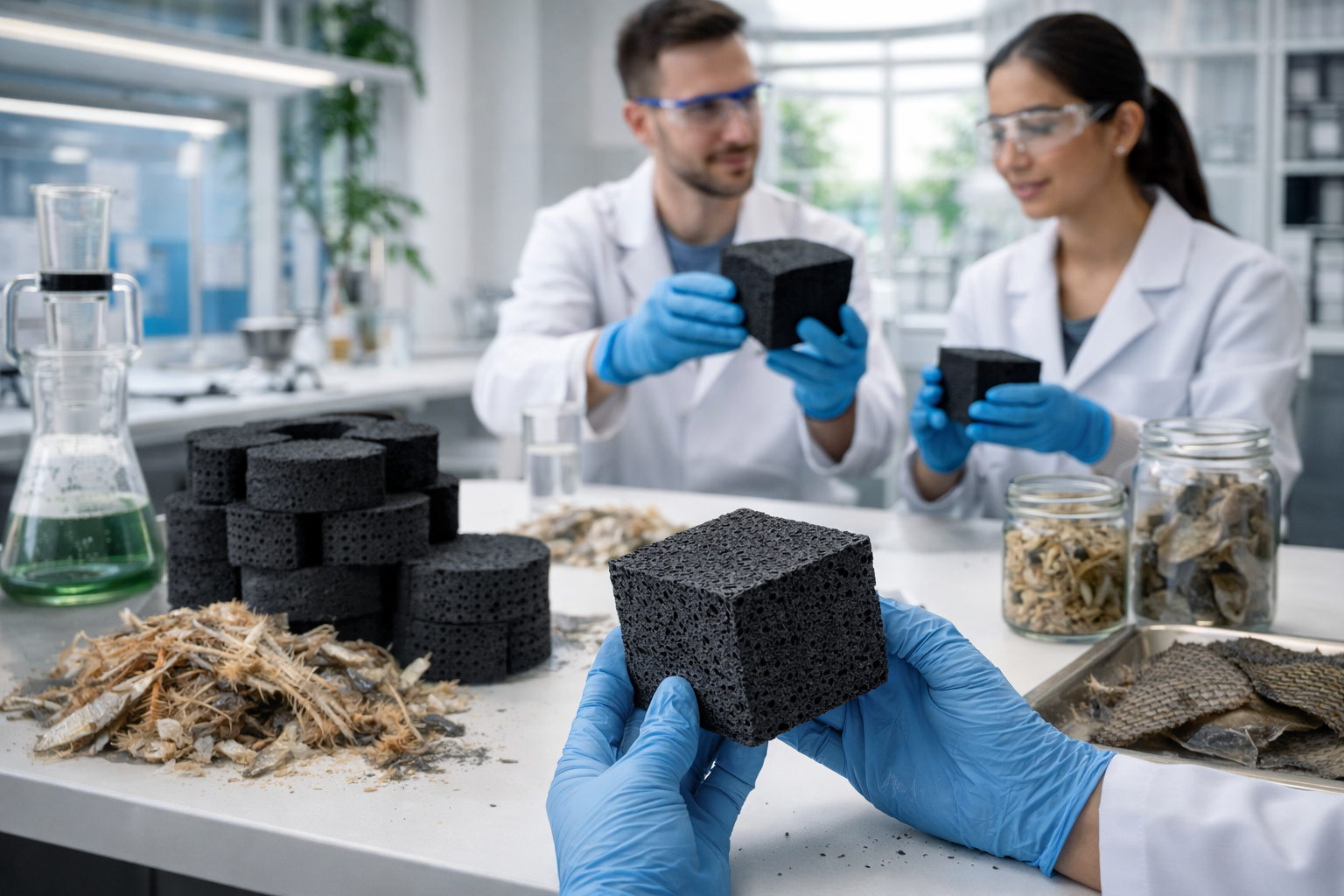
Portuguese project AERO2cycle transforms fishing waste into innovative material capable of capturing CO₂, joining circular economy and sustainability to reduce emissions and generate industrial value from organic waste.
In 2023, a scientific consortium led by institutions such as the Nova University of Lisbon and the University of Évora, in Portugal, began developing a technology that connects two global problems: the excess waste from the fishing industry and the increase in carbon dioxide emissions. The project, known as AERO2cycle, is funded by the Foundation for Science and Technology (FCT) and has been publicized by initiatives related to the blue economy and sustainability, such as the Blue Economy News platform.
The proposal is straightforward: to transform fish scraps that would be discarded into a highly technological material capable of capturing CO₂ and integrating it into productive chains, especially those related to construction and industry. What makes this research relevant is not just the material itself, but the logic behind it: organic waste is used as a basis for a functional material that directly acts on emission reduction.
Aerogels are ultra-lightweight and highly porous materials used in advanced technology
The material developed in the project belongs to a class called aerogels, known for being some of the lightest solids ever created. These materials have a highly porous structure, potentially containing up to 99% air in their composition, which gives them unique characteristics.
-
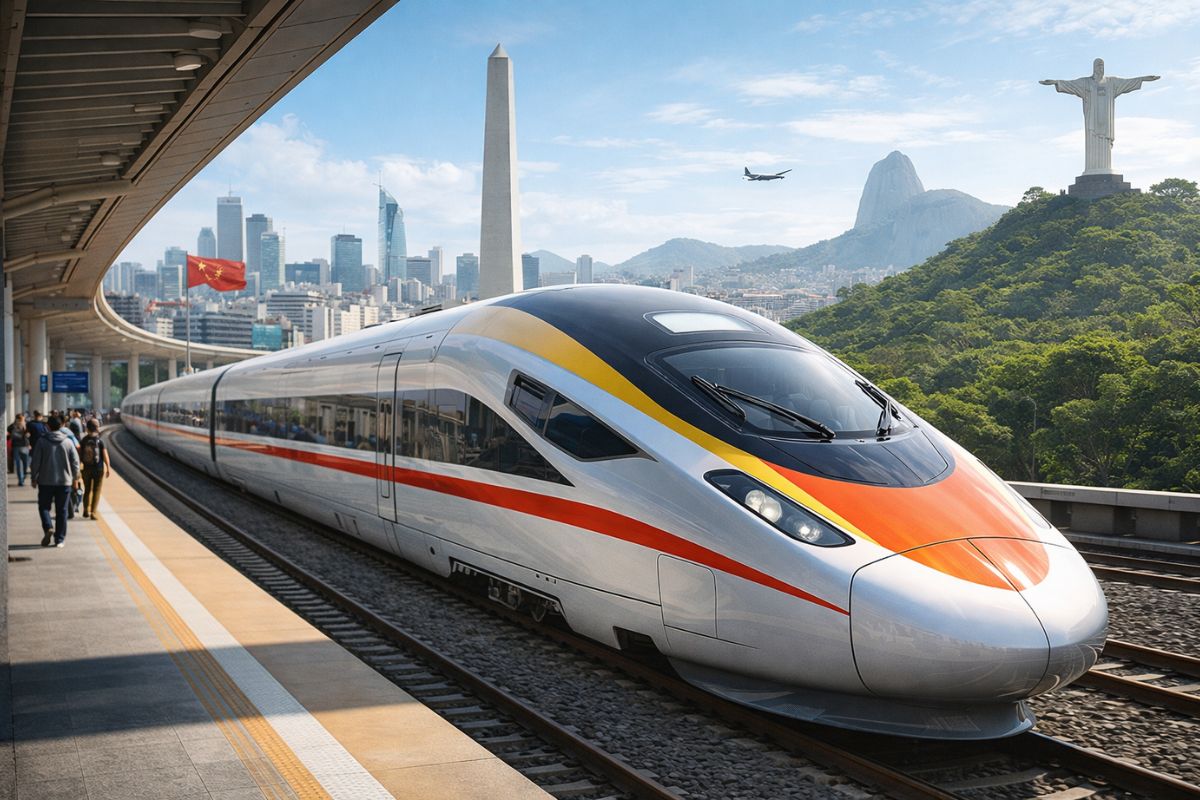
South America will have its fastest train in history: a billion-dollar project with Chinese capital will connect two capitals in two hours and create 20,000 jobs.
-
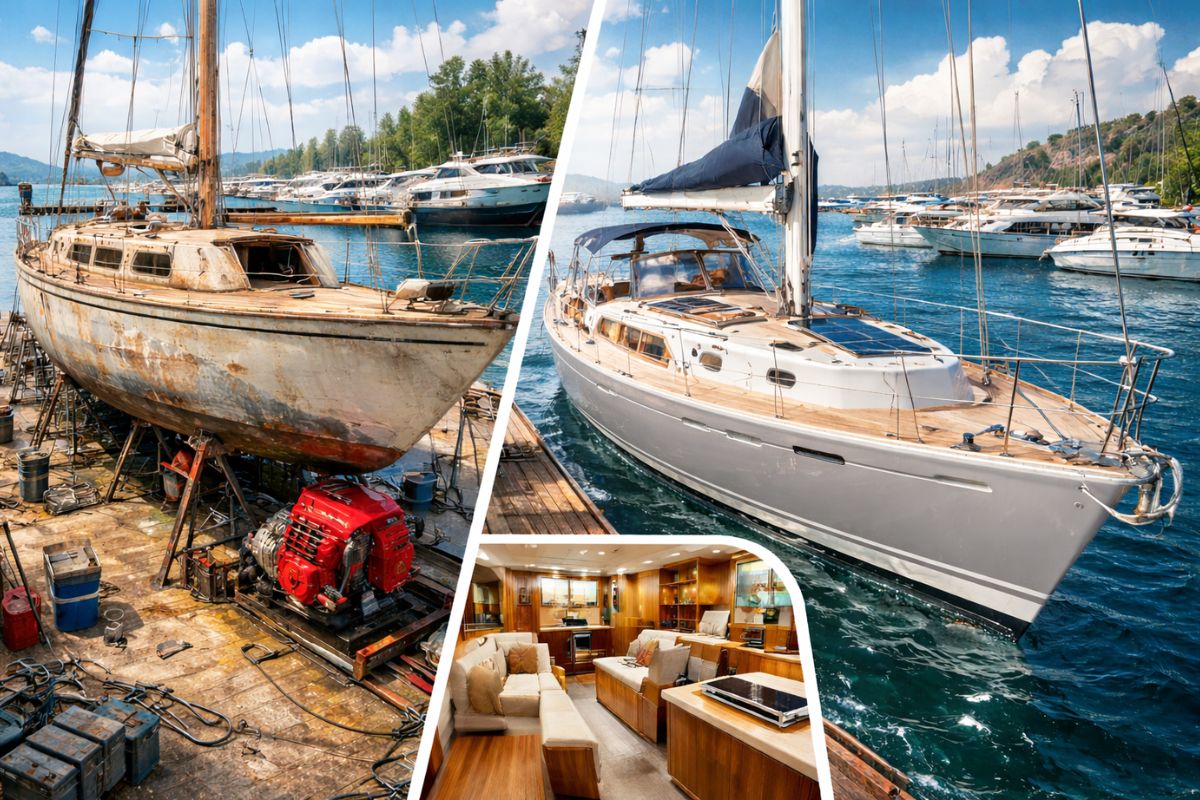
Naval reform transforms 40-year-old sailboat purchased for $5,000 into a residential yacht: structural repair of hull/keels, Awlgrip painting, engine replacement with Beta Marine, autopilot, sealing of chain plates, and complete interior retrofit for $25,479.
-
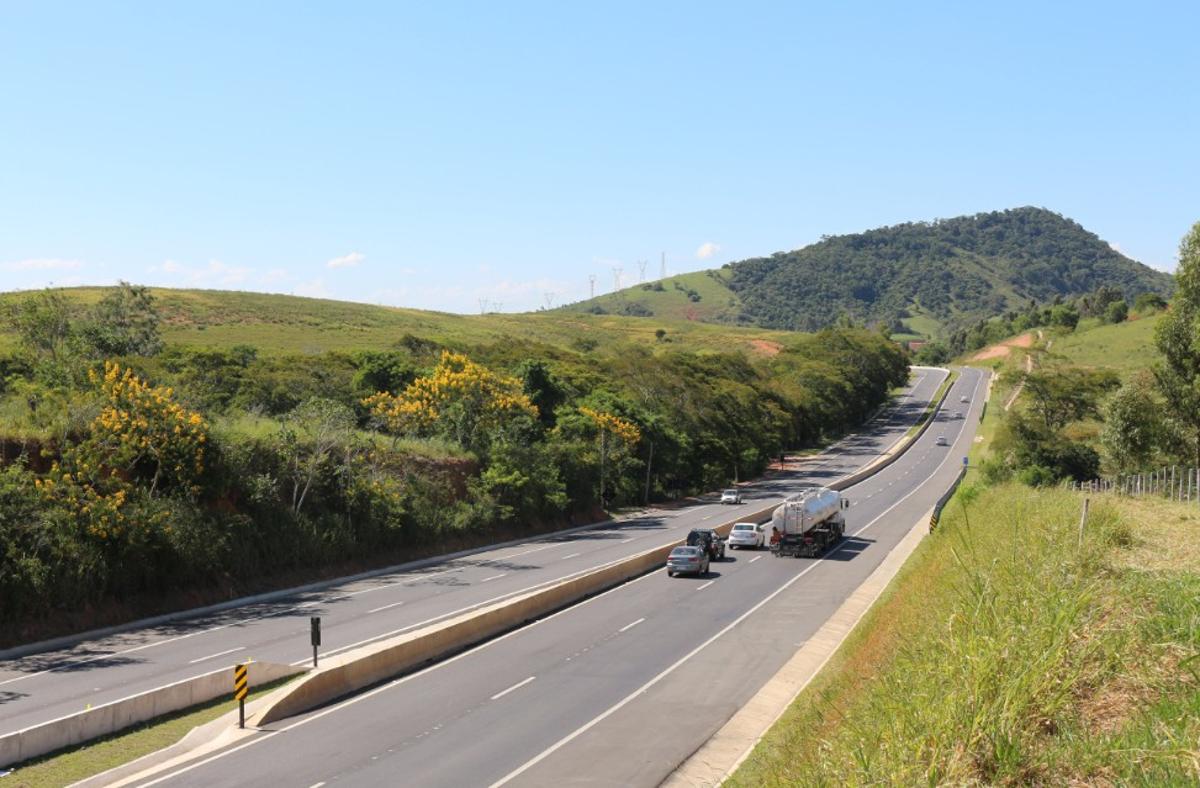
Firjan proposes to ANTT the acceleration of works on BR-101 in Northern Fluminense to improve logistics, urban mobility, and regional competitiveness.
-
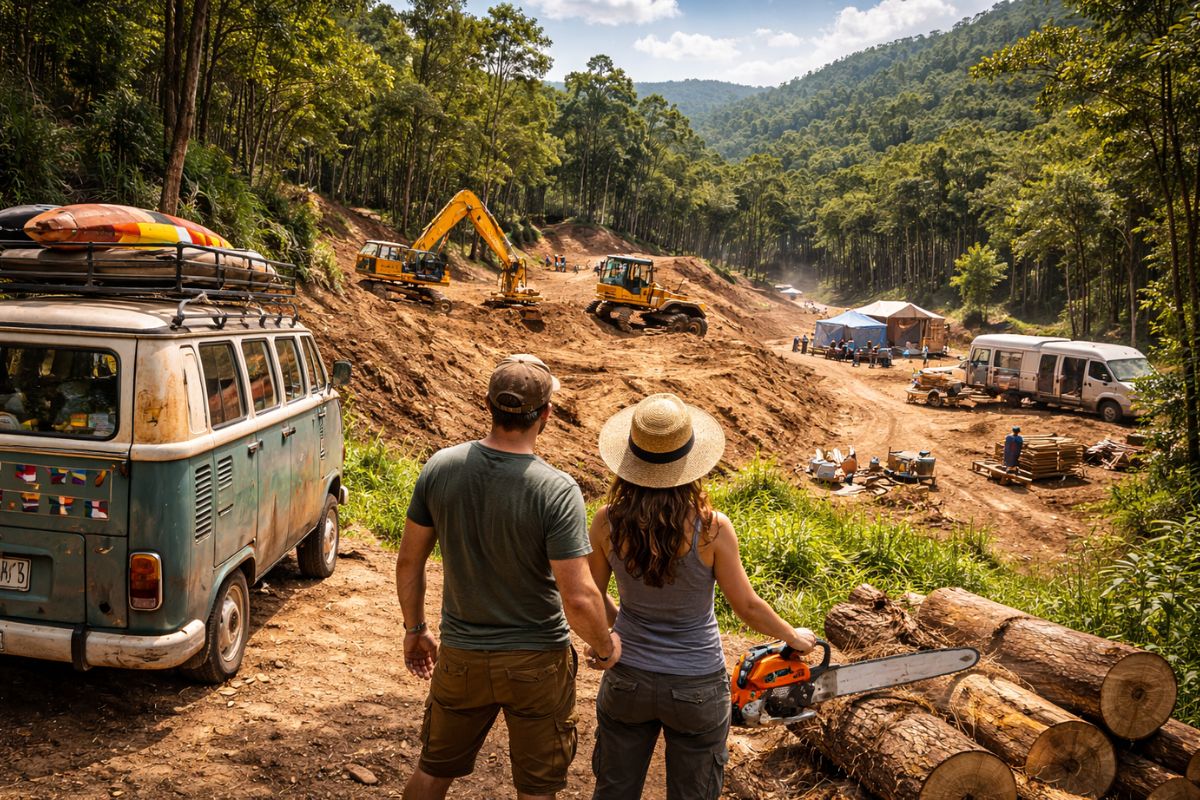
Couple that traveled by Kombi through many countries moves forward with the land in the south of SC: machines level the refuge in the woods, reinforce embankments, set up a construction camp, and train chainsaw operators to speed up the building process.
Aerogels are already used in advanced applications, including high-performance thermal insulation, aerospace industry, industrial equipment, and energy technologies. In the case of the Portuguese project, the difference lies in the origin of the material and its additional function: besides being lightweight and insulating, it is designed to capture carbon dioxide molecules.
Process transforms fish scraps into carbon-rich material through thermal treatment
The base of the material starts with waste from the fishing industry, such as bones, skin, and discarded parts from fish processing. These wastes undergo a process known as pyrolysis, which consists of heating in an oxygen-free environment.
This process generates a material called biochar, which is rich in carbon and has a porous structure. This biochar is then combined with specific chemical compounds that enhance its ability to interact with carbon dioxide.
The final result is a hybrid aerogel that maintains the characteristic lightness of this class of materials, but with the additional capacity to efficiently capture and retain CO₂.
Material designed to capture CO₂ in industrial environments and reduce emissions
The main objective of the material is not structural, but functional. It acts as a carbon capture medium, which can be applied in environments where there is significant CO₂ emission, such as industries and energy systems.
When carbon dioxide comes into contact with the aerogel, it is absorbed by the porous structure of the material, becoming trapped. This carbon can then be directed to recycling processes.
This approach connects to one of the main global strategies to combat climate change: capturing emissions before they reach the atmosphere and reintegrating them into productive cycles.
Technology connects fishing waste to the circular economy and sustainable construction
One of the most relevant aspects of the research is the integration between different sectors. The project transforms fishing waste, which would normally be discarded, into an input for advanced technology. This model follows the concept of the circular economy, where materials are not simply discarded but reintegrated into new productive cycles.
In the context of civil construction, the material can be used as a component of insulation systems or in solutions aimed at energy efficiency. Although it does not replace concrete or structural materials, it can help reduce the environmental impact of buildings.
Civil construction is one of the sectors most impacted by carbon emissions
The relevance of this technology increases when observing the role of civil construction in global emissions. The production of cement, for example, is responsible for a significant portion of CO₂ released into the atmosphere. In this scenario, materials that can contribute to emission reduction, improve energy efficiency, and capture carbon gain strategic importance.
The aerogel developed in Portugal fits exactly into this context, acting as an element that can help mitigate environmental impacts within larger systems.
Project foresees evolution until 2028 focusing on industrial applications
The AERO2cycle is not an isolated experiment. It has a development timeline that extends until 2028, focusing on scaling up the technology and integrating it into real systems. Among the project’s objectives are:
- Adaptation of the material for industrial use;
- Integration with large-scale carbon capture processes;
- Development of practical applications in productive sectors.
This horizon indicates that the technology is still in the evolution phase, but with a clear direction towards practical application.
Use of 3D printing can accelerate production of systems based on the material
Another relevant point is the use of complementary technologies, such as 3D printing, to develop structures capable of utilizing the aerogel efficiently. This approach allows for the creation of optimized shapes to maximize carbon capture, as well as facilitating the integration of the material into existing industrial systems.
The combination of innovative materials and modern manufacturing techniques expands the potential application of the technology.
Innovation transforms environmental problem into technological solution with multiple impacts
The Portuguese project stands out for transforming an environmental problem into a technological solution. Fishing waste, which represents a logistical and environmental challenge, is now used as the basis for a high-value material.
At the same time, the material addresses another global problem, which is the excess CO₂ in the atmosphere. This convergence of solutions makes the research especially relevant. The model shows that it is possible to connect different areas — such as food, industry, and construction — within an integrated logic of sustainability.
Development of new materials points to changes in the way of building and producing
The creation of materials like this indicates a broader trend in engineering and industry. The search for sustainable alternatives is leading to the development of solutions that combine technical performance with lower environmental impact.
These changes can influence not only civil construction but also sectors such as energy, transportation, and manufacturing. The idea that waste can be transformed into advanced materials is no longer just a concept but is being applied in concrete projects.
In light of this, the debate arises: can materials created from waste, capable of capturing carbon, become a common part of construction and industries in the future? Share your opinion in the comments.





Seja o primeiro a reagir!