





 Portuguese
  English
  Spanish
  6 min of reading
  0 comments


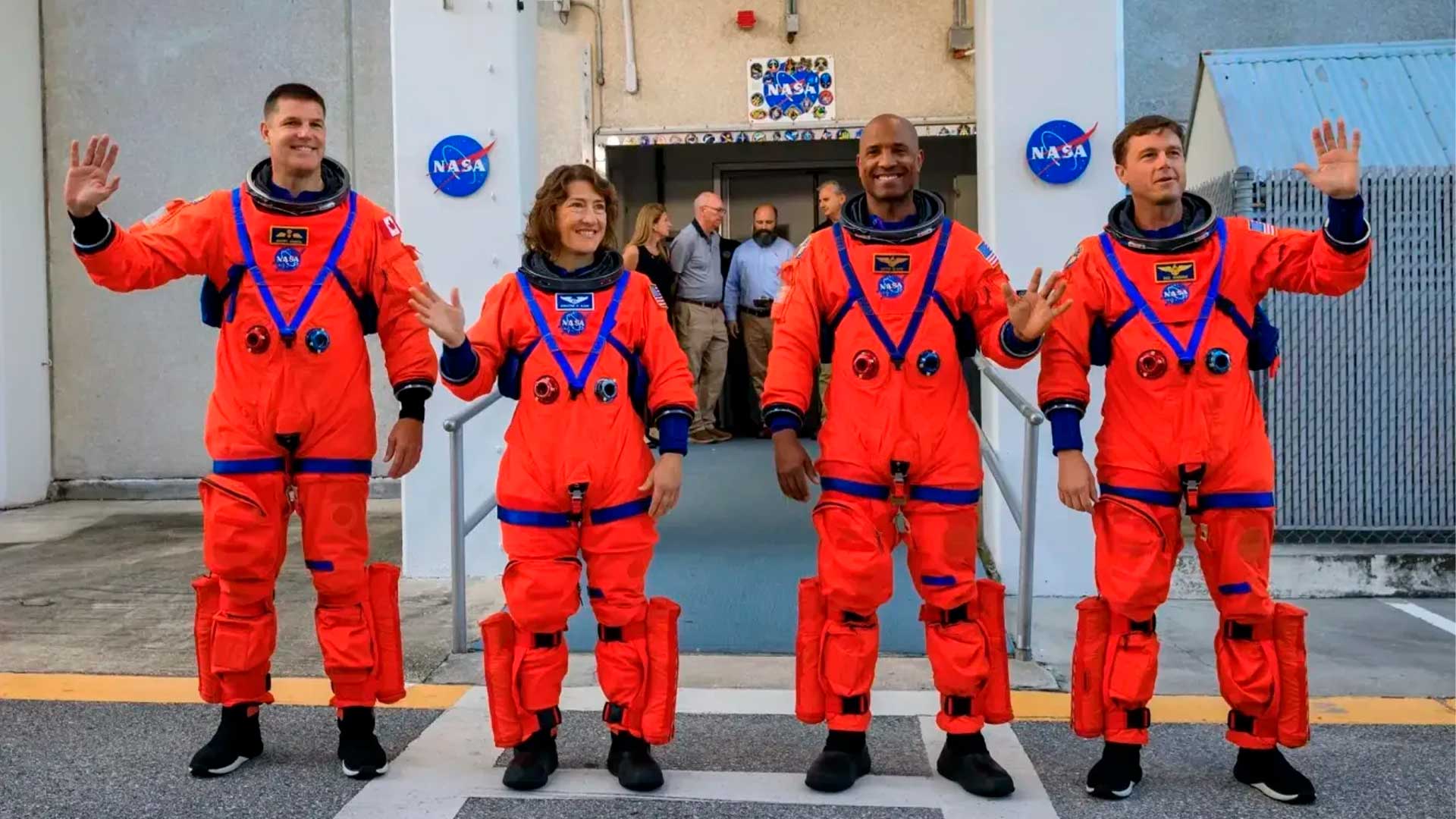
The return of humanity to the Moon has ceased to be merely a symbolic achievement and has come to involve billions of dollars, geopolitical strategy, and long-term economic interest
Going to the Moon has become a priority for NASA, but the cost of this decision is impressive. The Artemis program, created to take humans back to Earth’s natural satellite after more than 50 years, is expected to reach a total cost of US$ 100 billion, around R$ 530 billion.
This amount includes the development of the Space Launch System, the SLS, the Orion capsule, and all the necessary infrastructure for the missions. The figures also help explain why the new space race has ceased to be just a scientific project and has come to be treated as a strategic competition among powers.
The numbers show the scale of the effort. By 2020, about US$ 40 billion had already been spent, and another US$ 53 billion was projected for the period between 2021 and 2025, while a more recent budget request allocated US$ 8.3 billion for lunar and Mars exploration in 2026.
-
While the world looks at oil, the war with Iran is already disrupting helium supply from Qatar, affecting car and iPhone chips, threatening AI expansion, and putting pressure on aluminum packaging at the highest value in four years.

-
Global warming will expose a treasure hidden under the ice of Antarctica and may spark an international dispute over gold and valuable minerals.

-
A street vendor from Praia Grande built a robot made of scrap from scooters and washing machines that pulls his popcorn cart on the beach, emits sounds, and interacts with customers, becoming an attraction on the coast of São Paulo.

-
The specifications of the Xiaomi 18 Pro Max have been leaked, and the highlight is a dual 200 MP camera with a new 22-nanometer technology that promises to consume less energy and capture details in shadows and bright areas using LOFIC HDR.


The new phase of the program has gained even more attention with the Artemis II mission, which marks the advancement of the necessary tests before a future lunar landing. Although the astronauts will not land on the Moon at this stage, the flight is crucial to validate systems that will be used in upcoming trips.
How much does the Artemis program cost and why does the value approach US$ 100 billion over this decade
The estimated cost of Artemis considers a much larger structure than a single launch, according to CNN. This includes the development of space hardware, safety systems, technological adaptation, ground operations, and all the logistics required to support complex crewed missions.

In practice, NASA is working on a project that spans several years and multiple stages. The expectation is that Artemis IV, seen as part of the path to consolidate human presence in lunar orbit, will occur by 2030, which keeps investments high.
In the most recent calculations, the value is already impressive even before the current program ends. Therefore, the figure of US$ 100 billion is treated as a strong reference, but still subject to growth as new missions are confirmed and lunar infrastructure becomes more ambitious.
Why Artemis is not just more expensive on paper and needs to be compared with Apollo in updated values

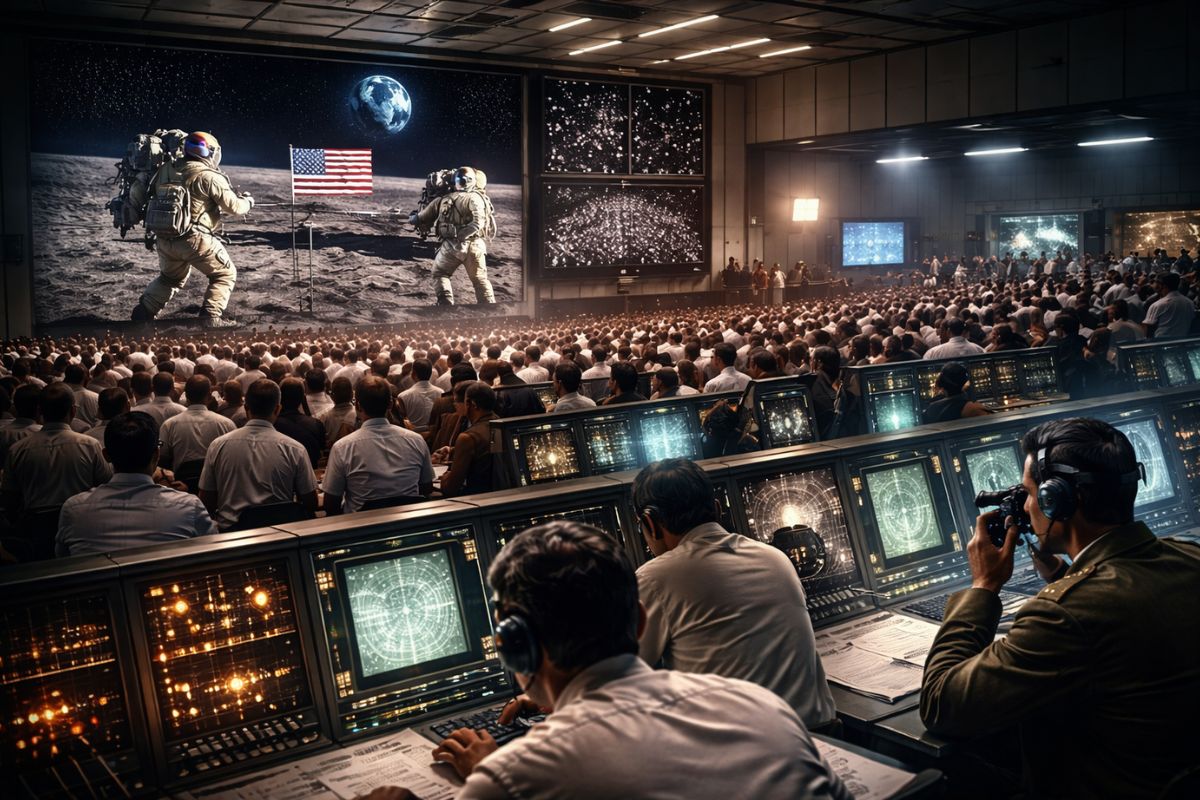
Between 1969 and 1972, NASA took 12 astronauts to the Moon through the Apollo Program. At the time, total spending was around US$ 20 billion, a value that today would be equivalent to something between US$ 150 billion and US$ 170 billion when adjusted for inflation.
This significantly changes the comparison. In nominal values, Artemis seems much more expensive, but when inflation is taken into account, the current program still falls below the financial effort made by the United States during the peak of the last century’s space race.
The history of Apollo also helps to understand the risks of Artemis. The high cost was one of the factors that weakened the previous lunar program, and budget cuts ultimately accelerated its closure in 1972.
Now, the difference is that the return to the Moon has broader objectives. It is not just about repeating a historical feat, but about creating a structure capable of sustaining a continuous presence in deep space.
What NASA seeks with the new lunar missions beyond landing and how the Moon became a bridge to reach Mars
From a scientific perspective, the goal is clear. NASA wants to use the Moon as a base for future missions and pave the way to send astronauts to Mars within the next decade.
The strategy involves testing systems, studying the lunar environment, and operating in regions that have never received human visits, such as the lunar pole. This knowledge should aid in the development of technologies that can also improve life on Earth, in areas such as materials, energy, and autonomous systems.
Artemis II is a central piece of this preparation. In this mission, the crew will fly around the Moon and return to Earth, without landing, precisely to verify the performance of the spacecraft and the rocket in a real operation.
Among the most watched names in this phase are Victor Glover and Christina Koch. If a future mission successfully lands as planned by 2030, they could enter history as the first Black man and the first woman linked to this new chapter of lunar exploration.
Rare minerals, Helium-3, and the competition for primacy explain why the Moon has returned to the center of the space race
There is a strong economic reason behind the rush to return to the Moon. The satellite contains resources considered strategic, and one of the most cited is Helium-3, a rare isotope on Earth but abundant in lunar soil.
This material is seen as a potential fuel of the future due to its potential in clean, safe, and virtually unlimited nuclear fusion reactors. Although commercial exploration still depends on significant technological advancements, the mere strategic value of this resource has already changed the logic of the space race.
Practically speaking, the Moon does not belong to any country. Nevertheless, whoever establishes operational presence first tends to gain political, scientific, and economic advantages in exploring these areas.
It is precisely at this point that competition with China becomes more evident. The Chinese have already signaled plans to send a taikonaut to the Moon in 2030, which has increased pressure on the United States to maintain its leadership.
More than a space mission, Artemis has become part of a competition for technological superiority. The Moon is once again being treated as strategic territory for energy, research, mining, and global influence.
Artemis II tests Orion and SLS before the next stages and reinforces the promise of a new era of discoveries
After the launch of Artemis II, NASA Administrator Jared Isaacman emphasized that the priority is to thoroughly test the systems of the Orion spacecraft and the SLS rocket. The focus is on ensuring safety and performance before the next more ambitious crewed missions.
The assessment is crucial because no human had flown in this spacecraft before this testing cycle. In an operation of this scale, each step needs to prove that the systems work with sufficient safety margins to support even more complex journeys.
Isaacman summarized this moment as paving the way for future missions and for a golden age of science and discoveries. The phrase helps to convey the spirit of the program, which blends scientific ambition, heavy investment, and geopolitical pressure into a single project.
For those following the topic, the debate has gone beyond the billion-dollar cost. The question now is whether this new space race will prioritize science, political prestige, or economic exploration of the Moon. Leave your comment and say what weighs more in this competition that already involves the US, China, and the future of human presence beyond Earth.








Seja o primeiro a reagir!