





 Portuguese
  English
  Spanish
  5 min of reading
  12 comments




When thinking of discoveries that transformed the course of history, what comes to mind? Wars, revolutionary inventions, or social movements? Few remember that, in the dark depths of a mine in Europe, a small mineral would be responsible for one of the greatest scientific and technological revolutions of modernity.
At the end of the 18th century, in 1789, the German chemist Martin Heinrich Klaproth isolated, for the first time, a metal previously unknown from a mineral that seemed to be just another geological curiosity.
This mineral, known as pitchblende, was primarily used to give color to ceramics and glass. No one imagined that its true importance was yet to be discovered.
The Unexpected Discovery of Fluorescence That Opened Doors for New Investigations
Decades later, in 1852, the physicist and mathematician Gabriel Stokes began to study the properties of light and its interaction with various materials.
-
Historic bankruptcy of Centauro shocks the market, and the century-old company puts more than 500,000 products, machines, and complete infrastructure up for online auction.

-
Brazil extracts 26.3 million tons of ore from what was previously treated as waste, transforming residues into wealth, producing over 3 million tons of sand, and demonstrating how national mining is relearning to generate value.

-
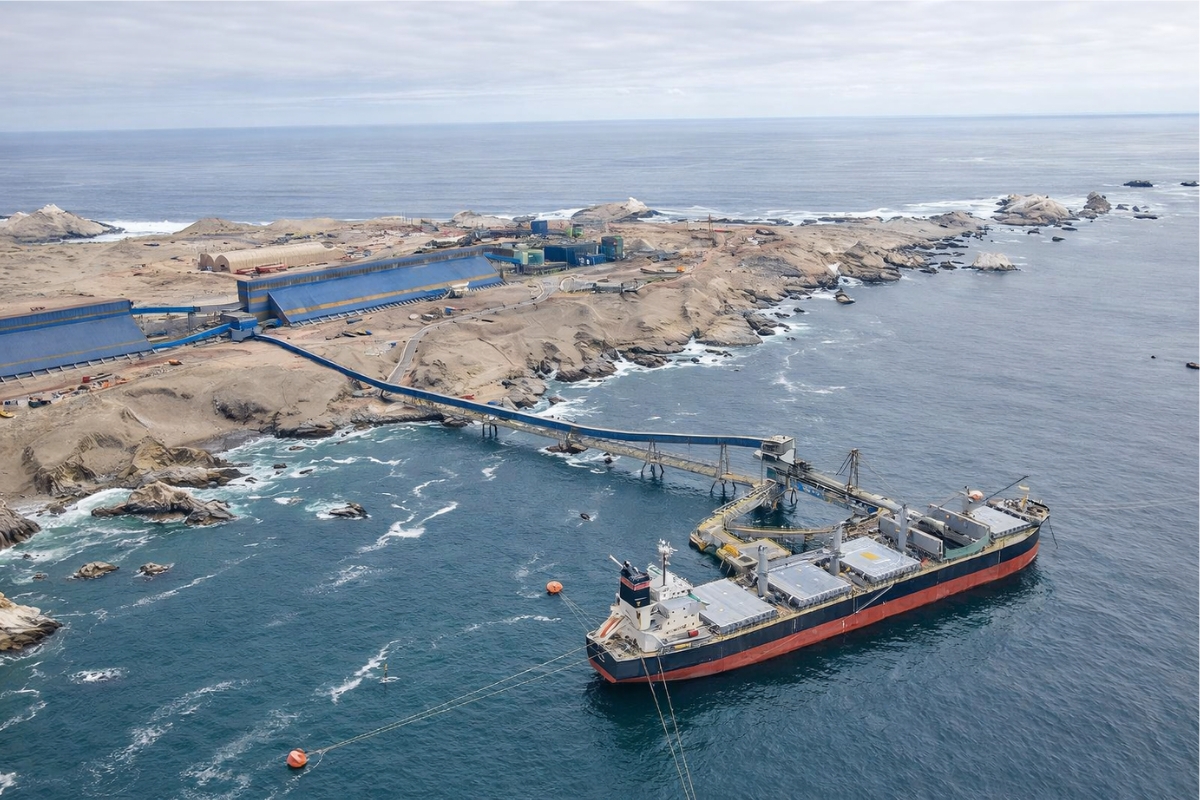
A $3.5 billion megaproject in Latin America pumps desalinated seawater at 1,050 liters per second over 194 km to keep a copper supermine in the Andes operational for another 20 years.
-
New shoe factory in Ceará is expected to create 400 jobs and strengthen the local economy.

He observed that glasses pigmented with substances extracted from pitchblende exhibited strong fluorescence, a phenomenon that was still far from being completely understood.
This discovery was just the tip of the iceberg, as much more would be revealed about the hidden potential of this seemingly ordinary stone.
Henri Becquerel and the Invisible Ray: When Science Advances by Accident
Only at the end of the 19th century, in 1896, did the true power of pitchblende begin to be unveiled.
The French physicist Henri Becquerel, who was studying fluorescence phenomena, decided to investigate whether the metal extracted from the mineral emitted rays similar to the newly discovered X-rays.
During his experiments, Becquerel accidentally left the metal stored in the dark alongside a photographic paper.
To his surprise, the paper registered marks, suggesting that the metal emitted a form of invisible energy. It was the discovery of radioactivity, a scientific revolution.
Marie and Pierre Curie: The Couple That Brought to Light the Power of Uranium
Inspired by Becquerel’s discovery, Marie Curie made radiation the topic of her doctoral thesis. With the support and collaboration of her husband, Pierre Curie, she managed to isolate two new radioactive elements: polonium and radium.
During their research, the Curie couple revealed that uranium, the metal extracted from pitchblende, was capable of continuously emitting energy, a process that transformed the metal into other elements.
This continuous transformation showed the world the incredible power of nuclear energy.


Ernest Rutherford and the Paradigm Shift About Matter
Meanwhile, Ernest Rutherford, a renowned physicist, was investigating the behavior of uranium and its ability to transform into other elements.
He demonstrated that uranium could release an unimaginable amount of energy when undergoing transmutation, challenging the long-held belief that atoms were indivisible. This discovery forever changed our understanding of matter and paved the way for future nuclear research.
Leo Szilard and the Chain Reaction: An Idea Born in the Streets of London
In 1933, the scientist Leo Szilard had a revolutionary insight while crossing a street in London.
Inspired by a speech from Rutherford, Szilard began to imagine the possibility of inducing nuclear reactions through neutrons, small particles with no electric charge.
He conceived the idea of a chain reaction, where a neutron bombards an atom, releasing energy and more neutrons that, in turn, trigger new reactions. This idea was fundamental for the advancement of nuclear science.
Fermi and Szilard: The Confirmation of the Chain Reaction Theory
In the following years, Enrico Fermi, one of the most renowned physicists of the time, joined Szilard to test the chain reaction theory.
They bombarded various elements with neutrons, observing their reactions. When they used uranium, they discovered it splits into smaller elements, releasing large amounts of energy. This discovery confirmed Szilard’s theory and marked the beginning of the nuclear energy era.
From Discovery to Power: Uranium as a Tool for Good and Evil
The discoveries of Fermi and Szilard resulted in the first controlled nuclear reaction, which would later lead to the development of the atomic bomb.
What began as a scientific curiosity in a remote European mine culminated in one of the most powerful forces ever known to humanity. Uranium, the invisible energy, transformed into a tool capable of both destruction and progress.
The Impact of Uranium on Science, Technology, and Society
The discovery of radioactivity and uranium revolutionized physics and had profound impacts on technology and society.
Nuclear energy became a new power source, leading to the creation of nuclear reactors for electricity generation and nuclear weapons, changing the global geopolitical balance.
But at the same time, it also brought promises of a future with abundant and clean energy, albeit surrounded by significant risks and challenges.
Challenges and Advances in the Nuclear Era: The Search for Clean and Safe Energy
Nuclear accidents, such as Chernobyl and Fukushima, highlighted the inherent dangers of nuclear technology, while nuclear weapons continue to pose a threat to global security.
Today, the search for safe and sustainable ways to utilize nuclear energy remains a central theme in both science and politics.
Medical Applications of Radiation: Saving Lives Through Nuclear Science
Radiation, beyond its use in energy generation and armaments, plays a crucial role in modern medicine. Radiation therapy, for example, is an essential technique in cancer treatment, using radiation to destroy cancer cells.
Other advanced imaging techniques, such as positron emission tomography (PET), are direct results of nuclear research and allow for more precise diagnoses, leading to more effective treatments.
The Future of Nuclear Energy: Promises and Challenges Ahead
The future of nuclear energy depends on technological advancements and rigorous regulations. Ongoing research and innovations are essential to explore the potential of nuclear fusion and other emerging technologies.
With a crucial role in the fight against climate change, nuclear energy can offer a clean and efficient energy source.
From its discovery to modern applications, uranium has played a central role in the evolution of science and technology.
Its unique properties enabled the development of one of the most powerful energy sources known, revolutionizing the way we see the world and opening new possibilities for the future. The story of uranium is undoubtedly a story of innovation, discovery, and transformative potential.
The story of uranium is a story of innovation, discovery, and transformative potential. How do you think the discovery of nuclear energy has influenced the modern world? Leave your opinion in the comments!







Sabemos que o Brasil possui grandes jazidas de Uranio, sendo as mais importantes a de Caetité na Bahia e outra no Ubajara no Ceará mas ainda importa Uranio enriquecido para a Usinas de Angra dos Reis. O processo de enriquecimento é muito caro e exige tecnologia avançada, mas em breve seremos auto suficiente nesse produto. Até porque se tem em construção, um submarino nuclear em fase avançada de construção e não pode continuar dependente dessa fonte de energia!
Boa matéria,eu sou fã.
Na realidade é uma extensão da própria matéria e suas diversas formas de manifestação seja em energias ou qualquer outro polo fica aí mais uma lição da natureza onde podemos usufruir de uma maneira eficaz e sistêmica.