





 Portuguese
  English
  Spanish
  4 min of reading
  1 comment


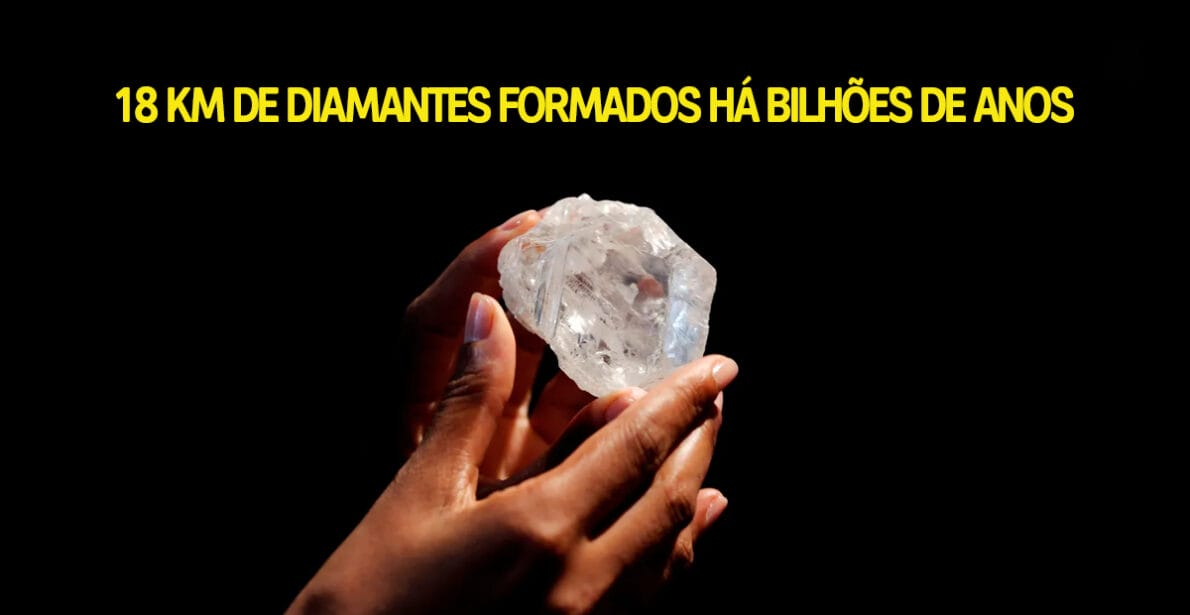

Surprising Discovery: A Layer of Diamonds Up to 18 Km Thick. Researchers Recreated the Extreme Conditions of the Planet in the Laboratory, Revealing a Diamond Formation Process.
The search for hidden treasures has always fascinated humanity. But what if I told you that one of the most precious treasures could be hidden in an unexpected place? Beneath the arid and unexplored surface of a planet, there may exist a layer of diamonds up to 18 kilometers thick.
According to new research, diamonds may be present on Mercury, forming shortly after the planet’s consolidation, about 4.5 billion years ago.
During this time, Mercury was enveloped in a cloud of dust and gas, subjected to conditions of high pressure and high temperature. It is believed that the young planet’s graphite crust floated over a vast ocean of magma.
-
USA and China compete for Brazil over resources that could be worth trillions — rare earths put the country at the center of a global dispute

-
With 74% of companies facing difficulties in hiring, technicians and engineers in renewable energy are becoming scarce in Brazil and are essential to support the expansion of solar, wind, and green hydrogen projects.

-
After China, it’s now the turn of the USA to ‘secure’ a share of Brazil’s natural resources: the country buys critical rare earths for R$ 3 billion and enters the center of the global technology dispute.
-
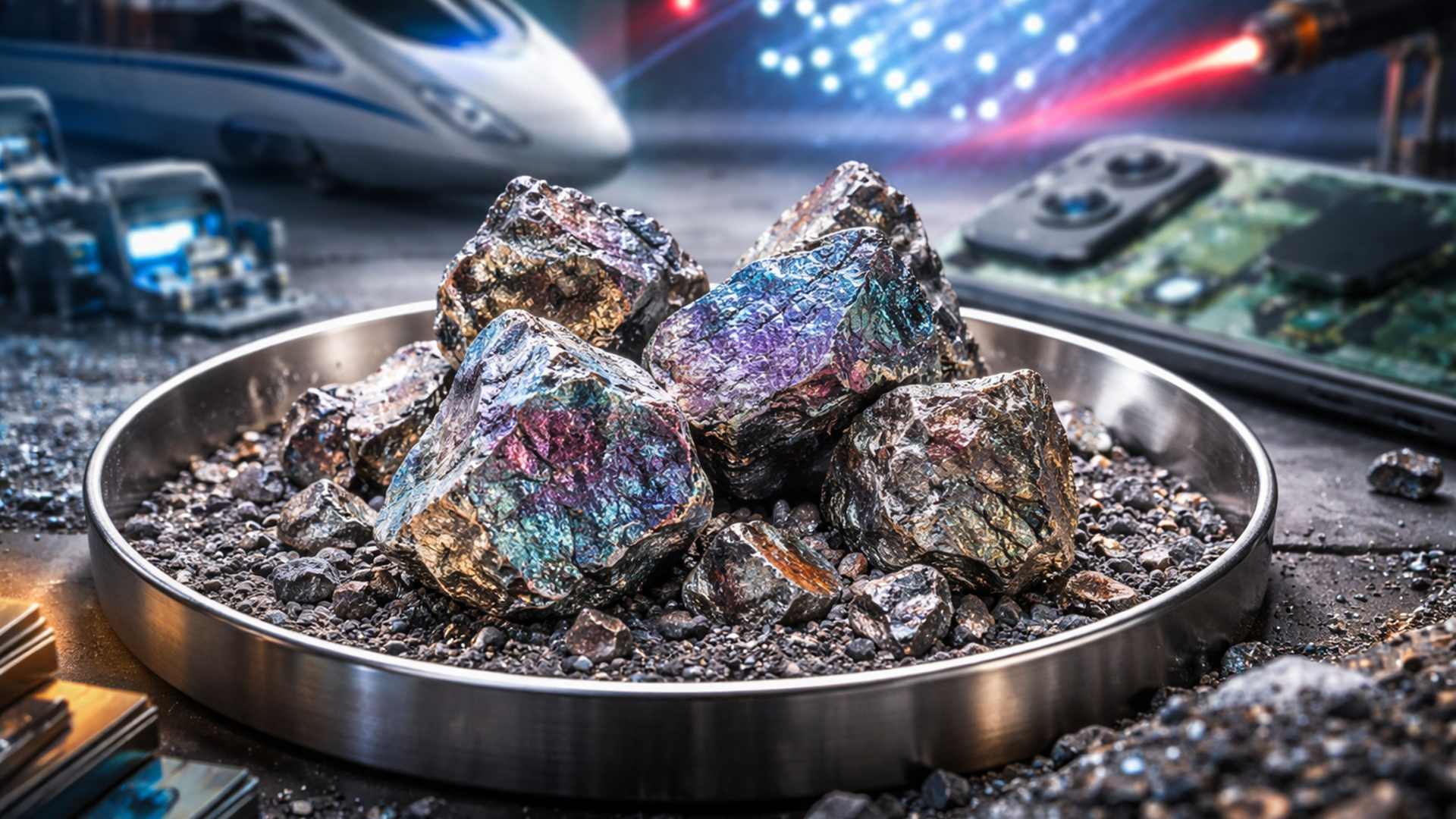
Rare earths are in everything, from cell phones to bullet trains, and what almost no one realizes is why they have become the target of such a delicate global war.

According to the portal CNN Brasil, a team of researchers recreated this extreme environment in a laboratory using a machine called an anvil press. This machine allows small samples to be subjected to the same pressures and temperatures found deep in Mercury’s mantle.
“It’s a large press that allows us to subject small samples to the same high pressure and high temperature we would expect to find in the depths of Mercury’s mantle,” explained Bernard Charlier, head of the geology department at the University of Liège in Belgium and co-author of the study.
Recreation of Mercury’s Conditions in the Laboratory
The researchers inserted a synthetic mixture of elements, including silicon, titanium, magnesium, and aluminum, into a graphite capsule, mimicking the theorized composition of Mercury’s interior. This capsule was then subjected to pressures nearly 70,000 times greater than those found on Earth’s surface and temperatures reaching up to 2,000 ºC. After the sample melted, microscopic analysis revealed that the graphite had transformed into diamond crystals.
“We found that the conditions are different from Earth because there is a lot of sulfur on Mercury, which lowered the melting point of our sample,” commented Charlier. “It melted completely at a lower temperature, which is good for diamond stability. This suggests that Mercury’s magma ocean is cooler and deeper than we expected.”
Mercury: The Mysterious Planet
Mercury, the second densest planet in the solar system, has a large metallic core that makes up 85% of its radius. This core and the lack of oxygen, due to its proximity to the Sun, differentiate Mercury from other rocky planets. The last completed mission to Mercury, NASA’s Messenger, orbited the planet from March 2011 to April 2015, collecting valuable data about its geology, chemistry, and magnetic field.
“Compared to the Moon or Mars, we know very little about Mercury, also because we do not have surface samples of the planet,” explained Yanhao Lin, a scientist at the Advanced Research Center for High Pressure Science and Technology in Beijing and co-author of the study.
The Messenger revealed that Mercury is rich in carbon, with a gray surface due to the widespread presence of graphite. Current research suggests that during the planet’s formation, the presence of sulfur and the extreme conditions allowed the transformation of graphite into diamond.
Formation of Diamonds and Possible Implications
Charlier and his team believe that the layer of diamonds on Mercury, estimated to be between 15 and 18 kilometers thick, is still in formation as the planet’s core cools. However, the depth of about 500 kilometers makes mining these diamonds unfeasible with current technology.
“It is reasonable to consider that lavas formed by the melting of the deep mantle could bring some diamonds to the surface, similar to what happens on Earth,” suggested Charlier. This diamond formation process may also be occurring on exoplanets with similar characteristics to Mercury, especially those with low levels of oxygen.
Future Missions and Challenges
The next mission to Mercury, BepiColombo, launched in October 2018 by the European Space Agency and the Japan Aerospace Exploration Agency, is expected to enter the planet’s orbit in December 2025. This mission promises to provide more accurate data about Mercury’s composition and internal structure, possibly identifying and quantifying carbon on the surface, as well as exploring the presence of diamonds.
“BepiColombo may possibly identify and quantify carbon on the surface, but also whether there is diamond or more graphite,” said Charlier. The collaboration is named in honor of the Italian scientist Giuseppe “Bepi” Colombo, who invented the “gravitational assist” maneuver routinely used to send probes to other planets.
The Importance of Research
Sean Solomon, principal investigator for NASA’s Messenger mission, highlighted that the research presents an interesting idea, although confirming it will be a challenge for future missions to Mercury.
“Any diamond layer is deep and relatively thin,” said Solomon. “The most promising technique is likely seismology, but that would require long-duration landers on Mercury’s surface.”
Felipe González, theoretical physicist at the University of California, Berkeley, believes that the study represents an important step in understanding planetary interiors and their formation.
“Interdisciplinary studies like this are crucial to tackling complex problems in science,” said González. However, he also emphasized that many assumptions about Mercury’s interior still depend on indirect measurements and future experiments.
For now, future missions like BepiColombo will shed more light on the mysteries of Mercury and perhaps confirm the existence of these valuable hidden diamonds.
Will we one day be able to explore and mine these treasures on Mercury? Share your opinions in the comments!








Quem será o geólogo com pos ou mba a aferir a qualidade do diamante? Trazido a terra se for feito e qual sera a sua estabilidade de se manter a tal qualidade en contato com outros elementos en nosso planeta,ele se tornara venenoso ao contato humano ou a outras vidas desse planeta?