





 Portuguese
  English
  Spanish
  3 min of reading
  0 comments



With an Innovative Reactor That Mimics the Structure of the Sun, Startup Promises to Transform Fusion Energy into an Endless Source for the Planet.
The search for fusion energy is advancing with bold new ideas, and OpenStar Technologies is leading a differentiated path. Unlike other startups that attempt to replicate only the power of the Sun, OpenStar also seeks to recreate its structure. This includes the use of a superconducting magnet floating in a vacuum, surrounded by brilliant thermonuclear gas, creating a scenario that mimics the core of our star.
Two weeks ago, the New Zealand-based company achieved an important milestone by producing its “first plasma” in a reactor prototype called Junior. This achievement represents a cloud of ionized helium contained by a superconducting magnet, floating at the center of the device. Although it is still far from generating net energy, OpenStar believes that its approach could revolutionize the field of fusion energy.
A Reactor Inspired by the Sun
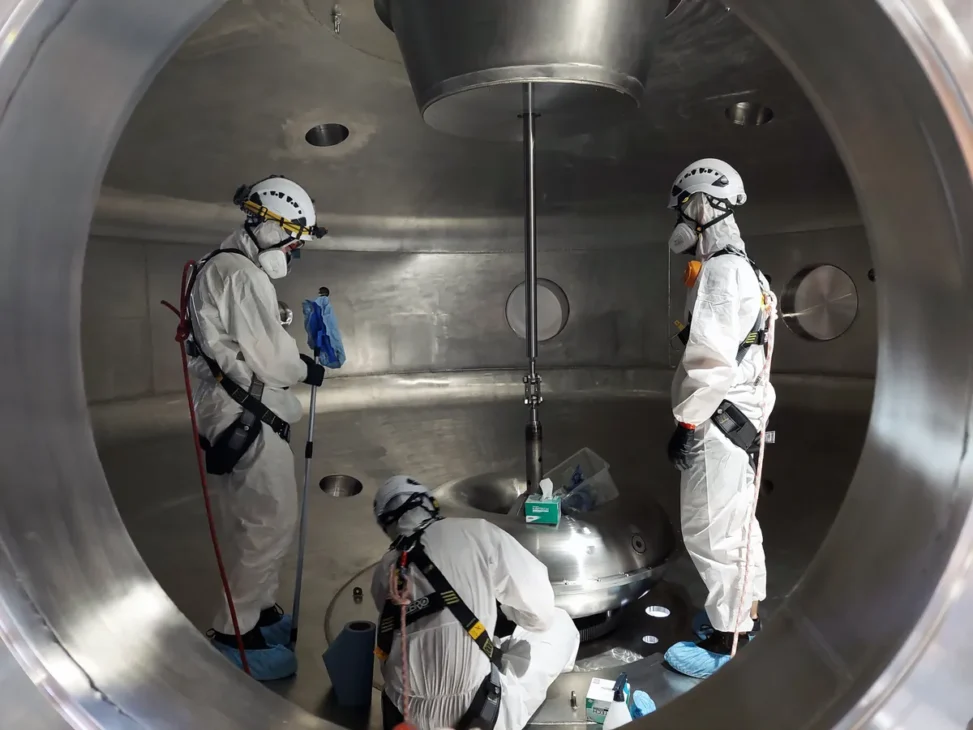
The Sun performs fusion thanks to its immense gravity, which forces hydrogen nuclei to unite and release energy. To replicate this on Earth, many researchers use magnetic fields to compress hydrogen nuclei. OpenStar’s innovation lies in adopting a dipole magnet at the center of the reactor, a choice inspired by the structure of the Sun and the natural stability of magnetic dipoles, such as the Earth’s field.
-
In Mexico, a 3,000-year-old Maya site with the dimensions of an entire city may have been built as a colossal map of the cosmos, created to represent the order of the universe and reveal how this people organized space, time, and rituals.

-
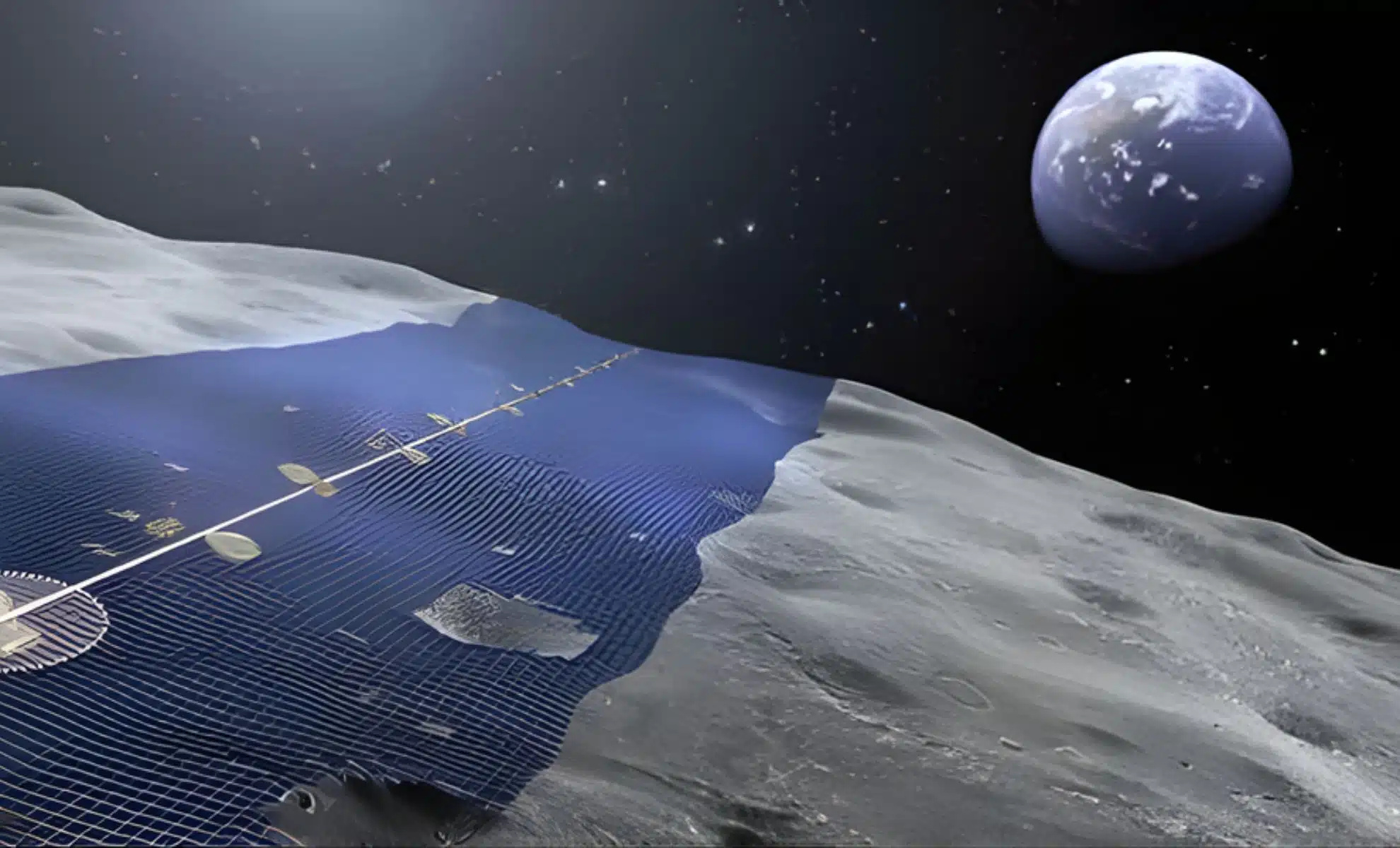
Japan wants to build a solar ring of 10,900 kilometers on the Moon to continuously send energy to Earth.
-
Weighing almost 1 ton, with temperatures of up to 3,000°C, the ability to launch 10,000 fragments within a radius of 1 km, capable of penetrating concrete and melting steel, Turkey’s terrifying bomb emerges as one of the most destructive non-nuclear weapons ever presented.

-
After a submarine disappeared beneath the “Doomsday Glacier,” scientists announce a new monstrous machine capable of operating at 3,000 meters depth to return to the heart of the ice and investigate a threat that could raise sea levels worldwide.


“The big difference is that dipoles are naturally stable, reducing complications in plasma containment,” explained OpenStar founder Ratu Mataira. However, integrating a superconducting magnet, which operates at temperatures close to absolute zero, into a reaction at 175 million °C is an extreme challenge.
In the recent experiment, the magnet was pre-cooled to -240 °C, functioning for 80 minutes before needing cooling. In the future, the technology will feature internal cooling with liquid helium and batteries to extend operating time.
Levitation and Futuristic Technology
Another innovative aspect of Junior is the levitation of the superconducting magnet at the center of the reactor, a technique based on MIT’s LDX experiment. The LDX, decommissioned in 2014, demonstrated part of the viability of this concept but never achieved fusion.
OpenStar aims to overcome this barrier, with plans for a successor reactor capable of exploring advanced technologies to heat the plasma and maintain sustainable reactions.
The Future of Fusion Energy
Although the path to commercial fusion is long, OpenStar has ambitious plans. Mataira envisions smaller yet efficient commercial units capable of producing 25 to 50 megawatts, ideal for data centers and remote locations. The technology could evolve into multigigawatt plants, significantly contributing to the global climate transition.
Experts highlight the potential of the concept. Plasma physicist Andrea Di Vita points out that the pressure of plasma in a dipole is 13 times greater than in tokamaks, increasing the energy of the fusion reaction by 150 times.
Despite the challenges, Mataira is optimistic: “We are exploring a concept based on nature. There may be problems ahead, but at this moment, this approach seems to be the most promising for achieving fusion energy on a commercial scale.”
With its unique approach inspired by the structure of the Sun, OpenStar Technologies is Pioneering New Possibilities to Make Fusion Energy a Reality.







Seja o primeiro a reagir!