





 Portuguese
  English
  Spanish
  3 min of reading
  0 comments


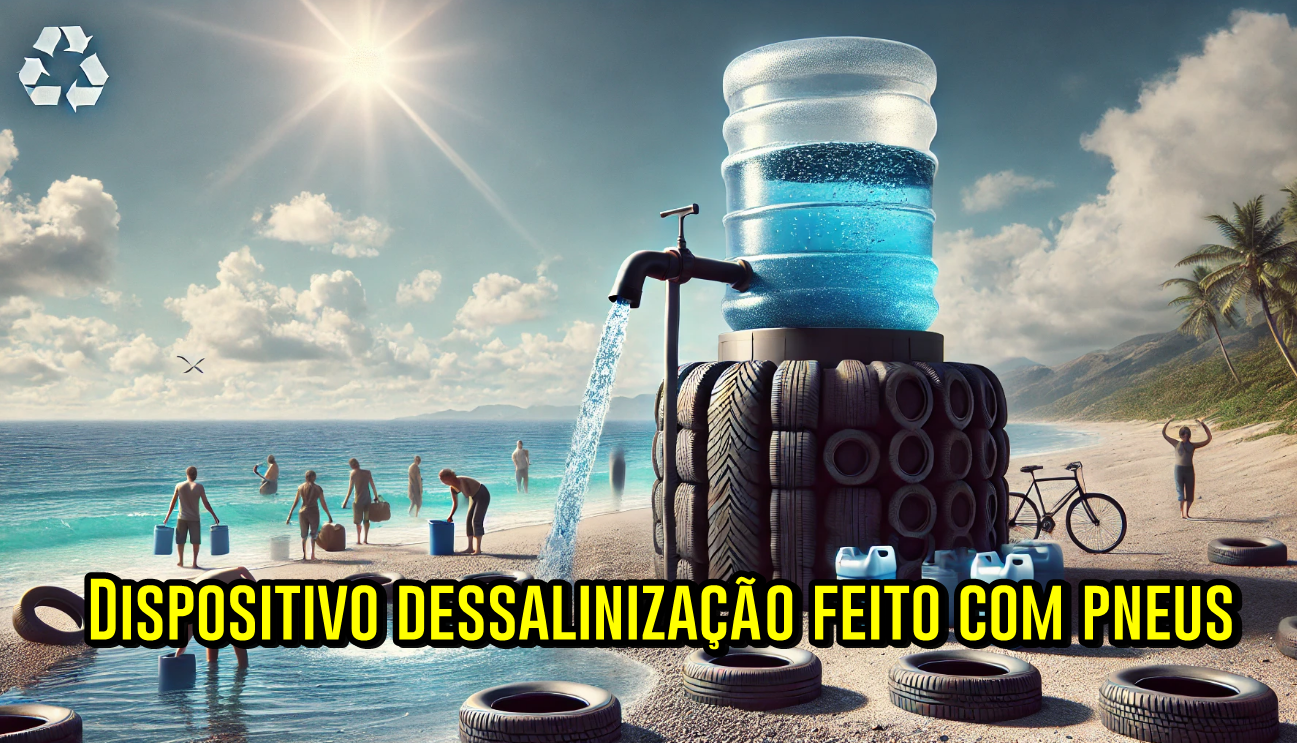
Sustainable Desalination Technology: Low-Cost Device Made from Used Tires Can Relieve Water Scarcity
The lack of drinking water is a crisis affecting various regions of the world, particularly impacting developing countries and remote areas. As a result, many experts are developing low-cost desalination technologies.
Although the planet is covered by a vast amount of water, much of it is salty and unsuitable for human consumption. A new solar desalination device, developed by researchers at Dalhousie University, promises an accessible and sustainable solution to this issue.
The Technology Behind The Desalination Device
The solar distiller developed by the Canadian team is a floating device powered by solar energy, capable of transforming seawater into drinking water.
-
Something was orbiting Earth before any human launched a satellite into space: scientists have found thousands of unexplained flashes in old photos of the sky, and a NASA researcher says the evidence points to non-human intelligence.

-
There is a gap of hundreds of kilometers between weather observation points in the United States, and now drones flying at 6,000 meters altitude in strong winds are filling this gap to predict tornadoes before they kill.

-
The most famous volcano in the world could paralyze one of the largest metropolises on the planet: Japan accelerates emergency plans for the eruption of Mount Fuji, which could bury Tokyo in ash for over two consecutive weeks.

-
The United States has a serious problem with its F-35s: China is already producing fighters at a pace that exceeds American capacity and could manufacture up to 300 aircraft per year before the end of the decade, shifting the global military balance.


This innovative device aims to address some of the challenges faced by previous desalination technologies, using readily available materials, such as used tires, instead of precious metals.
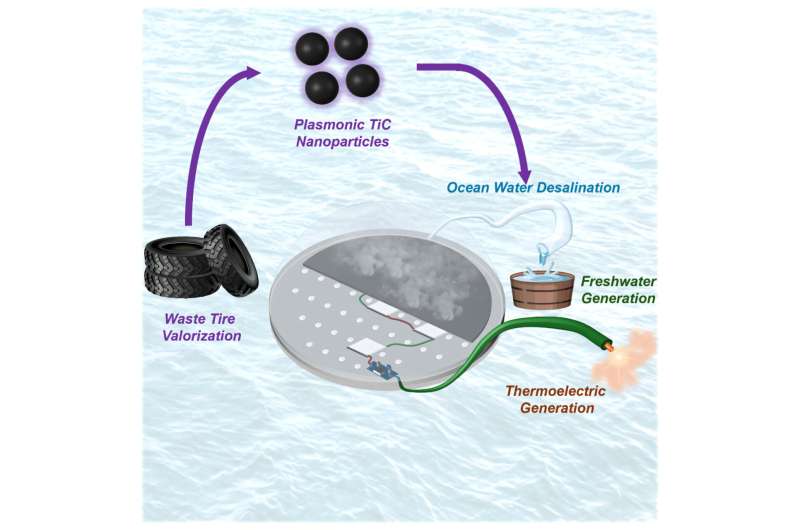
The idea behind the solar distiller comes from “refractory plasmonics,” a research field that develops materials capable of manipulating light in special ways while also resisting high temperatures. These plasmonic nanomaterials convert sunlight into heat, which is essential for the desalination process.
How The Device Works
The operation of the solar distiller is relatively simple yet ingenious. The device is placed over a water surface, where it absorbs seawater, evaporating due to solar heating, leaving the salt behind.
Then, the vaporized water is collected in a transparent dome, where it condenses and is directed to a storage container.
Steps In The Desalination Process:
- Water Absorption: Seawater is absorbed by the device’s surface.
- Solar Evaporation: Plasmonic materials heated by the sun evaporate the water.
- Condensation: The vapor condenses under the transparent cover.
- Collection: The purified water is directed to a sealed bag.
This technology enables the production of up to 3.67 liters of water per day, a remarkable amount for a passive solar distiller.

Use Of Recycled Tires And Other Wastes
The research team used carbon waste, such as coffee grounds and lobster shells, along with used tires for the construction of the distiller.
Tire rubber, in particular, proved to be an excellent material for the device, helping maximize captured heat and reducing production costs.
The use of tires also represents a sustainable solution, considering that these wastes are abundant and take centuries to decompose.
Thus, the technology not only addresses the issue of water scarcity but also contributes to recycling materials that would otherwise be discarded.
Future Applications And Real-World Testing
Tests conducted at Halifax Harbor demonstrated that the distiller is effective in real conditions, but a research team plans to expand testing in areas like South Asia.
With this, they hope that the technology can be utilized in regions facing various drinking water shortages, especially in vulnerable communities.
The team also anticipates improvements in the technology, such as the possibility of generating enough thermoelectricity for quality water monitoring sensors, allowing real-time monitoring of the water produced.
A Step Towards Sustainability And The Circular Economy
By using recycled tires as critical components of the desalination device, the technology reinforces the importance of a circular economy. Instead of relying on expensive and scarce materials like gold and silver, the distiller utilizes abundant and accessible materials, promoting a low-cost and easy-to-maintain solution.
Professor Dasog, one of the project leaders, remarks: “We shouldn’t be making an expensive or very complicated device. It has to be easy to manufacture, last a long time, and be easy to dismantle and move.”
The simplicity and efficiency of the device are fundamental parts of its design, aimed at beneficiary communities that urgently need access to drinking water.
The portable solar distiller developed by the Dalhousie University team represents a significant advancement in combating water scarcity. By transforming salty water into potable water in an economical and sustainable way, this technology offers a practical solution for regions with limited access to water resources.
Moreover, by utilizing waste such as tires, the device contributes to the circular economy and environmental preservation, turning a problem into a solution.








Seja o primeiro a reagir!