





 Portuguese
  English
  Spanish
 3 min of reading
  0 comments


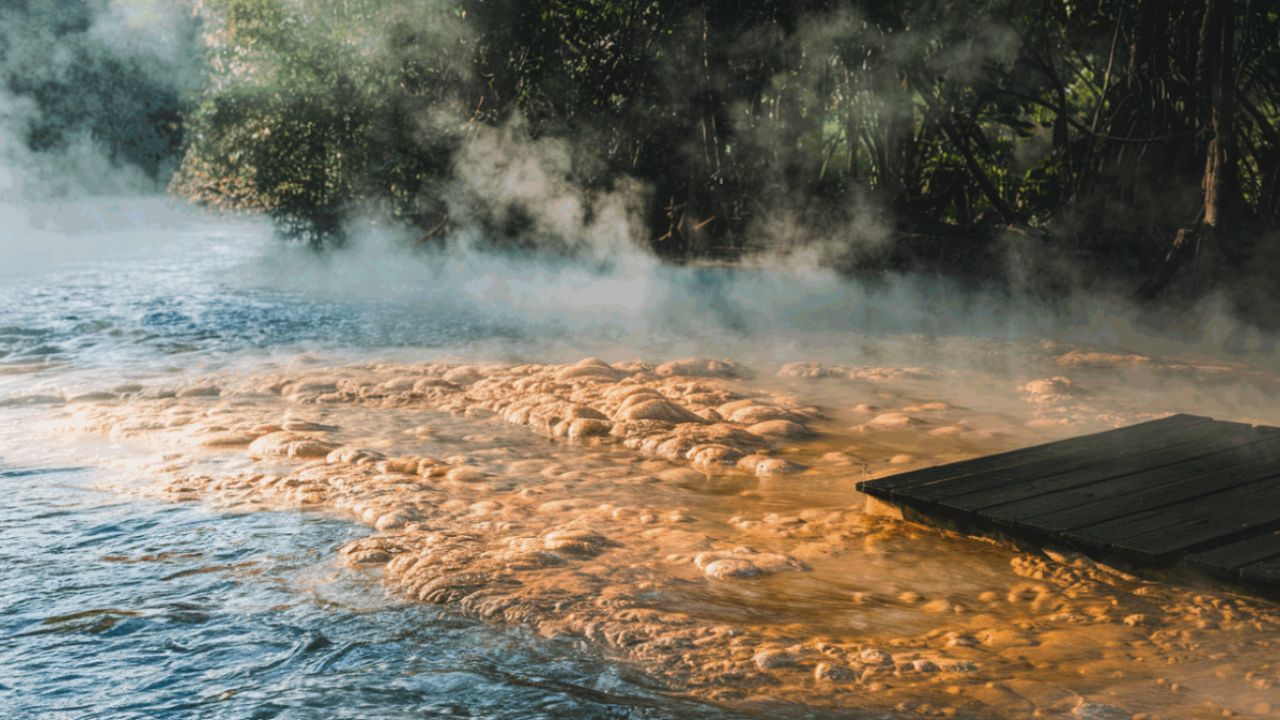
Known as the Boiling River of the Amazon, the Shanay-Timpishkao reaches temperatures close to 100 ºC, killing animals in seconds and serving as a natural laboratory to study the effects of extreme heat in the Amazon forest
In the heart of the Peruvian Amazon flows a river that seems to come straight from legends: the Shanay-Timpishkao, also known as the Boiling River of the Amazon.
Its waters reach almost 100 ºC, heat enough to kill small animals in seconds.
For centuries, Indigenous peoples associated the river with a spirit in the form of a giant snake, while Spanish explorers recorded impressive yet scientifically unverified accounts.
-
Neither Brazil nor the USA: China produces over 60% of the world’s farmed fish and accounts for about 40% of all global seafood, using industrial-scale aquaculture megafarms to influence the international market and supply billions of people.

-
Archaeologists opened the only Etruscan chamber never looted in 2,600 years and found four individuals lying on stone beds with 110 intact objects around them, and the inscriptions found in the tomb have not yet been deciphered because the Etruscan language is a mystery that science has not yet solved.

-
Health issues urgent alert for flu and calls for the vaccination of the elderly, children, and pregnant women this Saturday with Day D and drive-thru in Curitiba.

-
What seemed like waste has turned into a barrier, and now human hair collected from salons helps retain debris in the water of ancestral channels in Latin America.


The story of mystery began to change in 2011, when Peruvian geologist Andrés Ruzo decided to investigate the river he had known since childhood through his grandfather’s tales.
With permission from the local communities that protect the area, he traveled more than six kilometers along the watercourse. The measurements recorded average temperatures of 86 ºC, reaching 99 ºC at specific points.
Thus, the Shanay-Timpishkao was confirmed as the hottest river in the world outside volcanic regions, a geothermal phenomenon whose origin still challenges science.
One of the hypotheses raised by Ruzo suggests that waters from the Andes glaciers seep deeply into the ground, heating up before emerging boiling in the Amazon.
Despite being intriguing, this theory has yet to be proven. What is known is that the river is not just a curiosity, but a natural laboratory to study the impact of high temperatures on the ecosystem.
Shanay-Timpishkao River: Extreme Heat and Its Effects on Amazon Flora
The Shanay-Timpishkao River offers a unique opportunity to observe how vegetation reacts to extreme conditions.
In 2024, a study published in Global Change Biology, conducted by Alyssa Kullberg, Riley Fortier, and teams of scientists from Peru and the United States, monitored air temperature variations over the course of one year along a two-kilometer stretch.
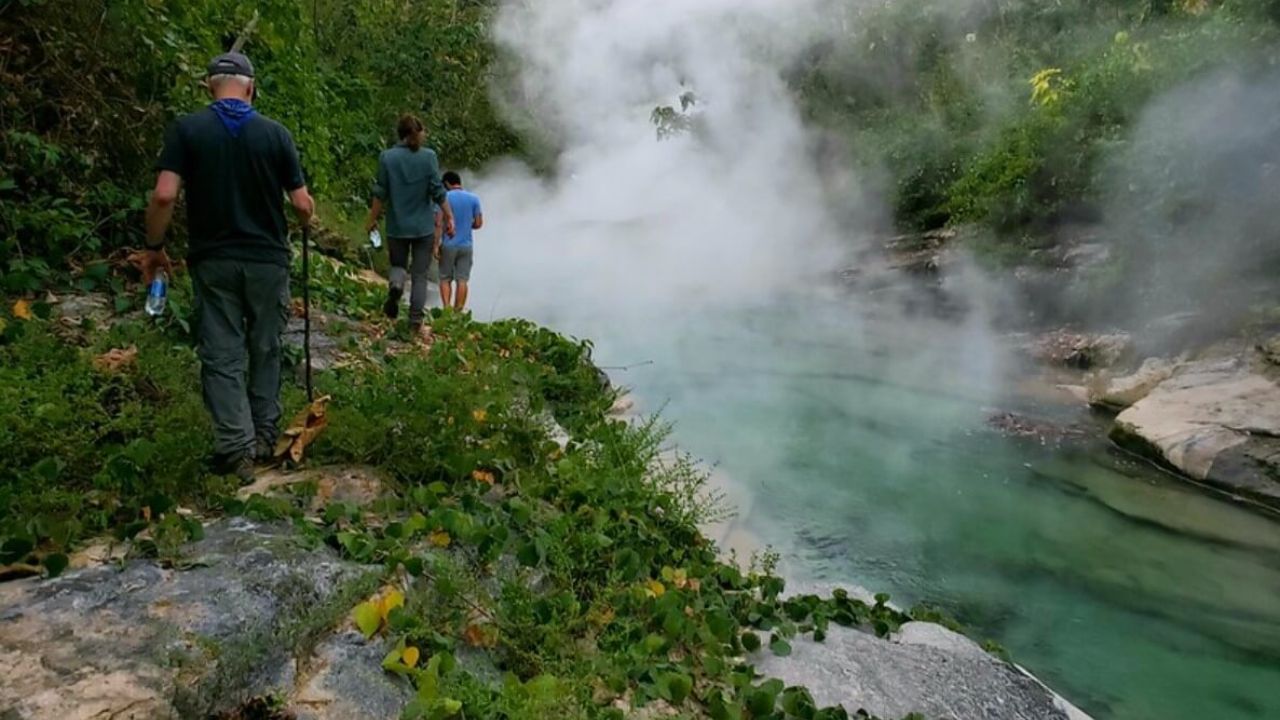
Thirteen devices were installed at different points. In the cooler areas, the annual air average varied between 24 and 25 ºC, while in the warmer stretches it reached 28 and 29 ºC, with peaks of nearly 45 ºC.
The impact on the vegetation was evident. Trees such as Guarea grandifolia showed difficulties in growth, while heat-adapted species, like the giant kapok tree (Ceiba lupuna), fared better.
These results indicate that although some species can survive, many others are directly affected by extreme heat.
The density of plants, the distribution of species, and even the presence of insects and other animals undergo changes in response to elevated temperatures.
The River as a Warning for Climate Change
In addition to its scientific value, the Shanay-Timpishkao serves as a signal of what could occur in the Amazon in light of climate change.
The study showed that some plant species may adapt, but others are at risk of extinction, affecting the entire ecological chain.
The river also highlights the intersection of science, culture, and mystery. For centuries, Indigenous legends preserved its existence, attributing a sacred character to the river.
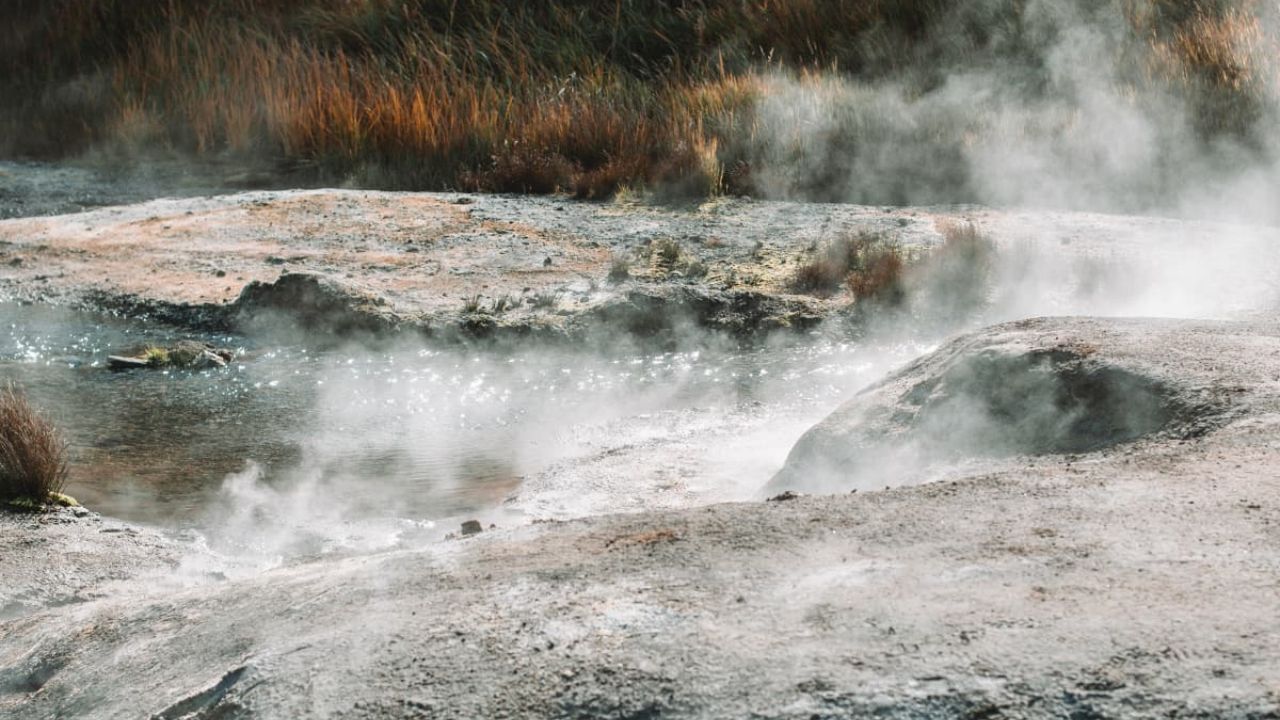
Today, in addition to being protected by local peoples, the Shanay-Timpishkao is an international point of interest, providing essential data on the resilience and vulnerability of Amazonian species in the face of rising global temperatures.
At the same time, its existence is impressive for its destructive power: animals that come into contact with its boiling waters die quickly, reinforcing the notion that the Amazonian nature still holds extreme phenomena that are not well understood.
For scientists, every measurement and observation made in the river helps to understand how ecosystems may react to adverse conditions and provide clues for conservation strategies in the future.
With information from Xataka.







-

-

-

4 pessoas reagiram a isso.