





 Portuguese
  English
  Spanish
 3 min of reading
  12 comments


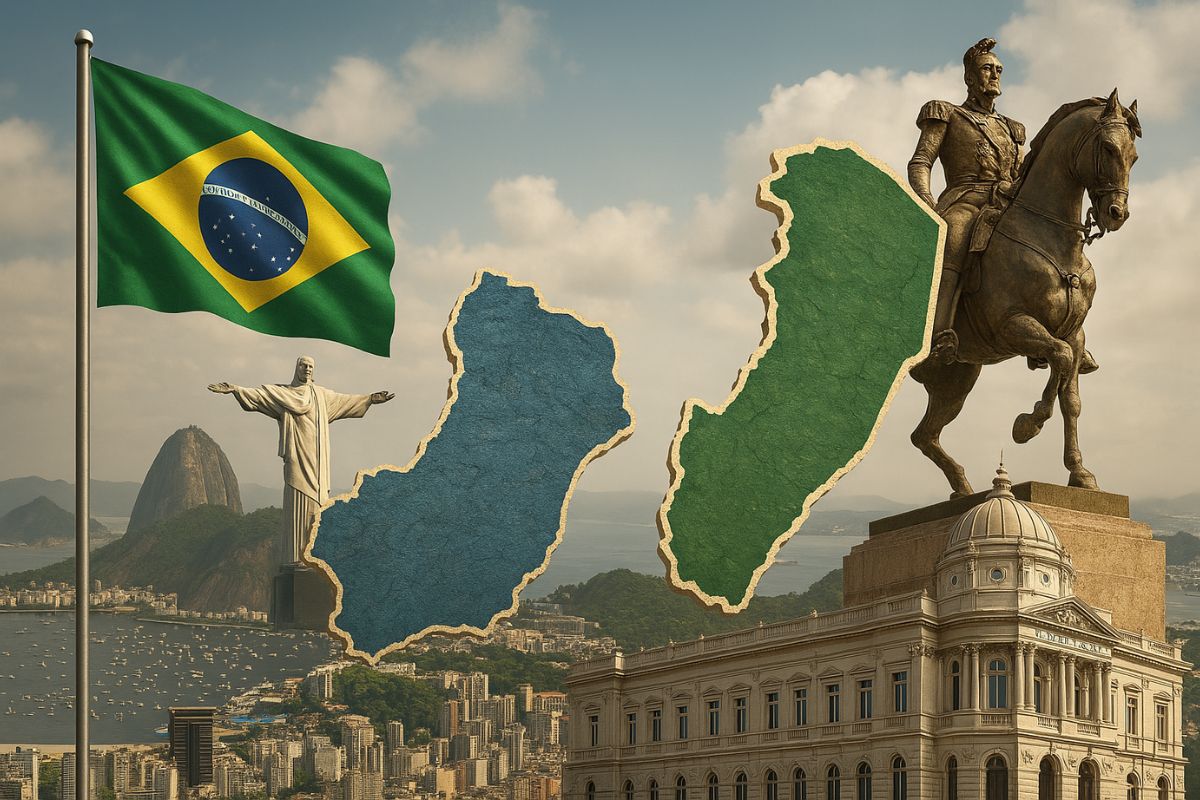


Despite Geographical Similarities, Rio de Janeiro and Espírito Santo Present Profound Contrasts in Population, Economy and Historical Relevance
Rio de Janeiro and Espírito Santo occupy the same coastal strip, are almost the same size, and even have capitals in bays, but the similarities end there. While Rio is home to 17 million inhabitants and accounts for around 10% of the national economy, Espírito Santo, with only 4 million residents, represents less than 2% of the country’s GDP. Two neighboring states, with trajectories that could not be more different.
At a first glance at the map, it almost looks like a mirror game: Rio de Janeiro and Espírito Santo occupy about 350 km of coastal extension, with approximately 120 km in width each. Their capitals, Rio and Vitória, are coastal, situated in natural bays, and serve as gateways to their states. But it only takes scratching the surface to realize that these two neighbors have walked completely different paths. And the explanation lies in politics, in geopolitics… and, of course, in gold.
When Power Chooses Where to Live: Rio de Janeiro vs. ES
The disparity begins in the 18th century, when the Portuguese crown decides to transfer the capital of Brazil from Salvador to Rio de Janeiro. The reason? Pure economic pragmatism. Rio was strategically positioned next to Minas Gerais, the center of the gold cycle, and São Paulo, a growing trade route.
-
Oil surged to $115 a barrel due to the war in the Middle East, and diesel in Brazil has already risen to R$ 7.45 per liter, while the United States…
-
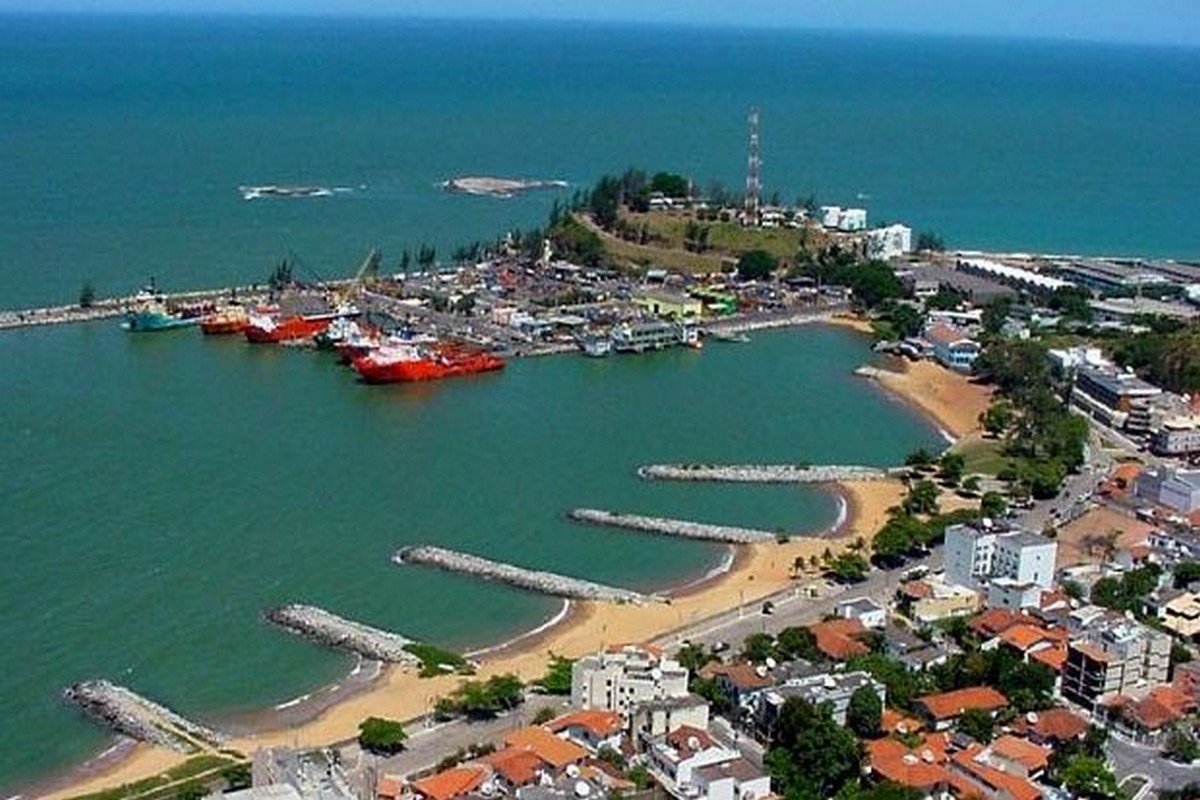
Brazilian city bets on the business environment to generate jobs and attract investments in the energy sector — secretary reveals strategy at Macaé Energy 2026.
-
50 viaducts, 4 tunnels, 28 bridges, and 40 kilometers of bike paths: BR-262 in Espírito Santo will receive 8.6 billion reais for the largest engineering project in the state’s history, inspired by the Immigrant Highway in São Paulo.

-
Brazil produces too much clean energy and doesn’t know what to do with it: over 20% of solar and wind capacity was wasted in 2025 while investors flee and 509 renewable generation projects were abandoned in the last year.

Espírito Santo, on the other hand, did not have safe routes to the mines and lacked sufficient port infrastructure to compete. The result: while Rio became the new capital and began to concentrate power and investments, Espírito Santo was left out of the game.
Royal Family in Rio, and the Forgotten Espírito Santo
If the year 1763 was a watershed, 1808 was an earthquake. Fleeing from Napoleonic invasions, the Portuguese royal family lands in Rio de Janeiro and transforms the city into the center of the overseas empire.
Rio starts to host unprecedented institutions: Banco do Brasil, Jardim Botânico, Imprensa Régia, Biblioteca Real. The city becomes not only the capital of Brazil but also of the Portuguese metropolis itself. Meanwhile, Espírito Santo is hardly mentioned in the grand plans of the court, a silence that echoes to this day.
Numbers That Tell the Difference
In 1872, the first Brazilian census already laid bare the distance: the province of Rio de Janeiro had about 1 million inhabitants. Espírito Santo? Only 82,000. In economic terms, the gap grew even wider: today, Rio accounts for nearly 10% of Brazil’s GDP, while Espírito Santo, even with a relevant industrial hub in areas like oil and cellulose, still does not exceed 2%. The logic is cruel: where power is concentrated, so are population, infrastructure, and resources.
Espírito Santo has never been the capital of anything, neither of Brazil, nor of the empire, nor even of a relevant economic cycle. This has distanced it from decision-making centers, investments, and population flows. Surrounded by three powerhouses, Minas, São Paulo, and Rio de Janeiro itself, the state of Espírito Santo has not had space to thrive with the same intensity. The lack of historical prominence has limited its reach even to the present day.







Além de tudo o que foi explanado teve ainda a necessidade de deixar o Espírito Santo, estado montanhoso, como uma espécie de muro verde, de proteção natural às minas gerais.
Ainda bem, nossas cidades interioranas são pequenas, capital Vitória é pequena l, comparando com outras capitais, cidades com pequenas populações e assim ficamos com melhores índices de qualidade de vida.
Que tal criarmos o Estado do Rio do Espírito Santo. Os Estados têm muita coisa em comum.
Quem sabe nos tornamos uma potência, juntando o que há de melhor nesses dois lindos estados.
Vamos ter apoiadores e discordantes, mas faz parte do jogo.
Obrigado. Que você continue pensando assim. Pois, aí mesmo tempo em que bons resultados escancarados trazem investimentos, também trazem a criminalidade, e temos um vizinho um pouco indesejado quando o quesito é crime.
Só pra ter dar algumas informações, de 2011 a 2020, Vitória ES foi a líder no rank do país em PIB per capita, quando baseada no PIB per capita municipal de outras CAPITAIS. (Estamos falando de capitais aqui, ok?). A partir de 2022, mudaram a métrica para beneficiar outras capitais, mas mesmo assim, Vitória-ES ficou sempre entre as 3 primeiras capitais.
Mas, já que a comparação é entre Vix x RJ, pasmem. RJ sempre esteva abaixo de Vitória quando o assunto é renda per capita.
Posso continuar se você quiser… Posso??
Enfim, Vix está listada entre o M2 mais caro, ou um dos mais caros do Brasil. Mas essa valorização do M2, não afeta o mercado, que está aquecido tanto para alugueis, quanto vendas e construções de novos empreendimentos imobiliários.
Mas honestamente, deixa do jeito que está.
Que continuemos a passar despercebidos, inclusive no Jornal Nacional.
Bora pessoal! Vai pro RJ.