





 Portuguese
  English
  Spanish
 4 min of reading
  11 comments


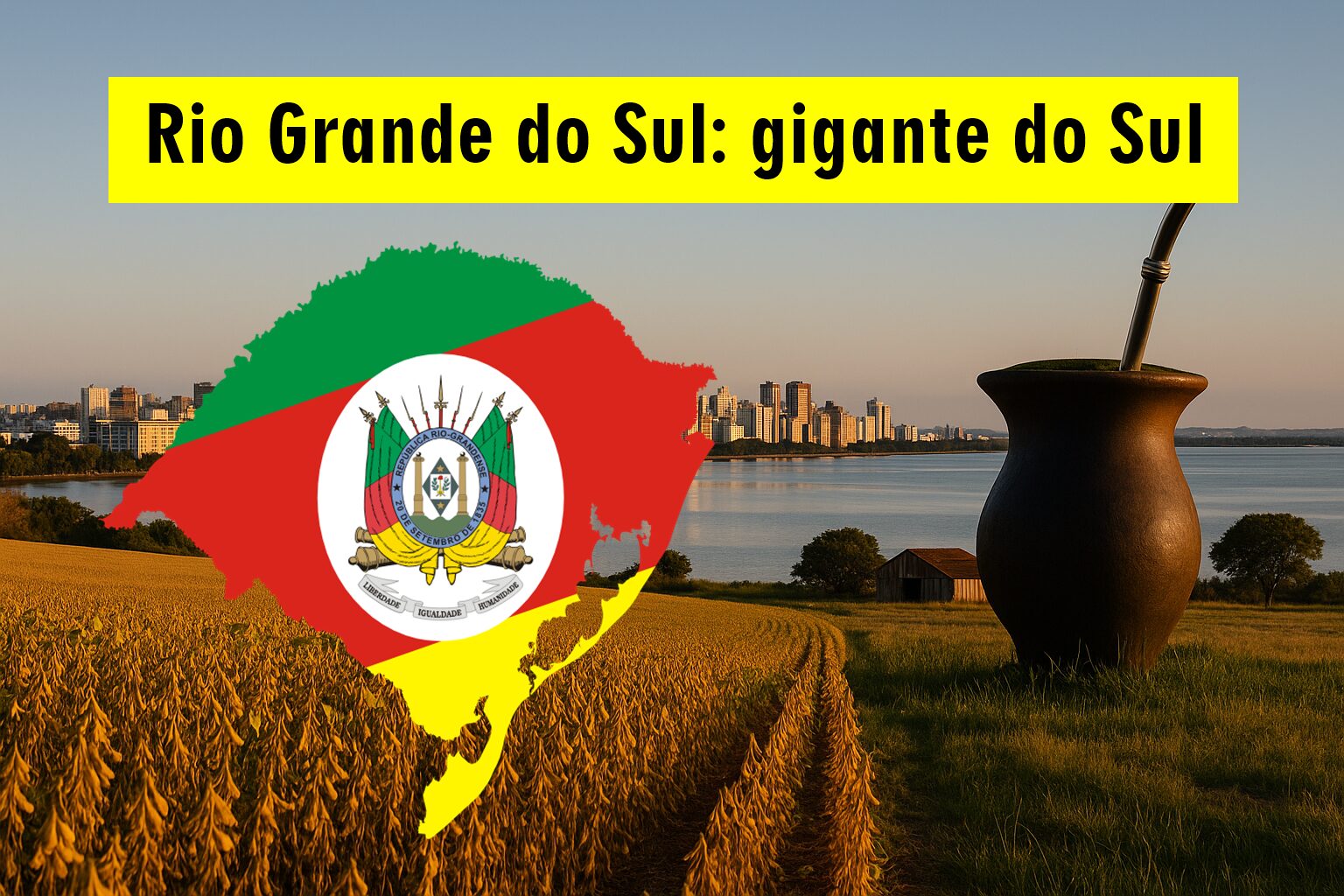

Despite Its Size, Diversified Economy And Strong Cultural Identity, Rio Grande Do Sul Faces Historical Challenges And Divides Opinions With Separatist Movements That Receive Severe Criticism
With a territory larger than the United Kingdom and a population greater than that of Portugal, Rio Grande do Sul stands out as one of the most significant states in Brazil.
Rich in culture, strong in agribusiness , and with a diversified economy, the region also faces structural difficulties that challenge its development potential.
Large Territory And Strategic Location
The Rio Grande do Sul has 281,000 km², which would make it the 73rd largest country in the world if it were a nation.
-
These living root bridges and ladders are over 700 years old and help indigenous people survive in one of the rainiest regions in the world.

-
From sertanejo star to international investor: Ana Castela invests millions in a mansion in the USA, creates a themed accommodation in Orlando, and shows that the “boiadeira” also wants to grow away from the stage.

-
The 10 most stunning motorhomes in the world: a $3 million trailer with a rooftop nightclub and garage for a Ferrari, “palaces on wheels” with Italian marble, private cinema, and five-star hotel luxury for billionaires.
-
Trump wanted to spend $400 million on the White House, but the courts prohibited the million-dollar construction.

Its borders extend to Argentina and Uruguay, as well as the states of Santa Catarina and Paraná.
The coastline exceeds 600 km, highlighted by the port of Rio Grande, one of the country’s main exits for exports.
The location is considered strategic. The state connects Brazil to the Southern Cone, with access to the Atlantic Ocean and the Pampas region, serving as a logistical and commercial link with neighboring countries.
Urban Population And Good Social Indicators
With around 11.3 million inhabitants, Rio Grande do Sul surpasses countries like Greece, Belgium, and Sweden in population.
The majority live in urban areas, concentrated in cities like Porto Alegre, Caxias do Sul, Pelotas, Canoas, Santa Maria, and Passo Fundo.
The literacy rate exceeds 97%, and the Human Development Index (HDI) of the state is 0.787 — one of the highest in Brazil.
Life expectancy is 78 years, above the national average.
Strong And Diversified Economy
The Gross Domestic Product (GDP) of the state is around R$ 660 billion, or about US$ 132 billion. The per capita GDP exceeds R$ 58,000.
The economy of Rio Grande do Sul is among the largest in the country, with a focus on agribusiness, industry, and the service sector.
Agriculture plays a central role: the state is one of the national leaders in the production of soybeans, corn, rice, wheat, meat, and milk.
The agro-industry exports to various countries, such as China, the United States, and the European Union.
The industry is also diversified, with hubs in technology, footwear, furniture, metallurgy, and agricultural automation. Universities such as UFRGS and UFSM maintain links with research and innovation centers.
Solid Infrastructure, But With Vulnerabilities
The state’s energy matrix is mainly renewable, with a strong presence of hydropower and investments in wind and solar energy.
The healthcare network has reference hospitals, such as Clínicas and Moinhos de Vento, along with reasonable coverage in major urban centers.
On the other hand, remote regions still face difficulties accessing healthcare and education.
Regional inequality and the exodus of young qualified individuals to other regions of the country remain structural challenges.
The Burden Of Debt And Restricted Market
Despite its advances, Rio Grande do Sul carries one of the highest levels of debt among Brazilian states.
The ratio of consolidated debt to net current revenue is one of the worst in the country, alongside Rio de Janeiro and Minas Gerais.
The limited internal market also represents a barrier. With 11 million inhabitants, the state depends on connections with the rest of Brazil, which has over 200 million consumers.
Separatist Movement And Its Criticisms
Separatist ideas have gained visibility in recent decades, driven by groups advocating for the state’s independence.
For these movements, Rio Grande do Sul allegedly has the economic, cultural, and territorial conditions to sustain itself as a country.
However, these proposals face strong opposition. Experts and political leaders argue that separatism is an outdated, elitist idea that is incompatible with Brazilian reality.
They argue that the economic interdependence with the rest of the country makes separation unfeasible and harmful, especially for the Gaúcho industry and commerce.
Moreover, independence could isolate the state, expose it to international competition without Brazil’s tariff protections, and hinder the continuation of companies that currently rely on federal incentives.
Critics also argue that the movement reinforces historical inequalities and avoids addressing the real issues of the state within the federal pact.
The Path Of Autonomy Within The Federation
For many, the most sensible solution is not to break away from Brazil, but to expand regional autonomy within the current federal model.
Just as in the United States, where states have significant power to legislate, collect taxes, and manage, Rio Grande do Sul could lead a movement for federal reforms.
More freedom to manage taxes, develop specific public policies, and decide on local investments could unlock the state’s potential while maintaining access to the national market and federal resources.
Rio Grande do Sul has attributes of a country: extensive territory, rich culture, large population, solid economy, and recognized institutions.
But it also faces real obstacles, such as debt, regional inequality, and dependence on national policies.
The challenge lies in enhancing the state’s leadership, seeking structural reforms, and strengthening its position within a fairer and more efficient federation.







Seria interessante complementar dizendo que a Constituição Federal de 1988 impede a secessão.
Desde quando o RS faz divisa com o PR?
O Brasil é muito grande poderia ser dividido em vários países, com certeza seria muito melhor, quem não concorda me responda porque nossa capital foi feita longe de tudo? a resposta todos sabemos para os **** ficarem mais a vontade longe do povo que perde tempo vendo propaganda política e acreditando em mentiras, se político fosse bom para a população e para o patriotismo não teriam tantos salários altos e mordomias, na verdade deveriam trabalhar de graça, claro que ser político é uma profissão maravilhosa, ganha muito e a população fica feliz com as migalhas.