





 Portuguese
  English
  Spanish
  5 min of reading
  0 comments


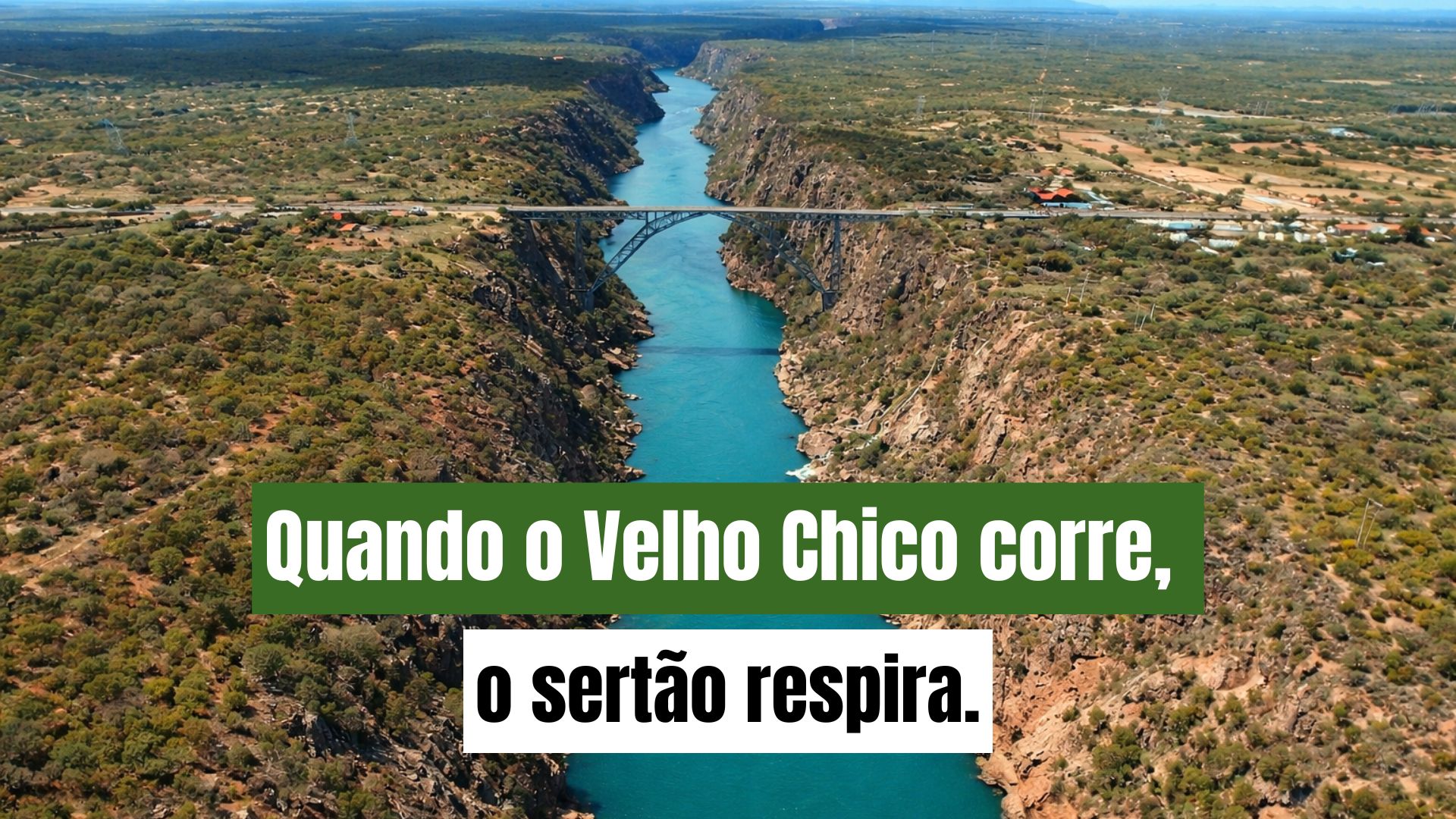
The São Francisco River Is Born Among Stones At Over A Thousand Meters Above Sea Level, Crosses Biomes, Sustains Peoples, Animals And Cities, And Becomes The Vital Axis Of The Brazilian Semi-Arid, Where Every Drop Decides The Future Of Life
The São Francisco River is born almost imperceptibly, among stones and fields of the Serra da Canastra, in the southwest of Minas Gerais, at over 1,000 meters above sea level. At first, it is just a thread of crystal-clear water, but over time, it transforms into one of the most important rivers in South America. With almost 3,000 kilometers in length and fed by more than 160 tributaries, it forms the largest exclusively national watershed in Brazil, crossing mountains, cities, and sertões until it reaches the Atlantic Ocean, between Alagoas and Sergipe.
The information has been disclosed by documentary productions and specialized environmental reports about the São Francisco River, detailing its ecological, historical, and social importance over the centuries. For indigenous peoples, it was known as Opará, the “ocean river.” For Portuguese colonizers, it became São Francisco. Today, it is affectionately called Velho Chico, a symbol of resistance, sustenance, and national identity.
From the Springs of Serra da Canastra to the Diversity of Fauna That Depends on the River
In the Serra da Canastra, the first drops of Velho Chico tumble down monumental waterfalls, such as the Cachoeira Casca D’Anta, surrounded by natural fields where wildlife thrives. There, the maned wolf, with its orange fur, travels great distances in search of food. By having an omnivorous diet, it plays an essential role as a seed disperser, helping to maintain the ecological balance of the region.
-
Luciano Hang revealed that Havan’s air fleet has already accumulated more than 20,000 landings, 10,000 flight hours, and 6 million kilometers traveled, and he says that without the planes, the company would never have grown so quickly.
-
A historical discovery in the Andes Mountains reveals a gold deposit valued at 770 billion reais hidden over 4,000 meters above sea level on the border between Chile and Argentina, and the whole world is watching.
-
With just joint compound, white glue, and pigment, you can make a homemade paint that yields double the conventional amount, saves up to 70%, and leaves the wall with a finish that no one would believe wasn’t store-bought paint.

-
Home environment can influence the brain, mood, and well-being: studies indicate an increase of up to 15% in productivity, a reduction of 12% in stress with plants, and a direct impact of the circadian rhythm on the 24 hours of the day.


Other emblematic species also directly depend on this environment. The giant anteater, for example, travels up to 12 kilometers a day in search of ants and termites, consuming around 30 thousand insects daily with the help of its long tongue. The giant armadillo, the largest species of armadillo in the world, measures about 1.5 meters in length and weighs approximately 35 kilograms, using its powerful claws to dig complex underground burrows, true natural fortresses.
Furthermore, the red-handed howler monkey, a rare primate in the region, inhabits the forests near the springs. Among the palm trees, the buriti rises as a natural guardian of the waters, protecting the groundwater. In this stretch, the geography is not just a backdrop but a destination: each stone and each relief announces the transition between water abundance and the approaching aridity.
When the River Meets the Caatinga and Becomes the Line Between Life and Death
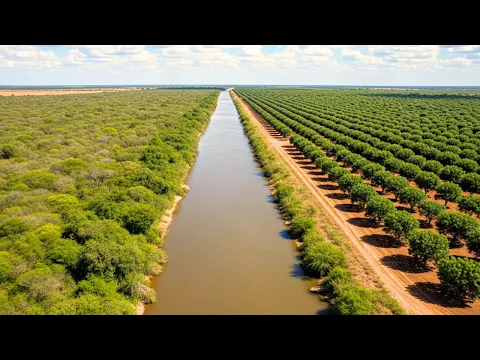

As Velho Chico moves toward the Northeast, the soil begins to crack. This is the sign that the river has found the Caatinga, the only exclusively Brazilian biome. In this extreme environment, the São Francisco ceases to be just a watercourse and comes to represent the tenuous line between life and death. Capybaras, marsh deer, and even the jaguar follow its banks in search of survival.
In the skies, the Caatinga piculet watches from above, while flocks of Caatinga parakeets and birds known as white-winged cross the horizon, reminding us that even the gray sertão can be filled with life. Within the waters of the river, species such as great catfish, golden dorado, and pacamã swim, fish that have sustained riverside families for centuries and provide food in regions where drought is constant.
It was also in this context that, around the 10th century, Portuguese colonizers found a solution for surviving the semi-arid: the introduction of goats, one of the first domestic species brought to the colony. Extremely resilient, these animals adapted to the harsh climate and scarce food, giving rise to northeastern breeds such as repartida, canindé, marota, and Mochotó. Today, the Northeast houses the majority of the goat herd in Brazil, particularly in Bahia, Pernambuco, and Piauí.
Cities, Transposition, Economy, and the Challenges Faced by Velho Chico
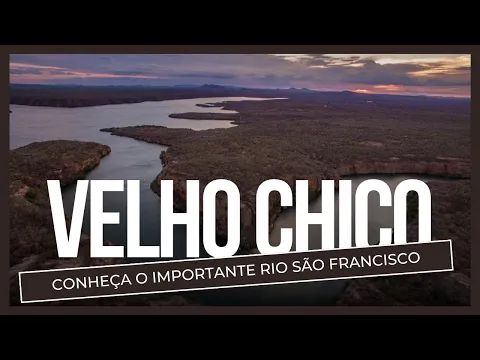
Throughout its course, the São Francisco River has given rise to strategic cities such as Pirapora, Juazeiro, and Petrolina. Where drought once dominated, today there are irrigated orchards that produce grapes, mangoes, and melons exported to various countries. Both Juazeiro and Petrolina move more than 90 million dollars per year in agricultural exports, highlighting the river’s vital economic role.
In some stretches, its deep waters allow for over 1,300 kilometers of navigable areas, connecting regions and facilitating transport. In recent years, Velho Chico has taken on a new mission: to supply areas beyond its natural bed. With the transposition started in 2007, concrete channels began to carry water to Ceará, Paraíba, Pernambuco, and Rio Grande do Norte, benefiting about 12 million people in the semi-arid region.
However, the impacts are concerning as well. Along the river, five large hydroelectric plants have been built, altering the natural flow of the waters. Entire communities have been flooded, and migratory fish have difficulty completing their spawning runs, an essential reproduction process. Additionally, the risk of salinization at the mouth increases, as the ocean advances more easily due to the reduced river flow.
The lack of basic sanitation in many communities results in waste being directly dumped into the São Francisco, worsening its degradation. On the border between Sergipe and Alagoas, the Canyon of Xingó emerges as a natural masterpiece, with reddish cliffs reflected in the water. There, fishermen tell stories of treacherous whirlpools, mysterious lights, and the symbolic presence of a protective being of the river, represented by the traditional carrancas on the prows of vessels.
In Piaçabuçu, Alagoas, Velho Chico finally surrenders to the sea. Mangroves shelter the manatee, an endangered species, as well as sea turtles that benefit from the mixture of waters. The cycle then restarts with evaporation, closing a vital process for the entire Northeast.
Velho Chico is not just a river. It is culture, faith, sustenance, biodiversity, and collective memory. Without it, the Caatinga would not survive. Without it, entire cities would not exist. More than a watercourse, the São Francisco is the soul of deep Brazil, and its survival directly depends on the choices made today. When Velho Chico flows, the heart of the sertão beats along with it.
Have you ever stopped to think about how many lives depend on Velho Chico?




-

Uma pessoa reagiu a isso.