





 Portuguese
  English
  Spanish
  3 min of reading
  0 comments


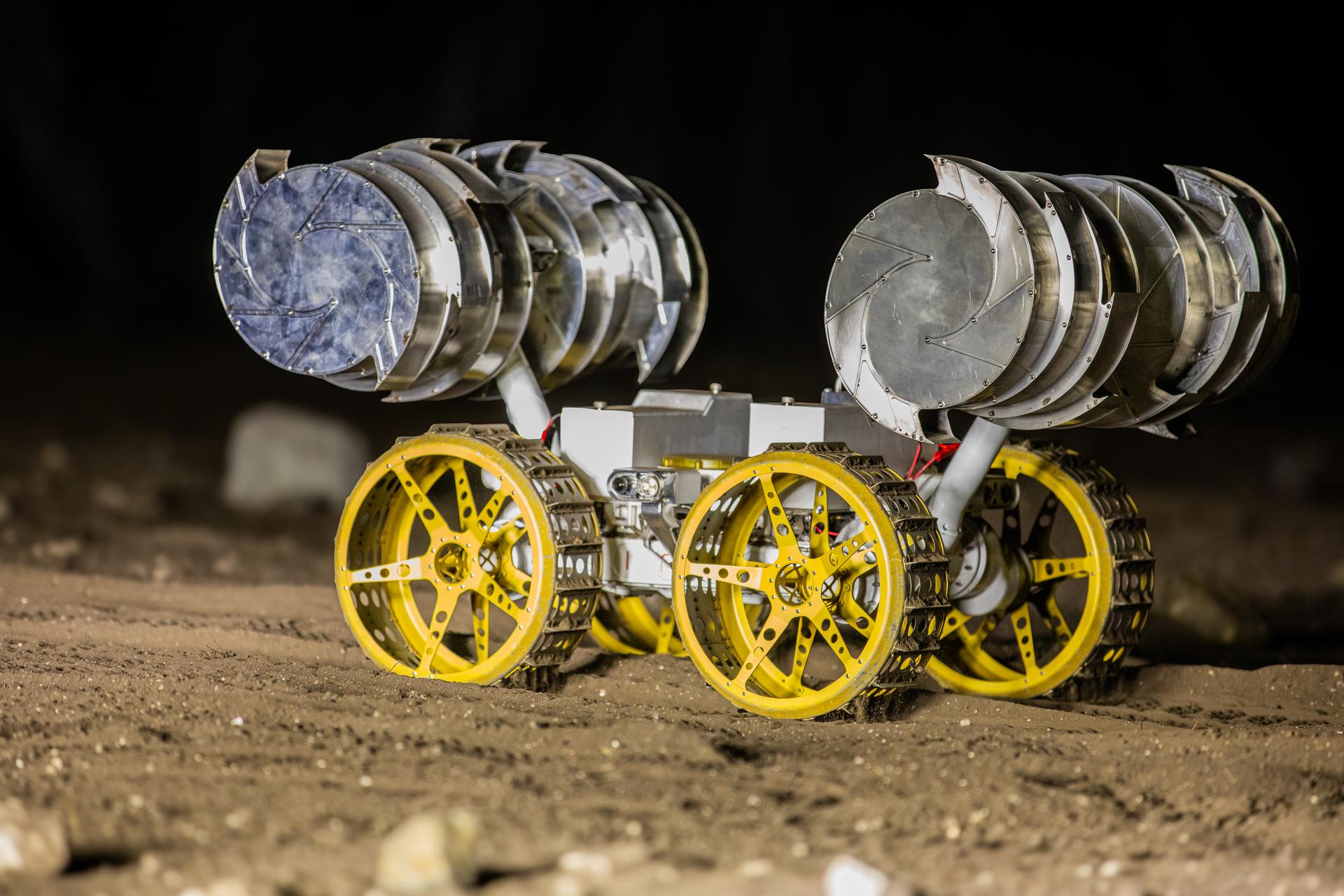
A Breakthrough for Space Exploration! NASA’s New Robot Can Excavates Up to 10,000 Kg of Lunar Rock per Day, Easing Future Missions to the Moon
NASA revealed the workings of one of its most ambitious projects: the lunar mining robot IPEx, or In-Situ Resource Utilization Pilot Excavator.
The machine will be a milestone in lunar exploration, allowing the excavation of resources directly from the Moon’s surface, which may represent a breakthrough for human maintenance on Earth’s natural satellite.
Dual Efficiency
IPEx is a robotic system with functions of a tractor and dump truck, designed to mine and transport lunar regolith – the rocky material that covers the Moon’s surface.
-
Pirita, the “fool’s gold,” deceived prospectors for centuries and today helps science uncover the origin of Earth’s magma.

-
The largest volcanic event in Earth’s history may have changed everything beneath the Pacific: a study shows that eruptions 110 to 120 million years ago reshaped the oceanic plate of the Ontong Java Plateau, the largest oceanic plateau on the planet.

-
The world’s largest acid geyser awakens in Yellowstone and reaches record heights after years of dormancy.
-
Tiny robots reveal the hidden chemistry of the depths and uncover secrets of low-oxygen dead zones in the ocean.
Regolith contains essential resources, such as hydrogen, oxygen, and even water, that can be extracted and used to support human presence in space.
According to Jason Schuler, project manager of IPEx and principal investigator at Kennedy Space Center, the project is a testament to NASA’s commitment to developing cutting-edge technology to enable increasingly self-sufficient lunar exploration.
Innovative Bucket Drums
To perform its task, IPEx employs an innovative design: hollow rotary cylinders with blades, called bucket drums.
These counter-rotating drums are designed to reduce force feedback, allowing the system to operate efficiently in the Moon’s reduced gravity.
The great advantage of this system is its ability to excavate up to 10,000 kg of regolith per lunar day, equivalent to the weight of 20 adult elephants – a significant evolution compared to previous missions that managed to collect only a fraction of that amount.
This excavation capacity is essential for in-situ resource utilization (ISRU) operations, which aim to extract oxygen directly from lunar regolith.
Oxygen is vital for life support and can also be used as fuel for future space missions.
Eugene Schwanbeck, program element manager for IPEx, emphasizes that the counter-rotating design of the drums allows the machine to maintain a reduced mass while addressing the challenges of excavation in lunar gravity.
Advanced Technology at NASA for a Successful Lunar Mission
In addition to the innovative design of the drums, IPEx is equipped with cutting-edge technologies that enhance the robot’s efficiency. NASA has included a Dust Mitigation and Camera System, crucial for navigation and clear vision on the lunar surface, which is covered by a fine layer of dust.
The robot also features a Mobility System that allows movement on uneven and slippery terrain, a Thermal Control System to deal with the extreme temperature variations on the Moon, and a Regolith Delivery System that employs the drums and mechanical arms to transport the collected material.
To ensure maximum performance, IPEx uses advanced algorithms that enable greater precision and reliability during its operations.
Testing in Simulated Environments
In March of last year, NASA tested IPEx’s autonomy by simulating the extreme lighting and terrain conditions of the Moon in a yard with lunar rocks.
This test was crucial to ensure that the robot would be capable of operating autonomously in the lunar environment, where communication with Earth may face challenges.
The new NASA IPEx robot is an adaptable machine, with a modular design that allows for adjustments and modifications according to the requirements of different lunar missions. This modular approach reduces costs and complexity, ensuring that the system can be easily tested on Earth before being sent into space.
With information from IE.





Seja o primeiro a reagir!