





 Portuguese
  English
  Spanish
  4 min of reading
  0 comments


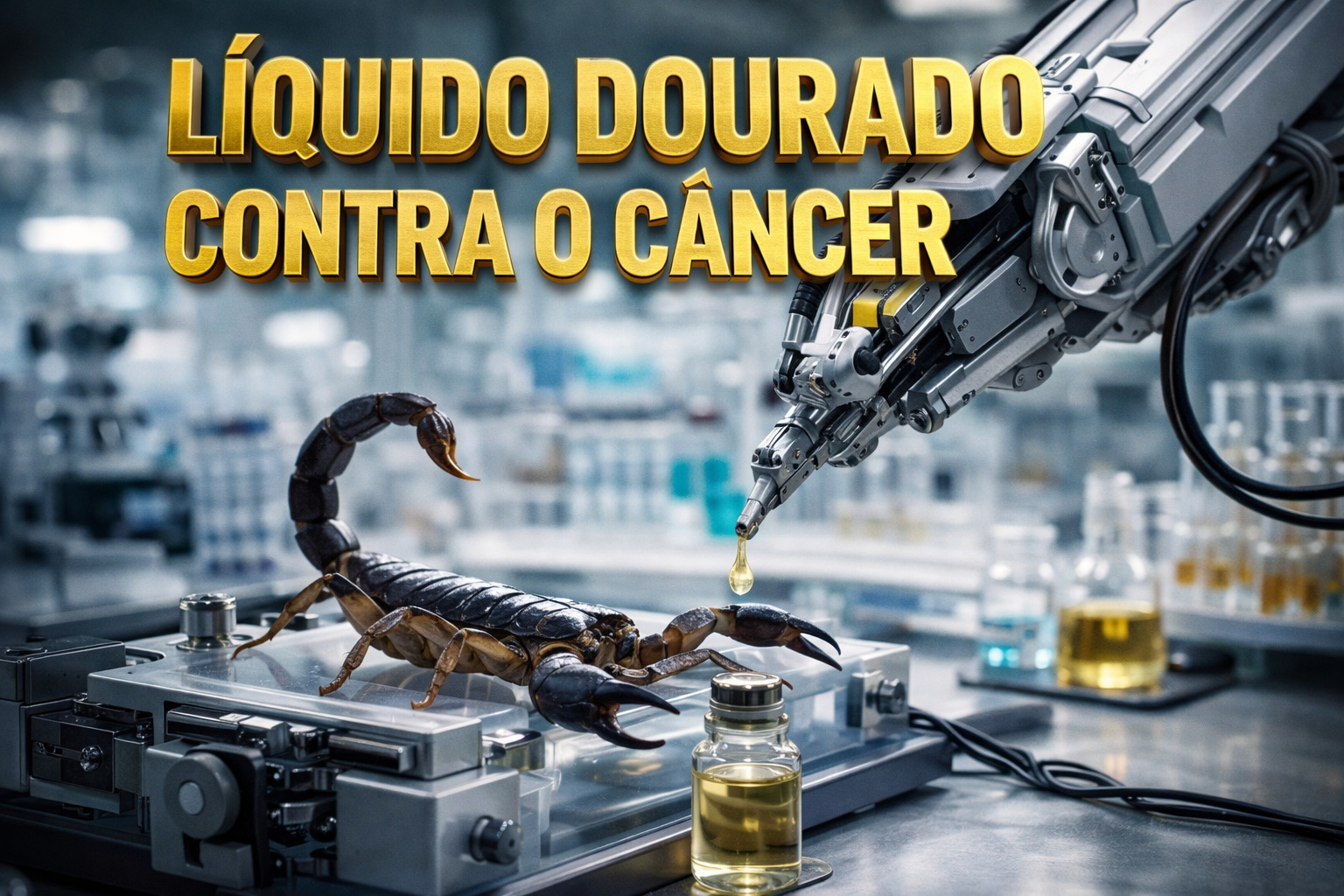
Technology Developed in Morocco Automates the Extraction of Scorpion Venom, Reduces Operational Risks, and Accelerates Scientific Studies Focused on Cancer Treatment
Since 2017, a technological innovation has been capturing the attention of the international scientific community. That year, researchers from Hassan II University in Morocco developed a robot capable of automatically extracting venom from scorpions, eliminating human risks and expanding access to one of the world’s most valuable natural substances. Thus, the technology began to play a strategic role in biomedical research, especially in oncology.
Although a scorpion sting is associated with intense pain and health risks, the venom houses rare compounds of high scientific interest. Therefore, historically, researchers have faced significant obstacles in collecting the toxin in sufficient quantities. In this context, automation emerged as a solution to a bottleneck that limited the progress of medical studies worldwide.
Traditional Extraction Limited the Advancement of Research
For decades, venom collection relied on manually executed mechanical or electrical stimulations, a slow, costly, and hazardous process. Additionally, both researchers and the animals themselves were exposed to accidents. Consequently, the difficulty in obtaining the substance restricted the scale of scientific studies, even in light of the venom’s significant pharmacological potential.
-
With a cost per shot close to zero, the DragonFire laser could change naval warfare in 2027 and provide British ships with nearly unlimited defense against drones.

-
A British startup creates tires that generate electricity in electric vehicles when passing over potholes, speed bumps, and cracks.

-
Scientists have created robots made with living cells that have their own nervous system, swim on their own, explore the environment, and self-organize without any genetic engineering, and now they want to do the same with human cells.

-
Students create a solar-powered ambulance that operates without a plug, without fuel, and still keeps medical equipment running in remote areas.


In this context, the team at Hassan II University sought a technological alternative. As a result, the robot was designed to reduce operational risks, increase efficiency, and ensure greater standardization in collection, without compromising the integrity of the scorpions.
Automated Technology Allows Safe and Efficient Collection
Currently, the equipment developed in Morocco can accommodate up to 35 scorpions simultaneously. To do this, it applies light and controlled electrical discharges to the animals’ tails, stimulating the release of small droplets of venom. According to researchers, the procedure is painless and does not harm the arachnids, which represents a relevant technical and ethical advance.
Subsequently, the venom is automatically collected into glass tubes via a vibrating system and internal antennas. This way, the process completely eliminates direct human contact with the substance. Furthermore, being lightweight and portable, the robot can be used in both laboratories and other research environments, requiring only basic training.
Why is Scorpion Venom So Rare and Valuable
Known as “liquid gold,” scorpion venom is among the most expensive natural substances on the planet. Scientific estimates released until 2024 indicate that a single gram can cost around US$ 8,000, equivalent to approximately R$ 42,000. This high value reflects, above all, the extreme difficulty of extraction and the low yield per animal.

To gauge the challenge, more than 2.6 million scorpions would be needed to produce just one gallon of the substance. Additionally, the venom contains peptides, neurotoxins, enzymes, and highly specific bioactive compounds capable of interacting precisely with the human body.
Scientific Advancements and Focus on Cancer Treatment
In recent years, oncology has become the main focus of research with scorpion venom. A study published by the National Library of Medicine demonstrated that certain peptides present in the toxin selectively act on tumor cells, interfering with ion channels, inducing programmed cell death, and in some cases, crossing the blood-brain barrier.
Furthermore, a review published in 2023 in the International Journal of Molecular Sciences, led by researchers from the Butantan Institute, reinforced that the venom functions as a molecular library, essential for the development of new anticancer drugs.
Brazilian Research Reinforces Therapeutic Potential
In Brazil, studies supported by FAPESP have also yielded significant results. In June 2025, researchers from the University of São Paulo identified a molecule found in the venom of the Amazonian scorpion Brotheas amazonicus capable of eliminating breast cancer cells with efficacy comparable to that of traditional chemotherapeutics.
Despite the importance of the robot in accelerating initial collection, the development of medications does not depend on the continuous extraction of scorpions. After identifying the peptides of interest, the responsible genes are cloned and reproduced in the laboratory through heterologous expression techniques. Thus, the molecules begin to be produced at scale, with greater control, stability, and safety, consolidating automation as a starting point for concrete medical advancements.








-

-

-

5 pessoas reagiram a isso.