





 Portuguese
  English
  Spanish
  3 min of reading
  0 comments


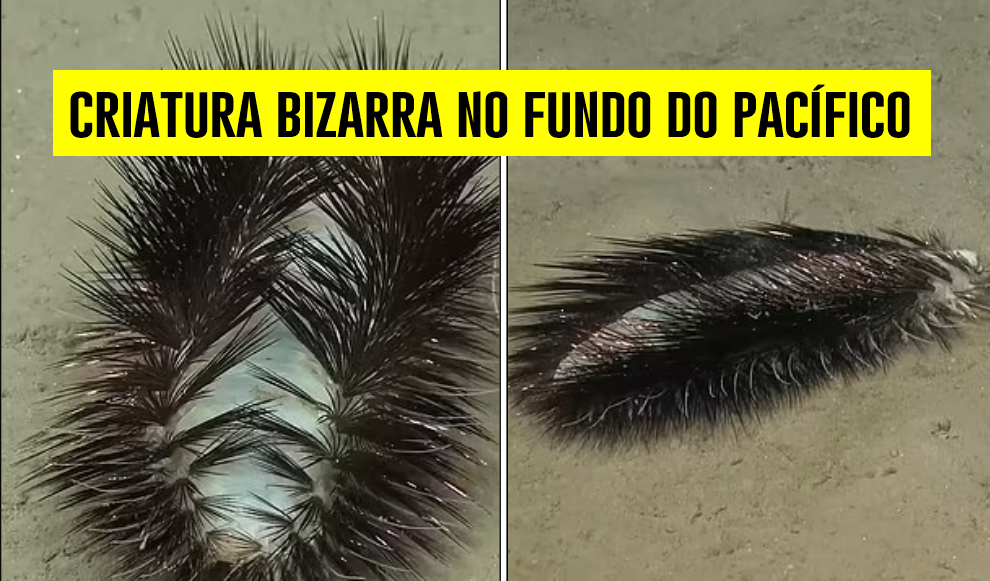
A Creature Never Seen Before Was Found at the Junction of Tectonic Plates in the Pacific, Surprising Scientists and Spectators
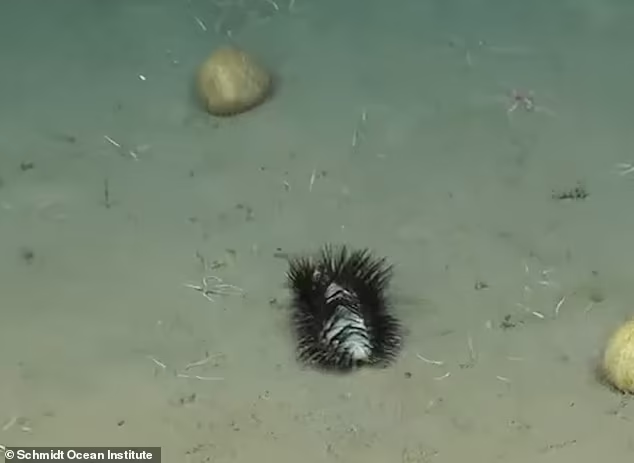
An unusual discovery on the bottom of the Pacific Ocean has left scientists and internet users intrigued. A polychaete, a marine creature never before seen, was found at the junction of three tectonic plates by researchers from the Schmidt Ocean Institute.
The creature, which shines as if it were made of liquid rainbow, earned the curious nickname of “prohibited toilet brush,” thanks to humorous comments on social media.
The Discovery of the Surprising Creature
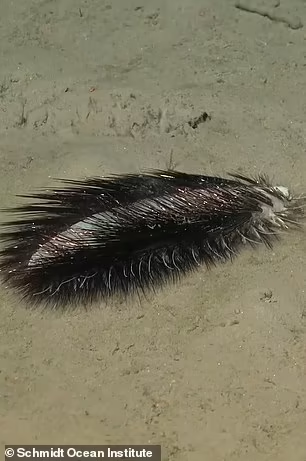
Using an underwater robot, the ROV (Remotely Operated Vehicle), researchers were exploring the Chile Margin when they encountered the polychaete. “To describe this polychaete, you just have to use jazz hands — it’s the only way to capture the shine of this deep-sea worm!,” the scientists jokingly said in an Instagram post, accompanied by fascinating images of the creature.
-
Something is happening around the Earth: Inside the huge explosion of fireballs in 2026

-
A hot air bubble coming from Argentina expands over Brazil, causing thermometers to exceed 38 degrees with a thermal sensation of 40 degrees in late March, affecting 6 states at once.

-
The radish leaf that almost everyone throws away has more polyphenols, flavonoids, and fiber than the consumed root, and a 2025 study showed that the leaf contains compounds that protect the intestine, combat inflammation, and may inhibit the growth of cancer cells.

-
A planet that seemed to defy the laws of physics has intrigued scientists for decades, until the James Webb revealed what is really affecting Saturn’s rotation.

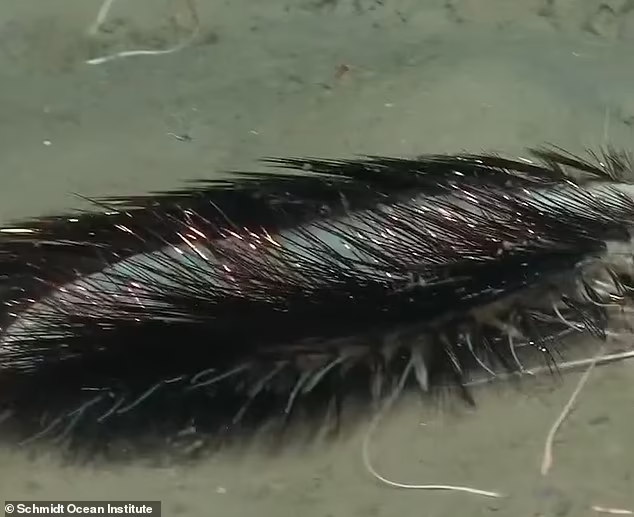
With an unusual appearance, the polychaete was described by some internet users as a “Christmas tree from the ocean floor,” while others compared it to a pair of false eyelashes. One viewer summarized the collective surprise by commenting: “It looks like something an alien would forget on planet Earth.”
What Is a Polychaete?
Belonging to the class of marine worms known as polychaetes, the creature has a segmented body structure, with protrusions called parapodia covered in iridescent bristles. These bristles, also called setae, have unique properties that reflect light, creating a brilliant and colorful effect.
While some polychaetes are bioluminescent, this newly discovered species owes its iridescence to protein structures in its bristles. “Polychaetes play a vital role in our global ocean, contributing to nutrient recycling and maintaining deep-sea ecosystems,” the specialists explained.
The Chile Margin: A Natural Laboratory
The Chile Margin, where the polychaete was found, is a region of unique scientific importance. It is a deep-water coastal formation that extends along the west coast of South America, where the Pacific tectonic plate submerges beneath the South American plate. This confluence of geological forces creates an ideal environment to study chemosynthetic ecosystems and organisms adapted to extreme conditions.
With depths ranging from 2,652 to 3,281 feet, this area is nicknamed “natural laboratory.” During a 55-day expedition, which ends on December 5, scientists aim to map, sample, and characterize the unique ecosystems of this region. “Their research will enhance our understanding of a crucial area in the ocean while strengthening efforts to manage and protect the waters of Chile,” highlights the Schmidt Ocean Institute.
Repercussions on Social Media
The video of the glowing polychaete slowly advancing along the ocean floor went viral, generating a flood of creative and curious comments. One viewer joked: “Who is that Pokémon?” Another commented: “It’s a scrub brush for the sink!” Despite the light tone, the public’s fascination highlights the importance of scientific advances in areas as unexplored as the ocean depths.
A Mystery from the Depths
In addition to the polychaete, other unprecedented species were also found during the expedition. However, none attracted as much attention as the “prohibited toilet brush.” The discovery highlights how much there is still to learn about the oceans, which cover over 70% of the planet but remain largely unexplored.
Even though it has been humorously described by many, the polychaete represents a significant milestone in science. It serves as a reminder that even in the darkest and most isolated depths of Earth, life can thrive, surprising even the most experienced researchers.







-

Uma pessoa reagiu a isso.