





 Portuguese
  English
  Spanish
  4 min of reading
  0 comments



Chinese Scientists Present a Graphene Oxide Robotic Tongue That Recognizes Flavors in Liquids and “Learns” Their Patterns with Neuromorphic Technique. In Tests, the System Achieved Nearly 99% Accuracy for Basic Tastes and Also Classified Beverages Like Coffee and Soda.
The new artificial tongue was detailed in July 2025 in the Proceedings of the National Academy of Sciences and signed by researchers from the National Center for Nanoscience and Technology in Beijing. The device integrates sensing and processing in the same component, something rare when it comes to artificial taste in liquid environments. The technical study confirms the advancement and explains the architecture of the system that allows robots to “feel” flavors.
The relevance of this discovery is twofold. First, taste has always been the most challenging sense to digitalize since it occurs in an aqueous environment, where ions, rather than electrons, carry the information. Second, the team was able to implement computation in the sensor, bringing it closer to how taste buds and neurons organize in the human body. This opens up possibilities for applications in food safety, health, and service robotics.
Another advantage is the short-term taste memory. The material’s behavior creates a hysteresis effect that retains information for about seconds to hundreds of seconds, allowing the robot to form electrical signatures of what it “tasted.” Technical reports mention durations of up to approximately 140 seconds, useful for stable sample classification.
-
China creates hypersonic engine that can make planes and missiles fly more than 6 times the speed of sound with less weight, more range, and without system change.

-
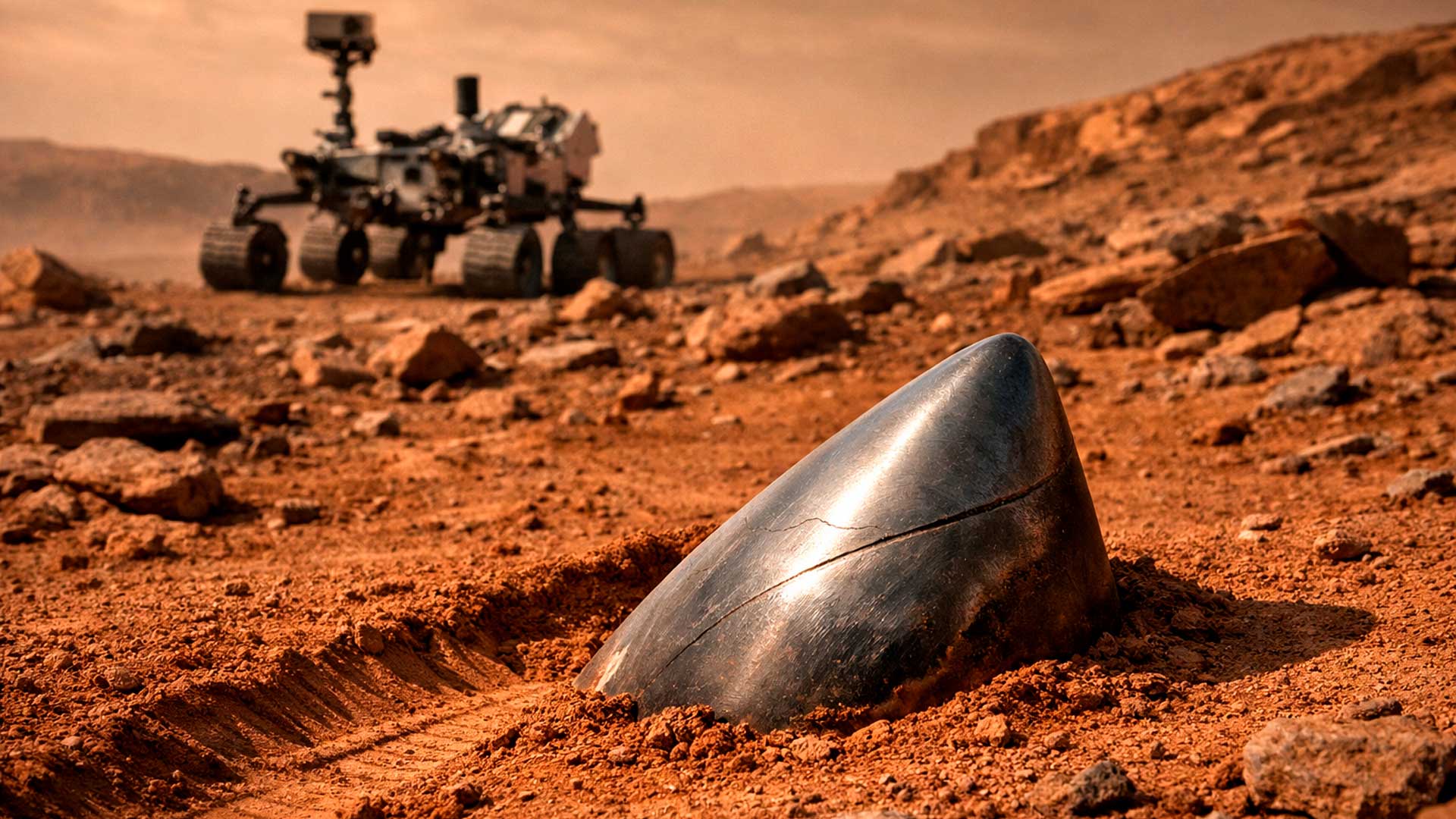
Mysterious object on Mars divides NASA and Harvard after Curiosity image reignites suspicions about what was really found on the planet.
-
Giant structures 14 meters beneath Egypt are revealed by satellites and expose a millennia-old secret buried in Buto.

-
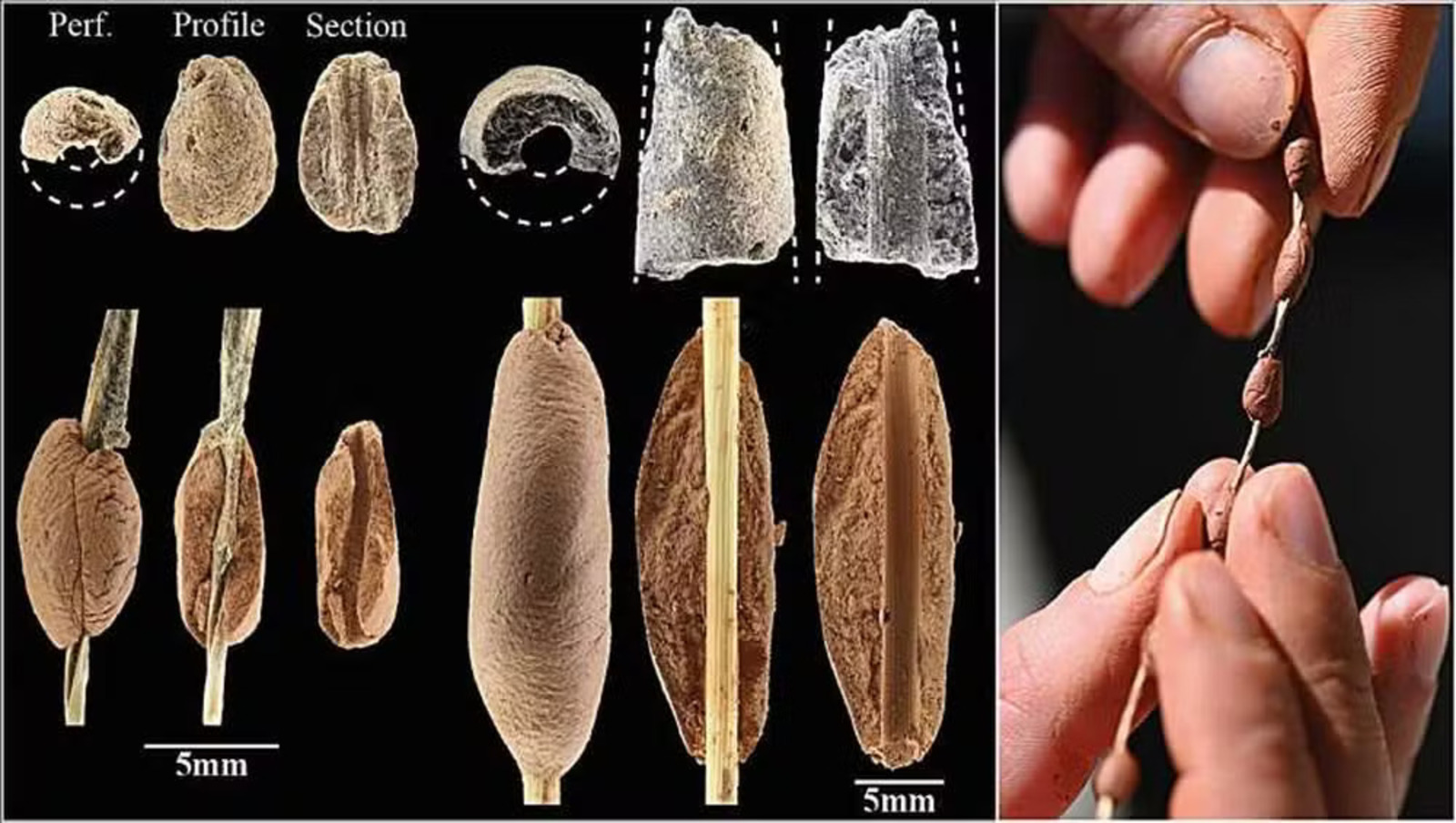
Children have been making clay pieces for 15,000 years in Southwest Asia, and fingerprints preserved on 142 ornaments helped archaeologists prove this.

What Is the Graphene Oxide Robotic Tongue
The so-called robotic tongue is a set of graphene oxide membranes that act as an ionic memristive device. Simply put, the same piece that detects the dissolved compounds also processes the signal generated by them, without relying on an external computer for the initial interpretation stage. This sensor-processing fusion is what makes the prototype special in the realm of “e-tongues.”
The work was published in PNAS with the participation of researchers in Beijing and collaborators in China. The article describes the idea of neuromorphic artificial tasting, which replicates the functional division of biological taste, from chemical capture to electrical coding and flavor recognition. The validation followed laboratory protocols with standard solutions for basic tastes.
Institutional reports from the NCNST help contextualize the leap: the team built hardware that operates in a humid environment, preserving performance and ensuring compatibility with real liquids, something that has historically limited artificial languages to dry configurations or displaced processing.
How It Works: Ionic Sensor and “Reservoir Computing” in the Device Itself
When the membrane comes into contact with the sample, molecules in solution release ions that migrate through nano-confined channels in the graphene oxide. The adsorption and desorption on the walls of these channels slows down the ions and produces an electrical response with hysteresis, similar to a volatile memory. This is the ionic memristive principle behind the tongue.
To turn this dynamic into perception, the signals are fed into a reservoir computing scheme. In this approach, the device itself serves as the physical “reservoir” that expands and temporally encodes the signals. Then, a simple neural network performs classification. According to the authors, the pipeline sensory input → reservoir → classifier mirrors the taste bud–nerve–cortex chain in human taste.
This in-sensor design reduces noise and latency, since much of the preprocessing occurs within the liquid, in the same component. The practical consequence is a more robust system for real environments, with less dependence on cables, interfaces, and external electronics in the critical first measurement stage.
Results: Accuracy Nearly 99% and Tests with Coffee and Soda
In tests with sweet, salty, sour, and bitter tastes, the artificial tongue achieved about 98.5% accuracy. In generalization scenarios, rates between 75% and 90% were recorded depending on the type of sample and the protocol. These numbers support that taste can be captured digitally with high fidelity.
In addition to basic tastes, the team tested the system on complex beverages, such as coffee and Coca-Cola, achieving high performance. Independent reports indicate accuracy nearing 96% for some liquids with richer chemical signatures, highlighting that real matrices may even facilitate classification.
Another important point is the taste memory. By exhibiting an electrical response that persists for a finite time, the device can “remember” the passage of a previous stimulus for dozens of seconds, which improves separability between classes in the temporal domain without requiring deep networks.







Seja o primeiro a reagir!